
What You Need to Know
Two seats labeled 24A can be completely different experiences. One might sit beside a wide, clear window on a long-haul jet, while the other sits against a blank wall of fuselage on a narrow-body. The seat map shows you a grid, but the aircraft type tells you what that grid actually means.
Most travelers pick a seat by glancing at the colored squares and clicking whatever looks open and cheap. A better approach takes about ten minutes. You identify the plane, read its cabin layout, decide what you care about most, and check for known quirks before you commit. The payoff is real: legroom, noise, recline, and ease of getting off the plane all vary by row, and the differences are predictable once you know where to look.
The steps below work for any airline and any cabin, from a short regional hop to an overnight widebody flight.
Step 1: Identify the Aircraft Type
Start with the plane, not the map. Your booking confirmation or the airline’s flight details page usually lists the equipment, often with a code or name such as “Boeing 737-800,” “Airbus A321,” or “Boeing 787-9.” If the airline only shows a generic label, a flight tracking site can usually show which aircraft type is assigned to that flight number.
Pay attention to the exact variant. A 737-800 and a 737 MAX 8 are close cousins but may be configured differently by the same airline. A 777 can carry very different cabin layouts depending on who operates it and how they fitted it out.
One more habit worth building: check the equipment again a day or two before departure. Airlines swap aircraft for maintenance and scheduling reasons, and a swap can scramble your seat assignment or change the layout entirely.
Step 2: Read the Cabin Layout Before the Seat Map
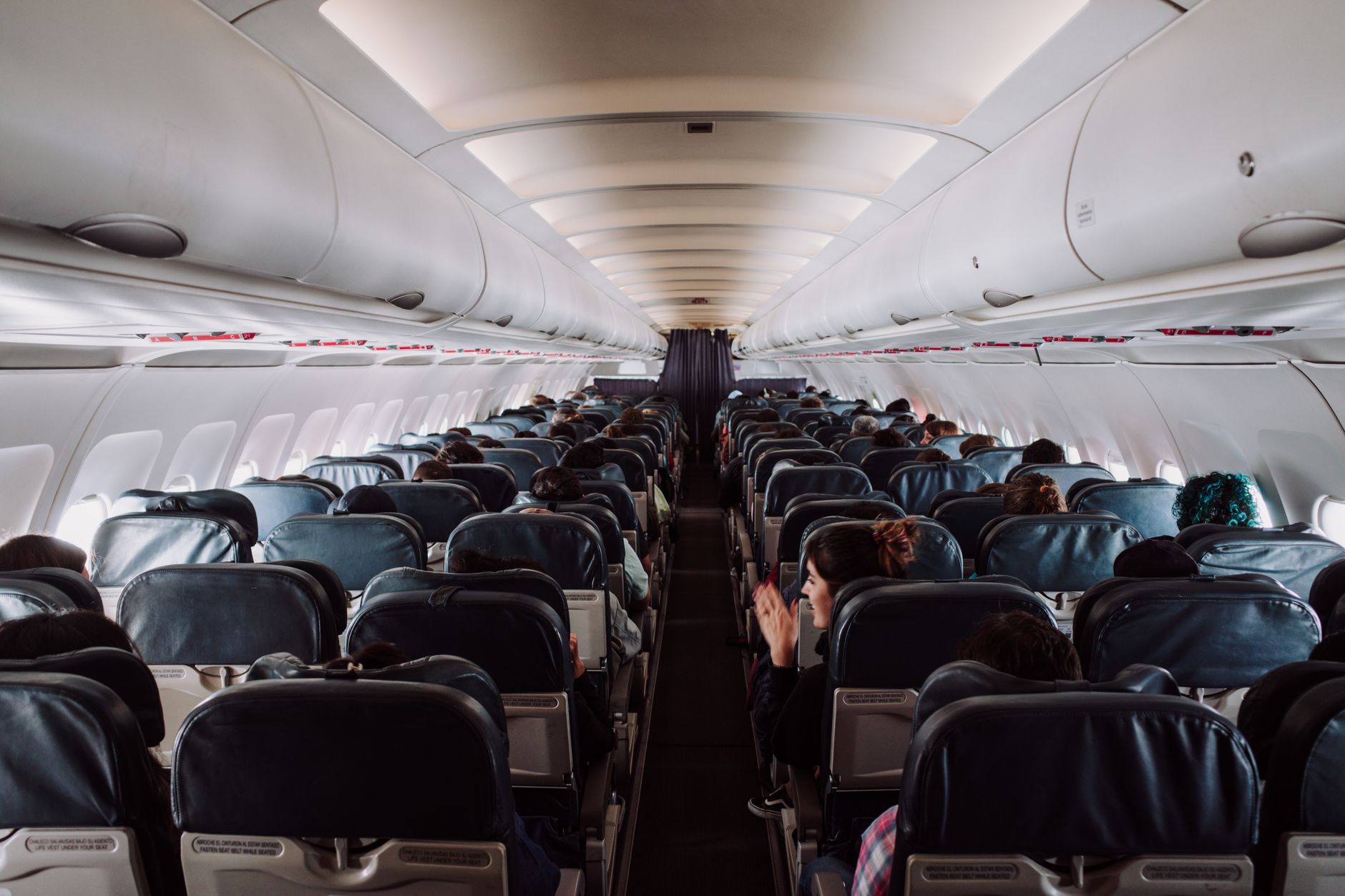
Once you know the aircraft, look at how the economy cabin is arranged. The pattern of seats across each row matters more than most people realize.
- Narrow-bodies such as the 737 and the Airbus A320 family typically run 3-3 in economy, which means a window, a middle, and an aisle on each side.
- Widebodies vary. Many 787s and A350s run 3-3-3 in economy, while some 777s are 3-4-3 and some A330s are 2-4-2.
- Regional jets and turboprops often use a 2-2 arrangement, which eliminates middle seats altogether.
This is where couples and solo travelers should pay close attention. On a 2-4-2 widebody, a pair can book the two-seat side section and have a row with no stranger. On a 3-3 narrow-body, a pair booking window and aisle may end up with an empty middle seat that is sometimes the last to fill, though that gamble only pays off on flights that are not full.
Solo travelers should look for the single-aisle-side seats on layouts that offer them, since an aisle in a 2-seat section means you only share an armrest with one person.
Step 3: Decide What Matters Most to You
No seat is best at everything. Choosing well means ranking your priorities honestly before you look at the map.
- Legroom: Exit rows and bulkhead rows tend to offer more space for your legs, though bulkheads often have no under-seat storage in front of you.
- A smooth ride: Seats over the wings sit near the aircraft’s center of gravity, and turbulence tends to feel milder there than at the tail.
- Quick exit: Rows near the front of the cabin get you off sooner, which helps with tight connections.
- Sleep: A window seat gives you something to lean on and keeps you out of the aisle traffic.
- Bathroom access and freedom to move: An aisle seat lets you stand without climbing over anyone.
Write down your top two. If you try to optimize for five things you will end up frozen on the seat map, comparing rows that cannot all win.
Step 4: Cross-Check With a Third-Party Seat Map
Airline seat maps are designed to sell seats. They show which squares are available and which cost extra, but they rarely tell you that a particular row has a stuck recline or a misaligned window.
Independent seat map sites fill that gap. Tools like SeatGuru and AeroLOPA catalog layouts by airline and aircraft type, and they flag details such as seat pitch, seat width, missing windows, and rows next to galleys. Some draw the cabin to scale, which helps you see how far a row really sits from the wing or the lavatory. Use them as a guide rather than gospel, because airlines retrofit cabins and the information can lag behind.
The key is matching the map to the exact aircraft variant and airline configuration from Step 1. A map for the wrong version of the plane is worse than no map at all.
Step 5: Spot the Problem Seats
Some rows look fine on the airline’s grid and turn out to be traps. Knowing the common patterns helps you avoid them.
Rows that recline poorly or not at all
The last row of a cabin often has limited recline because of the wall behind it. Exit row seats directly in front of the emergency door may not recline either, since reclining could block the exit path. If you plan to sleep, this matters.
Rows near galleys and lavatories
Rows beside galleys and bathrooms get steady foot traffic, light, and noise, particularly during meal service and the quiet hours of an overnight flight. The smell near lavatories on a long flight is also a factor that no seat map will warn you about.
Windows that are missing or misaligned
On many aircraft, certain window seats sit beside a blank stretch of wall, or the window sits ahead of or behind your seat. If the view matters to you, a seat map with window position data is worth the extra minute. Seats over the wing also limit your view downward, since the wing itself fills much of the window.
Seats near the engines
On aircraft with rear-mounted engines, the back rows can be noticeably louder. On wing-mounted engine aircraft, the rows alongside the engines can be loud too, especially during takeoff.
Step 6: Choose, Lock It In, and Keep Watching
With your priorities set and the problem rows flagged, you can pick. Choose a primary seat and a backup in a different area of the cabin, since the first choice can disappear or get reassigned.
Decide whether to pay. Many airlines charge for advance seat selection on cheaper fares, and some hold back the best rows for paid upgrades or elite members. If the seat you want carries a fee, weigh it against how long the flight is and how much the seat matters to your comfort. A paid exit row on a 90-minute flight is a harder sell than the same fee on an overnight flight where you want to stretch out.
If you skip the fee, selecting a seat at check-in is usually free, though the choices narrow by then. Many airlines also release held seats closer to departure, so checking the map in the final day or two can turn up better options than were visible at booking.
Finally, keep an eye on equipment swaps. If your aircraft type changes, repeat Steps 2 through 5 immediately. A swap can move your carefully chosen exit row to a spot beside the lavatory, and airlines do not always warn you with much notice.
Key Takeaways
- Identify the exact aircraft type and variant first, since the same seat number means different things on different planes.
- Learn the row pattern (3-3, 2-4-2, 3-4-3) because it determines who sits next to you and whether middle seats exist.
- Rank your top two priorities, whether legroom, ride quality, quick exit, or sleep, before opening the map.
- Cross-check the airline’s map against an independent seat map for the same aircraft configuration.
- Avoid rows beside galleys and lavatories, rows with limited recline, and seats with missing or misaligned windows.
- Pick a backup seat, and recheck your aircraft type a day or two before departure in case of a swap.
One caveat worth keeping in mind: the best seat on paper can still be ruined by the passenger in front who reclines fully into your lap, and no seat map can do anything about that.
Frequently Asked Questions
How do I find out what aircraft type my flight uses?
Check your booking confirmation or the airline’s flight details page, where the equipment is usually listed. A flight tracking site can also show the aircraft type assigned to your flight number.
Are exit row seats always the best choice?
Not always. They usually offer extra legroom, but the seats directly in front of the exit door may not recline, and some airlines charge extra or restrict who can sit there.
Where is the smoothest place to sit on a plane?
Seats over the wings tend to feel turbulence less than seats near the tail, because they sit close to the aircraft’s center of gravity.
Can my seat change if the airline swaps the aircraft?
Yes. If the airline changes the aircraft type, your seat may be reassigned to a different spot, so recheck your seat a day or two before departure.