
Where the Sahara Gets Serious
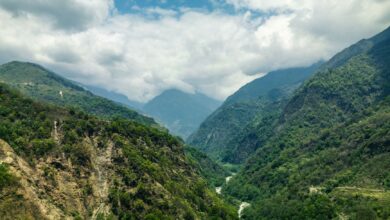
Morocco has long been the default answer for travelers chasing desert landscapes – the dunes of Merzouga, the kasbahs of the Draa Valley, the well-worn routes that feed a mature tourism infrastructure. But roughly 1,500 kilometers to the southeast, Algeria’s Hoggar Mountains offer something that Morocco’s most popular desert corridors no longer can: genuine solitude. The Hoggar sits at the center of the Algerian Sahara, a volcanic massif rising from the flat desert floor to peaks above 2,900 meters, and it draws a fraction of the foot traffic that flows through southern Morocco every season.
The comparison is not about which destination is better. It’s about what kind of trekker you are.
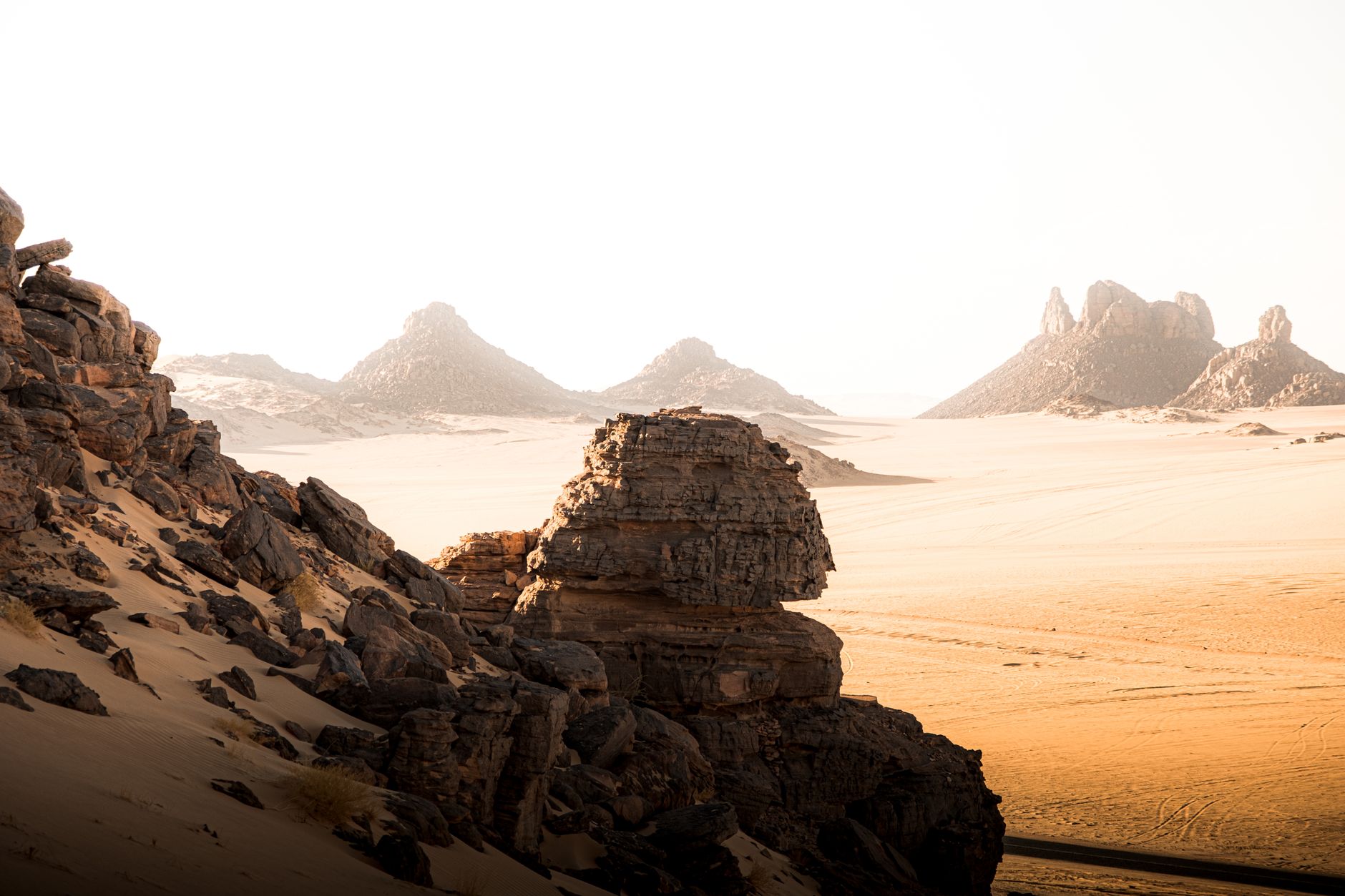
For those who have done the Morocco circuit and found it polished to the point of predictability, the Hoggar presents a genuinely different proposition – harder to reach, less forgiving logistically, but rewarding in ways that have nothing to do with Instagram coordinates. The rock formations here, known as the Atakor plateau, are unlike anything in North Africa’s more tourist-facing corners. Basalt spires and eroded volcanic plugs rise hundreds of meters from the sand, lit orange and purple at dusk in a landscape so still that the silence itself becomes a presence.
What the Hoggar Actually Looks Like on the Ground
The nearest town of any size is Tamanrasset, a desert city in Algeria’s far south that serves as the base camp for most Hoggar expeditions. Flights connect it to Algiers, and from there, guides and 4×4 transport can be arranged to reach the plateau’s interior. The logistics are not complicated, but they require more planning than booking a riad in Merzouga. Algeria requires pre-approved visas, guide registration is mandatory for foreign trekkers in the Hoggar National Park, and independent wandering without a licensed local guide is not permitted – a rule that exists both for safety and for the preservation of Tuareg cultural sites scattered throughout the range.
That last point matters. The Hoggar has been home to the Kel Ahaggar Tuareg for centuries, and their presence is not decorative. Tuareg guides are not just navigators – they are the living context for everything you see. The rock art panels at Tin Taghirt and throughout the massif date back thousands of years, depicting animals long vanished from the region: elephants, hippos, cattle. Standing in front of a painted panel in near-total silence, with a Tuareg guide explaining what you’re looking at, is a categorically different experience from viewing similar art behind museum glass.
Trekking routes vary from half-day walks around the plateau rim to multi-day expeditions crossing open terrain between rock formations. The most popular multi-day circuit takes trekkers through the heart of the Atakor, passing the hermitage of Charles de Foucauld on the summit of Assekrem – a stone shelter perched at 2,780 meters that has become a quiet pilgrimage point for travelers and spiritual seekers since the French priest built it in 1910. The sunrise from Assekrem, watched over a landscape that extends unbroken to the horizon in every direction, is the kind of thing people describe badly because words tend to flatten it.
The Morocco Comparison, Fairly Made
Morocco earns its reputation. The infrastructure in Merzouga and the Draa Valley is excellent, the camel treks and luxury camp scene are genuinely well-executed, and the cultural fabric of southern Morocco – Berber villages, ancient trade routes, the architecture of the kasbahs – is rich in ways that reward serious travelers. None of that is in dispute. But a growing number of desert travelers who have done the Morocco route more than once are starting to look for something with less scaffolding around it, and Algeria is one of the few places in the Sahara where that’s still possible.
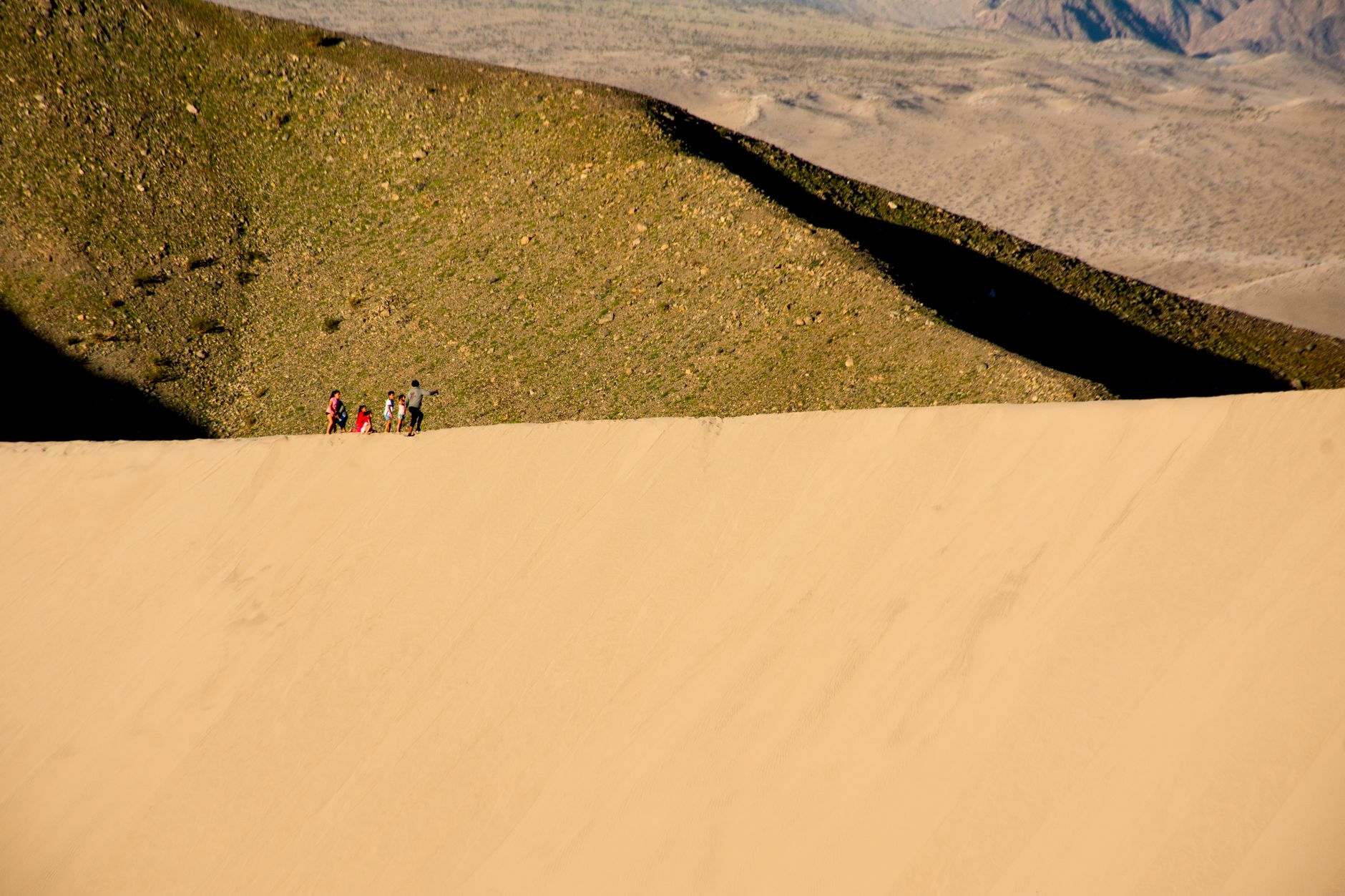
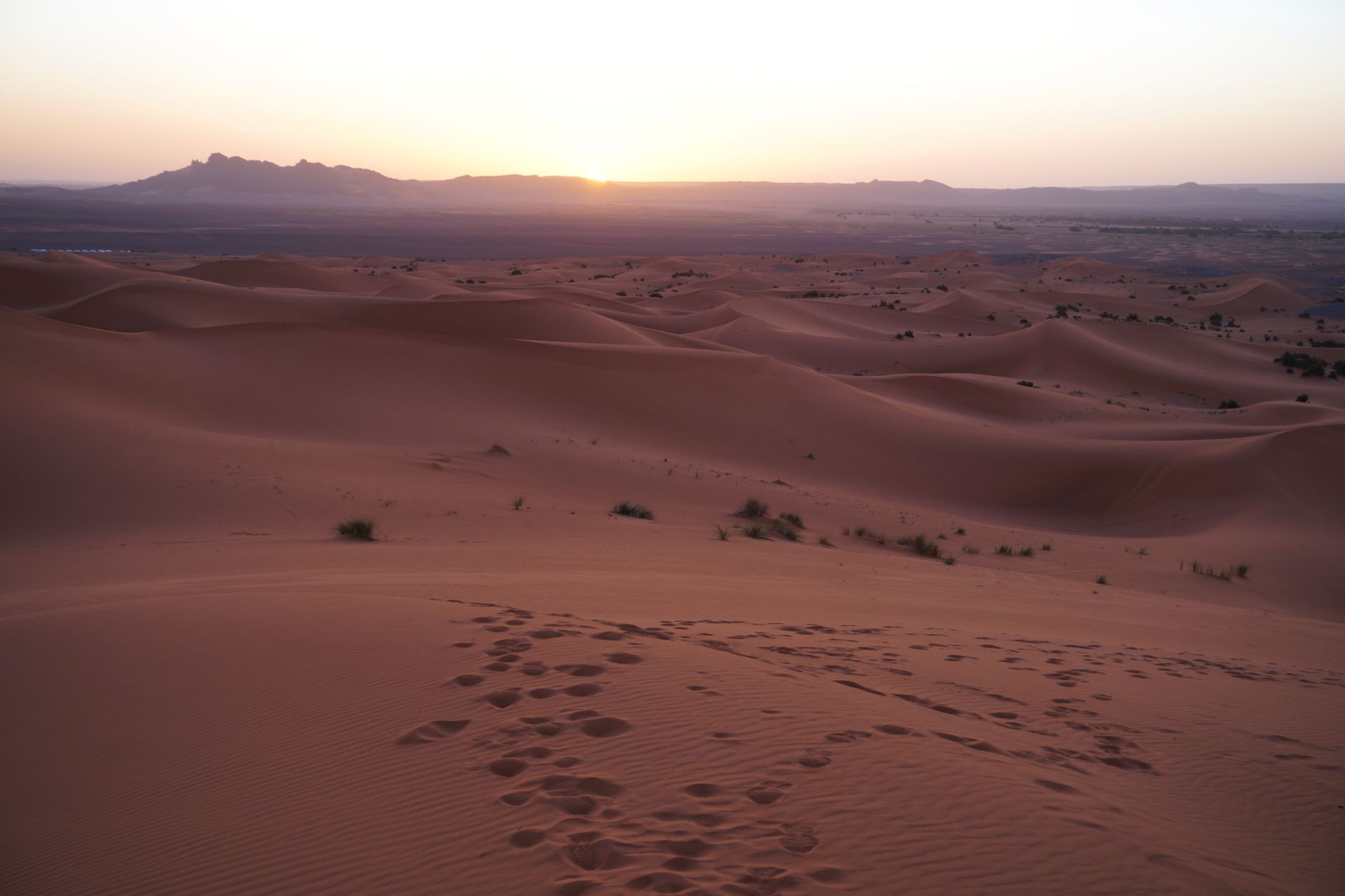
The physical difference between the two landscapes is significant. Southern Morocco’s desert is largely sand and flat reg, beautiful in its own terms but visually consistent over long distances. The Hoggar is vertical. The volcanic geology creates dramatic relief – sharp ridges, hidden valleys, canyon-like corridors between rock walls – that makes trekking feel more like mountain travel than desert crossing. Temperatures at altitude drop sharply at night even in summer, so packing strategy looks different here than it does for the classic dune camps farther north.
Algeria’s tourism sector is also notably underdeveloped compared to Morocco’s, which cuts both ways. There are no mass-market options in the Hoggar, no festival circuit, no network of budget-friendly riads catering to backpackers. What exists is a smaller ecosystem of specialist operators – mostly based in Tamanrasset or working through Algiers – who run properly guided expeditions with serious logistical knowledge. The quality of those operators varies, and vetting them requires more research than picking a Morocco adventure company with strong TripAdvisor reviews. But for travelers willing to do that legwork, the result is an experience that does not feel mediated.
The Case for Going Now
Algeria is slowly opening to international tourism after years of restricted access, and the window before the Hoggar enters any kind of mainstream travel conversation may be shorter than it appears – the same volcanic silence, the same unphotographed rock faces, the same uncrowded trails will not wait indefinitely for travelers who keep putting it off for somewhere easier to book.