
The Volcano at the End of the Road
Most travelers who fly into Bolivia have one image locked in their minds before they even land: the blinding white expanse of the Salar de Uyuni, mirror-flat and world-famous. But roughly 350 kilometers to the northwest, tucked against the Chilean border at an altitude that makes breathing feel like a negotiation, sits Sajama Village – a quiet collection of adobe houses that most tour operators don’t bother listing, and that volcano obsessives are quietly starting to find on their own.
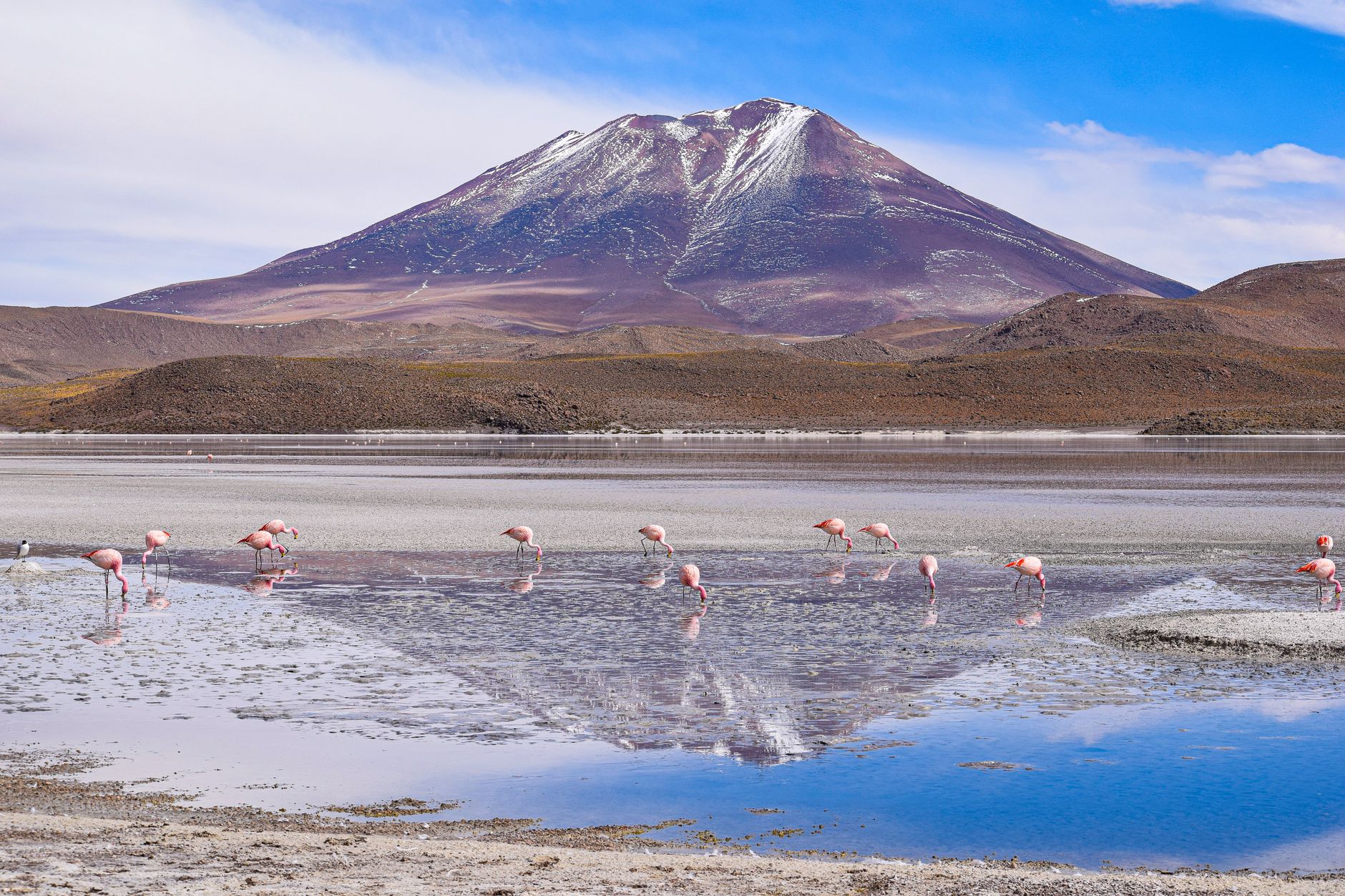
Sajama sits at the foot of Nevado Sajama, Bolivia’s highest peak at 6,542 meters, a near-perfect stratovolcano that dominates the surrounding altiplano the way very few mountains anywhere manage to. The village itself has a population that numbers in the hundreds. There is no luxury lodge. There is no influencer circuit. There is, however, a national park, a geothermal field, a collection of ancient Queñoa forests growing at impossibly high altitudes, and a resident Aymara community that has watched the mountain their entire lives.
The Uyuni comparison isn’t unfair – it’s just incomplete.
What Makes Sajama Different from Bolivia’s Usual Circuit
Uyuni draws visitors because it delivers a spectacle that photographs perfectly and requires minimal physical effort. You hire a jeep, you cross the salt flat, you hold a tiny person in your palm for a forced-perspective photo, and you leave. Sajama demands something different from its visitors. The approach road alone – crossing the Bolivian altiplano at over 4,000 meters – strips away anyone who wasn’t serious about coming. That natural filter is part of what keeps the place intact.
The national park surrounding the village – Parque Nacional Sajama, established in 1945 and Bolivia’s oldest – protects a landscape that stacks multiple ecosystems almost vertically. At the lower elevations, the Queñoa trees, a species of polylepis that clings to Andean slopes and is among the highest-altitude trees on earth, form gnarled forests that look like something from a Tolkien illustration. Higher up, vicunas and viscachas move through the grasslands with complete indifference to human presence. Above that, the volcano’s flanks are cloaked in ice and silence. Thermal pools and fumaroles dot the valley floor, visible proof that the geology here is still active and restless.
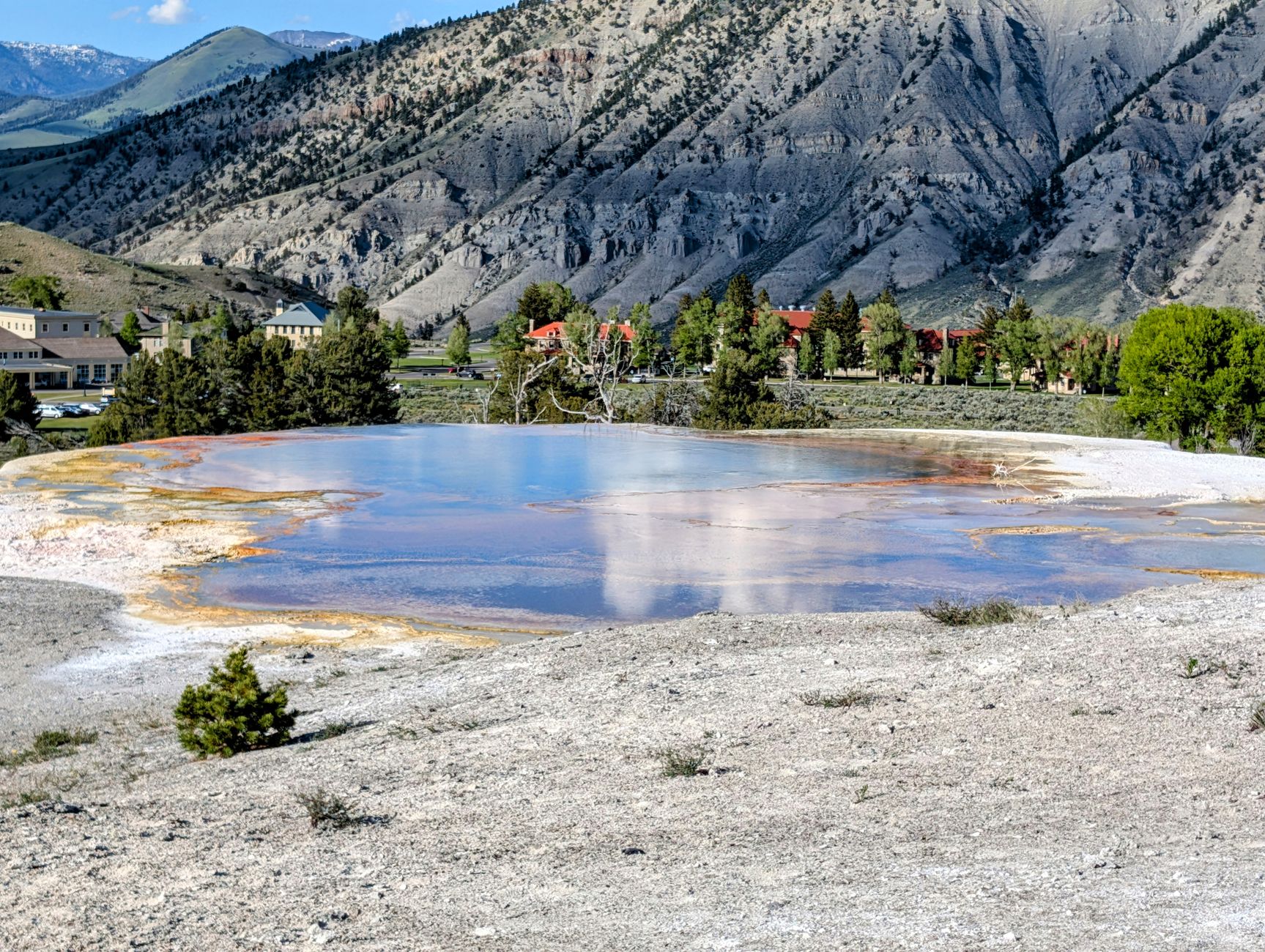
The geothermal activity near the village is what surprises first-time visitors most. Natural hot springs bubble up from the ground at multiple points around Sajama, some of them accessible without any formal infrastructure – just a stone-edged pool fed by water that smells faintly of sulfur and sits at a temperature that makes the cold altitude air irrelevant. After a day at elevation, these pools feel less like an amenity and more like a biological necessity.
The Aymara Community and the Question of Tourism Done Right
Sajama Village’s relationship with visitors is managed largely by the local Aymara community, and that arrangement shapes everything about the experience. Accommodations run through community-owned guesthouses rather than outside operators. Guides are local. The fees paid for trekking, climbing, and park access stay within the village economy rather than flowing to agencies in La Paz or Santa Cruz. That model is not unique globally, but it is rare enough in Bolivia that it sets Sajama apart from most of what the country’s tourism infrastructure currently offers.
The community has also worked to formalize the climbing route on Nevado Sajama itself. For serious mountaineers, it is a technically demanding high-altitude ascent that requires acclimatization, experience with glacier travel, and local guide support. It is not a casual day hike by any measure. But the structure around it – hiring a local guide, paying into the community fund, following leave-no-trace protocols – is more organized than many visitors expect from a village this remote. The mountain takes the experience seriously, and the community has matched that expectation.
For travelers who aren’t climbers, the valley-level options hold up on their own. Multi-day trekking routes circle the volcano’s base. The thermal pools are accessible to anyone who makes the drive. The park’s wildlife – flamingos at seasonal lagoons, Andean condors banking overhead, herds of llamas working the lower slopes – delivers the kind of wildlife density that usually requires a dedicated safari itinerary somewhere else.
Getting There and What to Prepare For
The nearest city is Oruro, roughly four hours by road, and the route is almost entirely unpaved once you leave the main highway. A 4×4 vehicle is not optional. The altitude at the village – around 4,200 meters – means acclimatization before arriving is genuinely important, not a precaution to note and ignore. Spending two or three nights in La Paz or Oruro before heading to Sajama is the standard approach. Arriving directly from a low-altitude city and expecting to trek on day one is the fastest route to altitude sickness and a wasted trip.
Accommodation inside the village is basic but functional. Community guesthouses provide beds, blankets, and meals. The food leans heavily on quinoa, potatoes, and whatever meat is locally available – which is not a complaint. The cold is constant and aggressive after dark. Packing layers that would feel excessive at a normal altitude is the right call. Connectivity is limited; don’t plan on uploading anything until you’re back in Oruro.
The best time to visit falls between May and October, when the dry season keeps the roads passable and the skies clear enough to actually see the volcano rather than stare into cloud cover. During the wet season, the access roads can become difficult or impossible, and the altiplano’s unpredictable weather patterns add a logistical challenge that isn’t worth testing unless you have a very specific reason to be there in those months.
Sajama will not stay this quiet indefinitely. The village’s community model, the volcano’s visual power, and the growing appetite among travelers for destinations that haven’t yet been smoothed into easy packages are exactly the conditions that eventually tip a place from obscure to known – and once that happens, the thing that made it worth visiting starts to wear away at the edges.