
Where the Salt Ends, Bolivia Begins
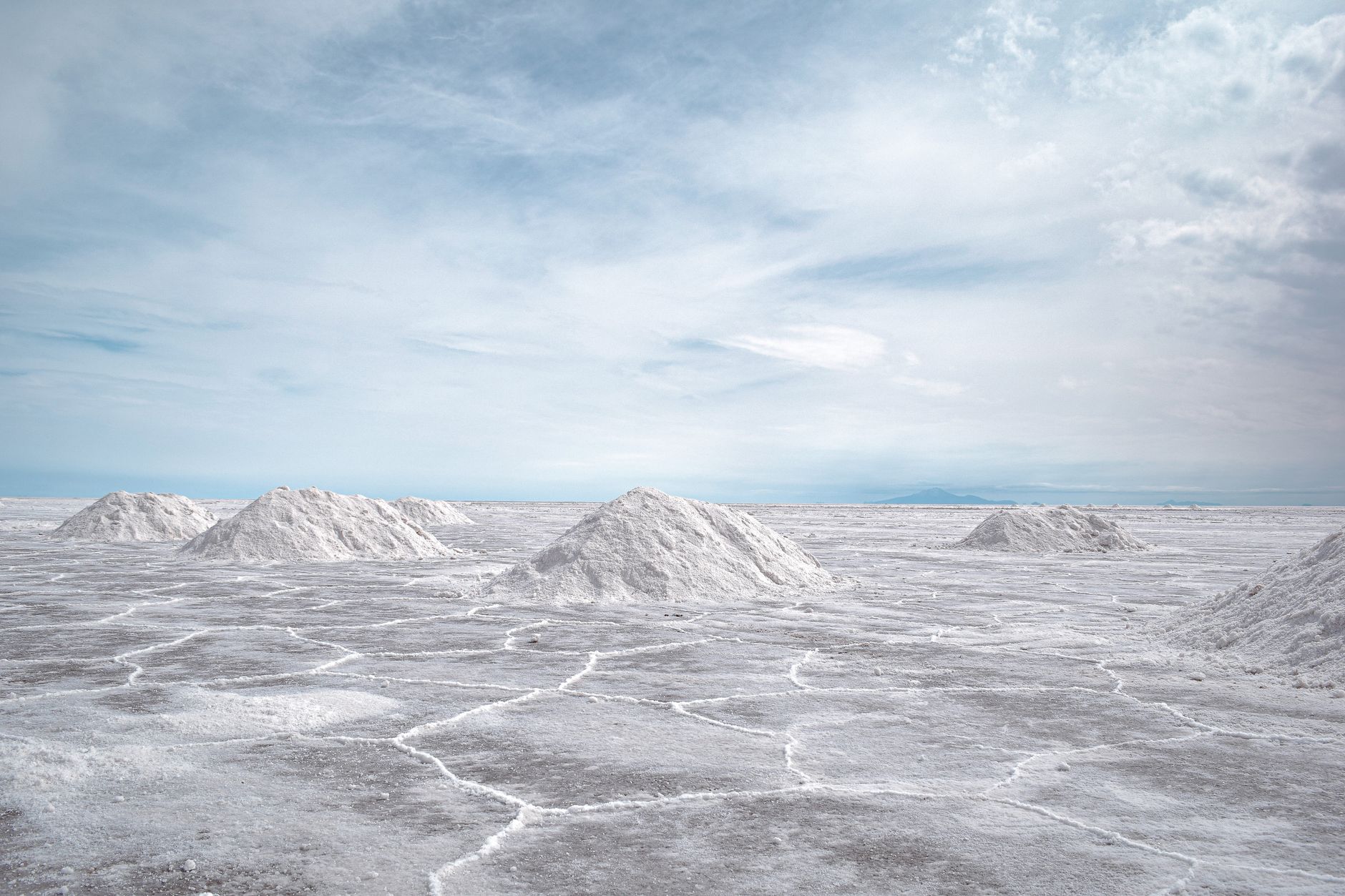
The Salar de Uyuni has long been shorthand for Bolivia itself – the image beamed across travel magazines and Instagram grids, a vast white mirror stretching toward the horizon with nothing between you and the sky. At roughly 10,000 square kilometers, it is the largest salt flat on Earth, and its reputation has been built almost entirely on that blinding, surreal expanse. But a growing number of travelers who make the trip to the Potosi Department are discovering that the salar is less a destination and more a doorway.
What lies beyond the salt – the volcanic peaks, the colored lagoons, the desert wildlife, the ancient mining towns – has been quietly drawing visitors away from the flats themselves and into a wider, more complicated Bolivia. The itineraries are changing. The stay is getting longer. And the conversation around this corner of the Andes is shifting from a single photograph to something far harder to capture.
The Eduardo Avaroa Circuit
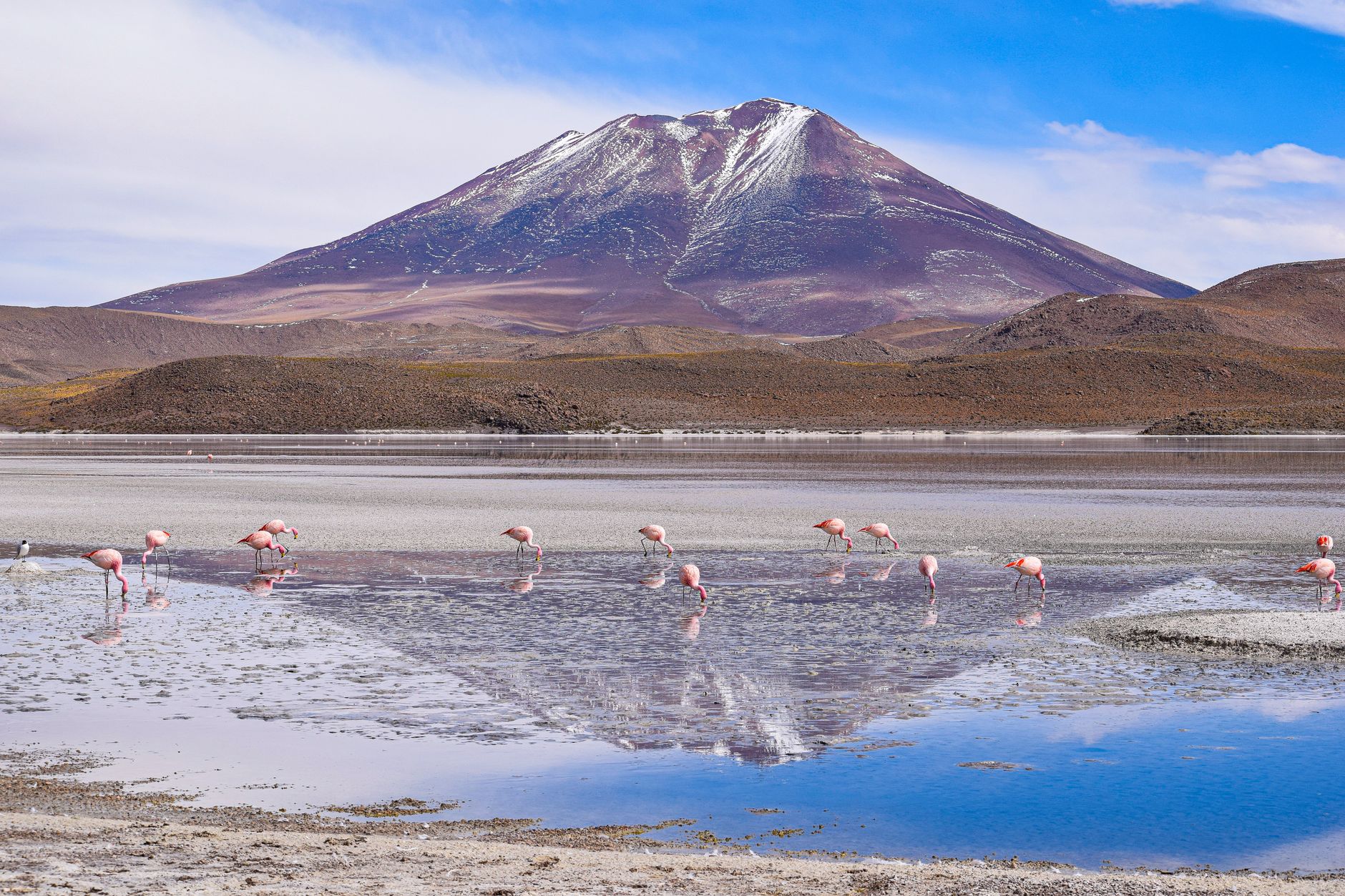
South of the salar, the Reserva Nacional de Fauna Andina Eduardo Avaroa protects one of the most dramatic landscapes in South America. Travelers who cross into the reserve encounter a sequence of environments that feel almost deliberately theatrical: the rust-red waters of Laguna Colorada, stained by algae and teeming with flamingos at altitude; the sulfurous geysers of Sol de Manana, active at dawn and best approached before the wind picks up; and the turquoise shock of Laguna Verde at the Chilean border, framed by the near-perfect cone of Volcan Licancabur. These are not minor supporting attractions. They are, for a growing number of visitors, the actual reason for the trip.
The circuit through the reserve takes three days by jeep, typically departing from Uyuni or the border town of San Pedro de Atacama on the Chilean side. It is not a comfortable journey – the roads are unpaved, the altitude hovers between 4,000 and 5,000 meters, and temperatures at night can drop sharply even in the dry season. Most travelers do it in organized group tours, sharing a 4×4 with strangers and sleeping in basic lodge accommodation with intermittent heating. The physical challenge is, for many, part of the draw.
What makes the Avaroa circuit distinct from other high-altitude Andean routes is the concentration of visual contrast within a relatively compact area. In a single day of driving, the landscape shifts from salt to desert to volcanic rock to lagoon, with the light changing every hour as clouds move across the altiplano. Photographers and serious hikers have known about this for years. The broader travel market is catching up slowly, partly because Bolivia’s infrastructure has not kept pace with interest, and partly because the country’s political volatility has historically made trip planning feel uncertain. Neither factor has gone away.
Potosi and the Weight of History
A few hours north of Uyuni by road, the city of Potosi sits at over 4,000 meters and carries a history that no amount of scenic beauty can quite overshadow. During the Spanish colonial era, the Cerro Rico – the mountain that looms over the city – was the richest silver mine in the world, and the wealth it produced funded the Spanish Empire while killing an estimated eight million indigenous and enslaved African workers over two centuries. That figure is not contested. Potosi’s colonial architecture, its baroque churches, and its UNESCO World Heritage status all exist in direct tension with what the mountain cost.
Tours of the Cerro Rico mines are still operating today, run by mining cooperatives whose members work in conditions that have changed far less than a UNESCO designation might suggest. Travelers can enter the tunnels, purchase gifts for the miners at the market outside – dynamite sticks and coca leaves are the conventional offerings – and witness an industry that Bolivia has never quite been able to leave behind. It is not a comfortable tourism experience by design. Whether that kind of encounter is appropriate for casual visitors is a question the travel industry has not resolved cleanly, and individual operators handle it with varying degrees of context and care.
Uyuni Town and the Logistics Reality
The town of Uyuni itself is small, functional, and not particularly charming by Andean standards. It exists primarily as a staging point – a place to arrange tours, eat a meal, sleep before an early start. The main street runs through a grid of hostels, tour agencies, and restaurants serving a rotating menu of quinoa soup and llama steak. Salt hotel accommodations on the edge of the flats offer a more theatrical option, though the novelty of sleeping on salt blocks tends to wear off faster than the marketing suggests.
What Uyuni does well is logistics. More agencies operate here than in comparable Bolivian towns, prices are competitive and easy to compare, and the departure points for both the salt flat tours and the Avaroa circuit are well-organized relative to the surrounding infrastructure. Travelers arriving by overnight train from Oruro or by bus from La Paz generally find the town easier to navigate than expected. The bus connections northward to Sucre – Bolivia’s constitutional capital and one of the better-preserved colonial cities in South America – have improved enough that combining the two destinations in a single itinerary is now practical without excessive backtracking.
Sucre adds a dimension to the Bolivia trip that Uyuni cannot provide on its own. The whitewashed city at a more manageable altitude of around 2,800 meters offers a slower pace, a functioning food scene, and access to the Cretaceous-era dinosaur footprints at Cal Orcko – a site that remains genuinely undervisited given how extraordinary it is. A wall of compressed rock covered in hundreds of dinosaur tracks, preserved at an angle that makes them visible from a viewing platform across the quarry. It sounds like something invented for a theme park. It is not.
The Sucre connection matters because it illustrates how Bolivia rewards travelers who resist the urge to treat the salar as the entire itinerary. The country has a habit of placing its strangest and most affecting experiences at awkward logistical distances from each other, which has historically discouraged the kind of efficient multi-stop travel that works well in, say, Peru or Chile. Bolivia operates on its own schedule, and the infrastructure – roads, buses, accommodation standards – reflects decades of limited investment in tourism. For travelers accustomed to smoother systems, that friction is a genuine obstacle. For others, it is precisely what keeps the place from feeling overrun.
Visitor numbers to the Salar de Uyuni have grown steadily over the past decade, with a particular spike in the wet season between December and April when a thin layer of water turns the flats into the famous mirror effect. During those months, the most photogenic corners of the salt flat can feel congested in a way that the surrounding altiplano never does. The tension between the iconic image and the actual experience of getting it – surrounded by dozens of other travelers doing the same jump shot – is not unique to Bolivia, but it is sharper here because the draw is so specifically visual. The question worth asking before booking is whether the photograph or the place itself is what you are actually after. Bolivia, without much effort, will make that distinction for you.
Frequently Asked Questions
What is the best time to visit the Salar de Uyuni?
The wet season (December to April) creates the famous mirror effect, while the dry season (May to October) offers clearer skies and easier road conditions for the Avaroa circuit.
How do travelers get to Uyuni from La Paz?
Overnight buses and a scenic train from Oruro are the main options. The train route via Oruro is slower but more comfortable and offers views of the altiplano.
Is the Eduardo Avaroa Reserve worth visiting beyond the salt flats?
Yes – the reserve contains colored lagoons, active geysers, and flamingo colonies at high altitude, and many travelers consider it the highlight of the entire Bolivia trip.