
The Pans Nobody Talks About
Chobe National Park gets the headlines, the luxury lodges, and the lion-sighting stories. But a few hours south, the Makgadikgadi Pans are doing something quieter, stranger, and in certain seasons, far more visually arresting – drawing flamingo wanderers who have tired of safari circuits built entirely around the Big Five.
A Landscape That Defies Easy Description
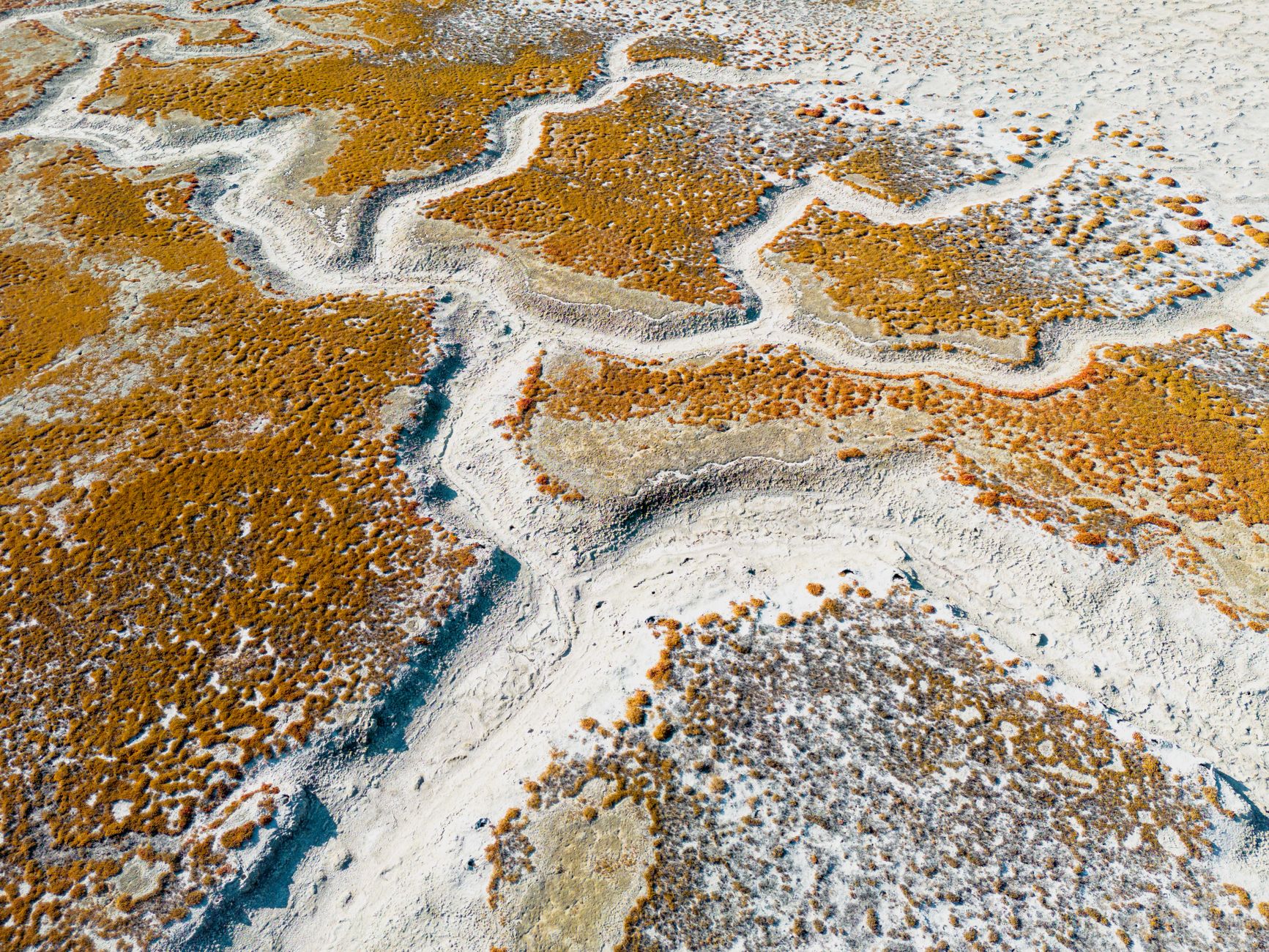
The Makgadikgadi is what remains of one of Africa’s largest ancient lakes, a vast salt flat complex in northeastern Botswana covering roughly 12,000 square kilometers. For most of the year, it reads as desolation – bleached white pans stretching to every horizon, the kind of silence that makes first-time visitors uncomfortable. The ground cracks underfoot. Heat distortion turns distant treelines into floating mirages. There is, objectively, very little happening. That absence is, for a specific type of traveler, the entire point.
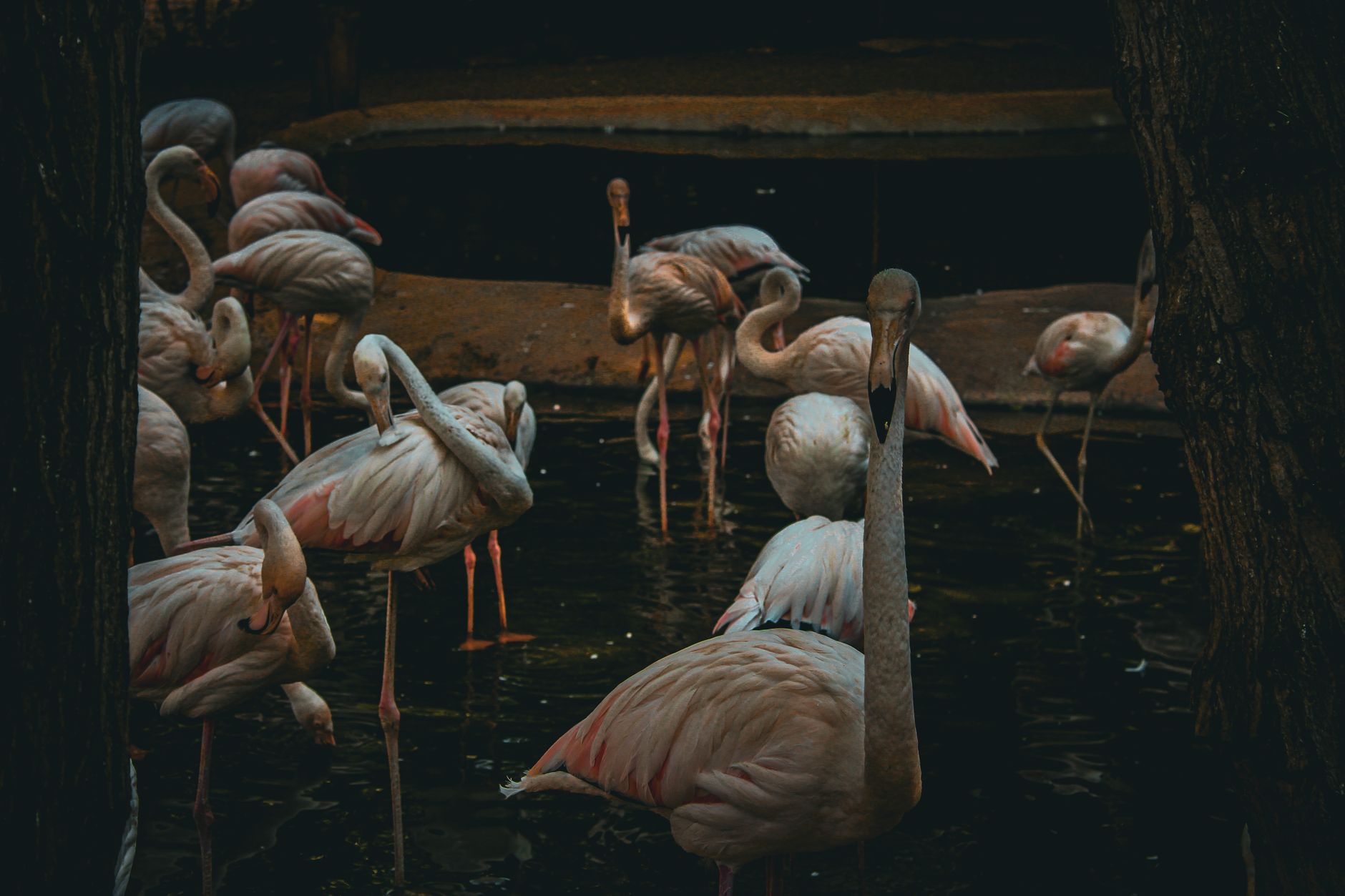
The equation shifts dramatically between November and March, when seasonal rains flood the pans and trigger one of southern Africa’s most spectacular natural events. Lesser flamingos and greater flamingos arrive in enormous concentrations, drawn to the shallow, mineral-rich water where algae and brine shrimp bloom quickly after flooding. The birds arrive in waves rather than a single sudden appearance, so the spectacle builds gradually over several weeks. At peak density, the pink mass extends so far across the water that the boundary between flock and reflection becomes impossible to identify from shore.
Nata, a small town on the northern edge of the pans, serves as the practical entry point for flamingo watchers. The Nata Sanctuary, a community-managed reserve established specifically to protect the flamingo aggregation site, sits at the confluence of the Nata River and the pan’s edge. The sanctuary is not a luxury destination. It offers basic facilities, community-run campsites, and birding hides positioned along the waterline. What it provides in exchange is direct, unhurried access to flamingo concentrations that at peak season can reach into the tens of thousands of birds.
What makes the Makgadikgadi flamingo experience different from the curated wildlife encounters at Chobe is structural. Chobe’s infrastructure is built around high-volume safari tourism, with boat cruises, game drives, and lodge transfers all operating on tight scheduling. The Makgadikgadi demands a different posture – slower, more patient, more tolerant of uncertainty. The flamingos do not perform on schedule. They arrive when conditions suit them, concentrate where the food is richest, and move unpredictably between sections of the pan. Visitors who build in extra days almost always see more than those working from a fixed itinerary.
Reading the Season and the Water
Timing a Makgadikgadi trip around flamingos requires understanding how erratic the rainy season can be across this region. Rainfall in the Kalahari basin varies considerably from year to year, and the depth and extent of pan flooding directly determines whether flamingos arrive in modest numbers or overwhelming ones. A low-rainfall year produces shallow, patchy water that may not sustain the algae bloom the birds depend on. In those years, flamingos may bypass the Makgadikgadi entirely and concentrate instead at other seasonal wetlands further north or in neighboring Zimbabwe. No guide, lodge operator, or local contact can guarantee a specific arrival date or flock size – the birds are making calculations that have nothing to do with visitor calendars.
The practical implication is that travelers serious about flamingos should build their trips around a window rather than a fixed date. Arriving in late November and staying through late December covers the period when flooding is typically deepest and flamingo activity most concentrated. January and February can be equally productive in strong rainfall years but carry higher uncertainty later in the season. March tends to mark the beginning of water recession, which sometimes intensifies flamingo concentration as the birds crowd shrinking habitat – a counterintuitive but reliable late-season opportunity.
The dry season, running roughly from May through October, presents a completely different version of the Makgadikgadi. The pans are completely desiccated, flamingos are absent, and the wildlife story shifts to the meerkats, brown hyenas, and large zebra and wildebeest migrations that cross the area between the pans and the Boteti River. Some operators run quad bike excursions across the hardened salt surface during this period. It is a genuinely arresting experience – moving across a white expanse under open sky – but it has nothing to do with flamingos and should not be confused with the wet-season visit.
Accommodation options around the pans range from the community campsites at Nata Sanctuary to more established camps positioned along the Boteti River on the western pan boundary. The Boteti camps offer better general facilities and proximity to dry-season wildlife, but they sit further from the primary flamingo aggregation sites near Nata. Travelers specifically targeting flamingos should prioritize the northern edge of the pan and accept that comfort levels will be lower than at Chobe’s well-developed lodge corridor.
Getting there without a self-drive 4×4 requires working through a Botswana-based tour operator, and the number of operators who specialize in Makgadikgadi versus running it as a one-night add-on to a broader Chobe or Okavango itinerary is notably smaller. That operational friction is, ironically, part of why the area remains relatively uncrowded even during peak flamingo season. It requires more logistical effort than booking a river cruise out of Kasane, and most package-tour travelers never make the calculation.
What Flamingo Wanderers Actually Find
Travelers who do make the calculation tend to describe the Makgadikgadi flamingo gathering in terms that resist the standard wildlife superlative vocabulary. The scale is not immediately legible the way a large elephant herd is – flamingos in mass aggregation read more like a weather event than a wildlife sighting, a pink-and-white density that covers the water’s surface and fills the air with a constant, strange mechanical calling. The sound carries further than the visual spectacle in low light, which means early-morning visits often begin with the flock announcing itself before it becomes visible.
Bolivia’s Sajama region draws a similar kind of off-circuit traveler willing to trade comfort for access to landscapes that haven’t been fully processed into a tourism product yet – and the Sajama flamingo lakes carry that same logic of productive inconvenience. The Makgadikgadi operates on the same principle. The birds don’t care about road conditions, lodge star ratings, or whether the Wi-Fi at the campsite works. They’re there because the chemistry of the water is right. Visitors who show up on those terms – prepared for the logistics, tolerant of the uncertainty – tend to walk away with something that a Chobe boat cruise, however well-executed, simply cannot replicate.