Where the Sahel Meets Stone
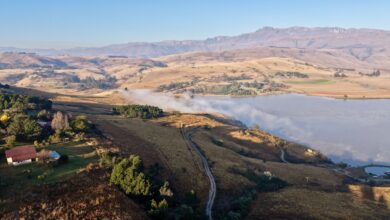
Waza National Park gets the headlines – the elephants, the lions, the guided convoys rolling across flat savanna at golden hour. But Cameroon holds another world entirely, one that sits at roughly 1,400 meters above the northern plains and runs along the country’s border with Nigeria in volcanic ridges and eroded granite spires. The Mandara Mountains are not a secret exactly, but they have never attracted the organized safari crowd that Waza draws each dry season, and that gap in attention is precisely what makes them worth the detour.
The range stretches across the Far North and Adamawa regions, threading through communities of Musgum, Mafa, Gudur, and Podoko peoples whose agricultural terracing and fortified hilltop villages predate modern tourism infrastructure by centuries. Travelers who do arrive tend to arrive on purpose, which is the kind of filtering that keeps a destination honest.
Getting There Without a Tour Operator Holding Your Hand
The gateway town is Maroua, which has a functioning airport with domestic connections from Yaounde and Douala. From Maroua, bush taxis and minibuses run northeast toward Mora and the foothills around Rhumsiki, which is the most visited settlement in the mountain zone and still receives far fewer visitors than comparable highland destinations across the continent. Roads improve in the dry season, roughly November through April, and deteriorate sharply in the wet months when some tracks become impassable without a 4×4. Travelers moving independently should budget extra time and carry water and food for full-day crossings between villages.
Rhumsiki itself sits at the edge of a volcanic landscape that looks, on clear mornings, like something assembled by a film set designer who had never been told to be subtle. Eroded basalt plugs rise from the valley floor in narrow columns, and the village market runs on a rotating weekly schedule that draws traders from across the Nigerian border. The border is porous and the commerce is real – dried fish, millet, woven cloth, and livestock change hands in ways that have very little to do with formal customs arrangements.

What the Musgum Bring to This Landscape
The Musgum people are associated primarily with the lowland floodplains north and east of the Mandara range, particularly around the Logone River, where their famous conical mud-brick homes – called cases obus for their resemblance to artillery shells – have been photographed and documented widely. What receives less attention is the broader Musgum cultural zone that extends into and around the mountain foothills, where seasonal migration, fishing cycles, and trade relationships have created a centuries-old pattern of movement between the lowlands and highland markets.
Traveling through the Mandara region with any curiosity about Musgum material culture means following that seasonal logic rather than a fixed itinerary. The pottery traditions that appear in highland villages connect directly to lowland Musgum techniques. The architecture shifts as elevation changes, but the underlying principles of mud construction – the way walls are built in successive rings, the way surface texturing both decorates and structurally reinforces – carry through from the famous conical houses of the floodplain to the more rectangular compounds of the mountain slopes.
This is one of those places where the distinction between “cultural tourism” and simply paying attention collapses. A visitor wandering between the weekly markets of Mora, Meri, and Tourou is not attending a curated cultural experience. They are moving through a functioning system that existed long before the phrase “cultural tourism” was coined, and the experience is richer for it. Local guides based in Maroua can provide context that no guidebook has adequately captured, partly because the social geography shifts seasonally and partly because printed guides tend to freeze living cultures into static descriptions.
The highland Mafa villages offer a contrasting reference point. Mafa communities built their terraced fields and fortified compounds as a deliberate defense against lowland slave raids, and that history is physically legible in the architecture – narrow passages, hidden granaries, compounds designed to be defensible from inside. Walking through a Mafa village with a knowledgeable local guide turns an afternoon into something closer to reading a layered historical text.
The Practical Reality of Accommodation
Maroua has a reasonable range of guesthouses and mid-range hotels, some with reliable electricity and air conditioning that matters considerably when temperatures in the far north exceed 40 degrees Celsius in April. The town’s central market quarter has several smaller auberges that cost a fraction of the larger hotels and put travelers within walking distance of transport hubs. Beyond Maroua, accommodation options thin out sharply. Rhumsiki has a handful of simple guesthouses, some run by local families, where meals are negotiated directly and hot water is not guaranteed.
Camping is possible but requires coordination with local authorities in some areas, particularly near border zones where military checkpoints operate. Travelers who have navigated highland Africa before – Ethiopia’s Simien Mountains, or the kind of off-grid movement familiar to steppes wanderers – will find the logistical rhythm familiar even if the specific landscape is new. The key is flexibility on timing and a tolerance for itineraries that change based on weather, market days, and what the person you meet at breakfast suggests.

Why This Competes Differently Than Waza
Waza offers a specific and well-understood product: large mammals, open savanna, professional guide infrastructure, and the satisfaction of checking a named wildlife destination off a list. The Mandara Mountains offer something harder to package – an immersive encounter with a living landscape where the wildlife is not the point and the people are not a backdrop. Birds are abundant, including species associated with the Sahel-Sudan transition zone, and the hiking between villages is genuinely demanding without requiring technical skill.
The comparison to Waza is useful because most travelers planning a northern Cameroon itinerary choose one or the other rather than building in time for both. The smarter move, for anyone with ten days or more, is to treat them as complementary rather than competing – a few days in Waza’s open plains followed by a move into the mountains. The contrast sharpens both experiences.
What keeps the Mandara Mountains genuinely undervisited is not any single barrier but a combination of factors: limited promotion, the political complexity of the far north (security conditions should be checked against current government advisories before travel), and the absence of a marquee attraction that can be summarized in a single sentence. A landscape that requires explanation to appreciate will always trail behind one that sells itself. That gap is unlikely to close quickly, which means anyone willing to do the homework gets something increasingly rare – a highland region that has not yet learned to perform for cameras.