
Stone Arches and Silence: Why the Ennedi Is Different
Most travelers who dream of the Sahara picture endless golden dunes, camel caravans, and Lawrence of Arabia sunsets. The Ennedi Plateau in northeastern Chad offers none of that. What it offers instead is harder to categorize – towering sandstone arches wider than football fields, narrow corridors of rock carved by ancient rivers that no longer exist, and cave walls covered in prehistoric paintings of cattle, horses, and human figures from a time when this desert was green. For a certain kind of traveler, that is worth crossing three time zones and a complicated visa process to see.
The Ennedi Massif spans roughly 60,000 square kilometers in the Sahara Desert’s eastern reaches, and it was designated a UNESCO World Heritage site in 2016. Despite that recognition, it remains dramatically undervisited – not because the experience is underwhelming, but because getting there requires genuine logistical commitment. That friction, paradoxically, is a large part of what preserves it.
What You Are Actually Looking At
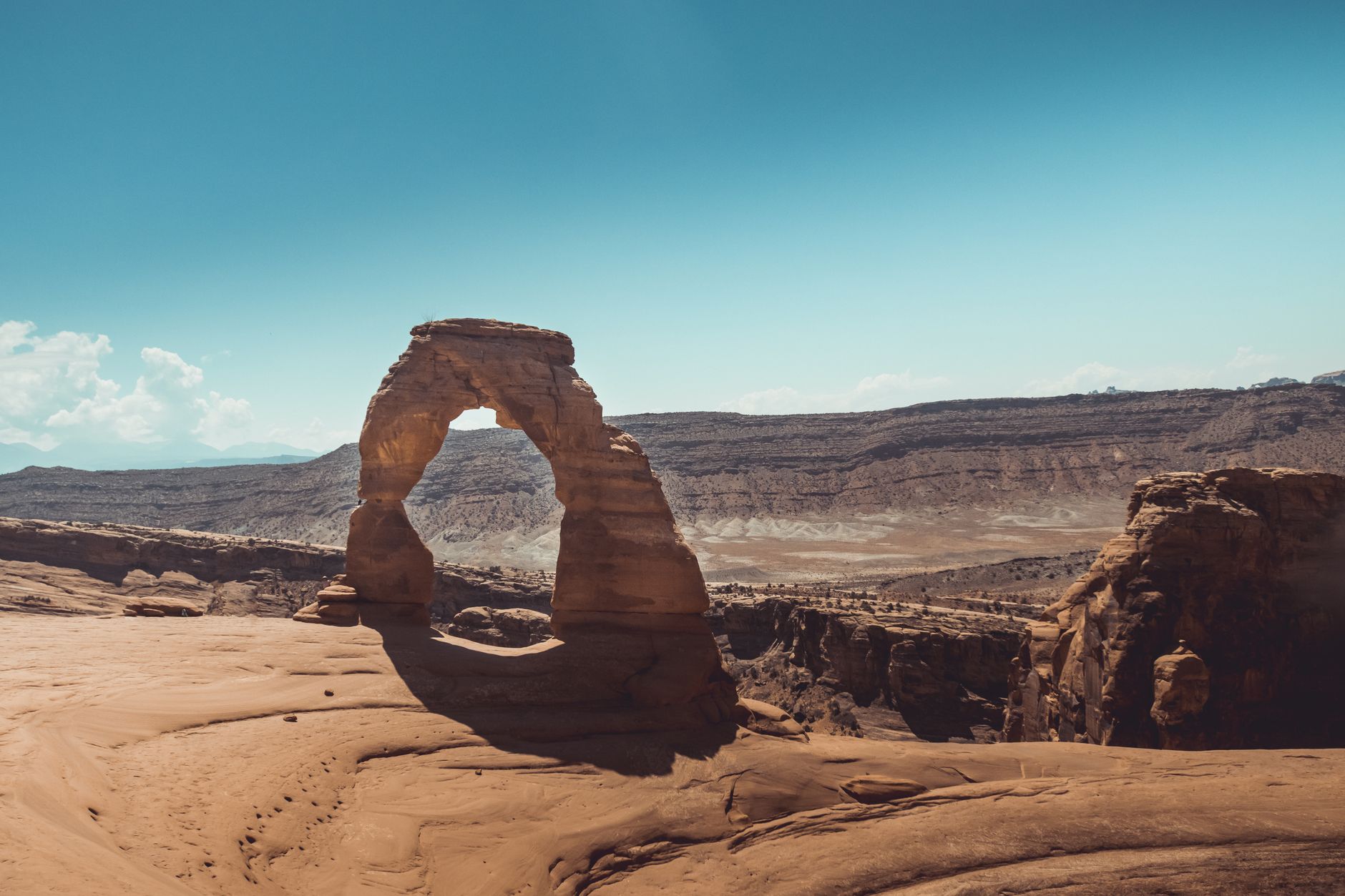
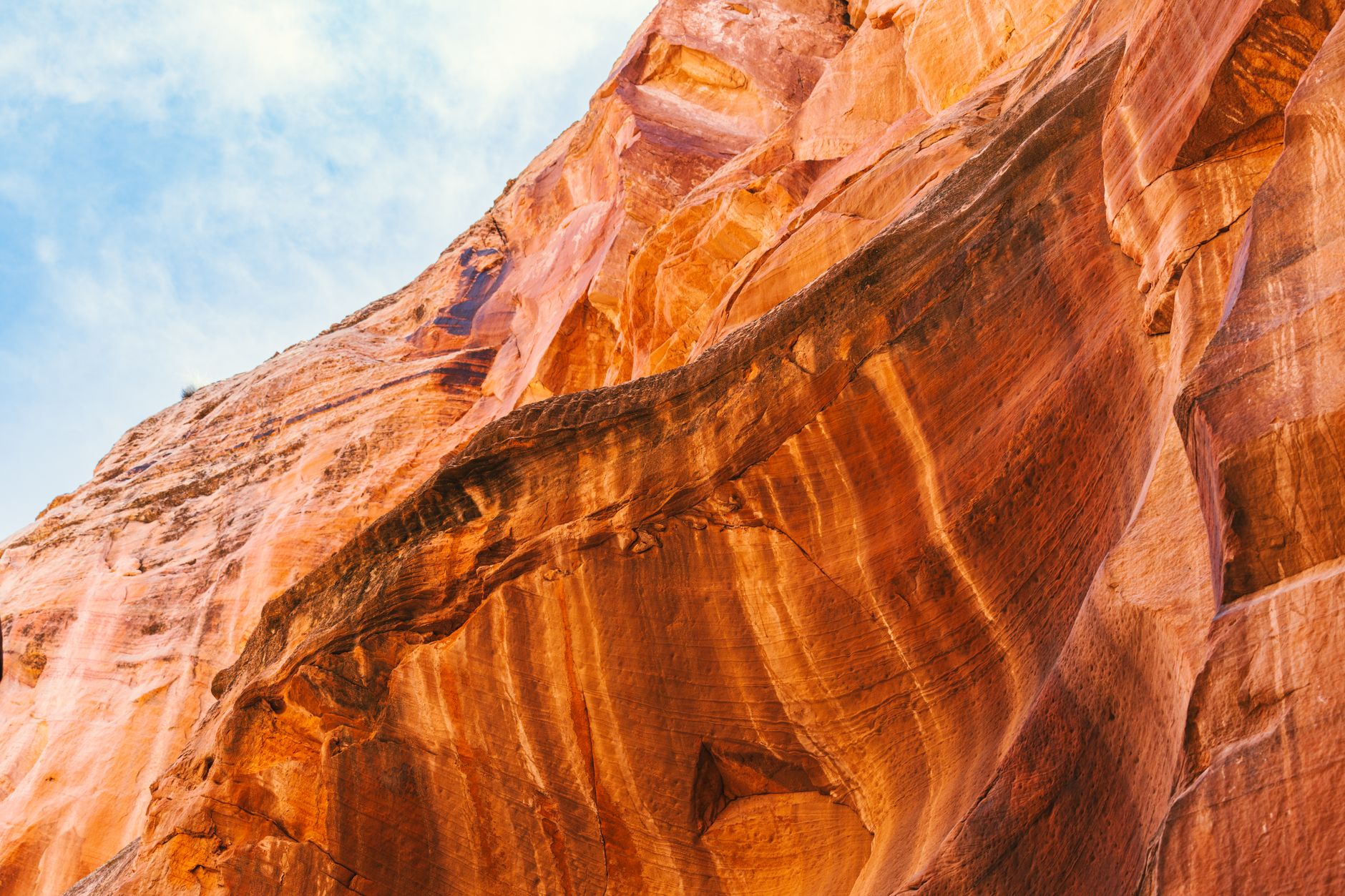
The plateau’s geology tells a story that is almost incomprehensible in scale. Over millions of years, wind and water carved the Ennedi’s Nubian sandstone into formations that look borrowed from another planet: natural bridges, mushroom-shaped hoodoos, slot canyons bathed in amber light, and free-standing rock towers that cast long shadows by late afternoon. The most photographed structure in the region is the Aloba Arch, widely considered one of the largest natural arches on earth. Standing beneath it produces the specific vertigo that comes from realizing the scale of geologic time against a human lifetime.
Beyond the geology, the Ennedi holds something rarer – water. The Guelta d’Archei is a permanent water source deep within the massif, fed by underground springs that have sustained life here for thousands of years. It is home to a small population of Nile crocodiles, descendants of a much larger prehistoric population that once thrived across a wetter Sahara. The crocodiles are not a recent discovery, but they continue to astonish visitors who expect the desert to be purely hostile to life. Camel caravans still pass through the guelta regularly, a detail that feels taken from a different century.
The rock art scattered across the plateau’s caves and overhangs dates from as far back as 7,000 years ago, through the Neolithic Pastoral period when the Sahara supported significant wildlife and human populations. Images of giraffes, elephants, and crocodiles appear alongside hunting scenes and ritual figures – evidence of an ecosystem now entirely gone. Some panels are crowded with overlapping images added across thousands of years, turning cave walls into accidental archives. No entrance fee, no interpretive signage, no glass barrier. You walk up and stand in front of them.
A growing number of adventure travel operators now include Ennedi circuits in their Saharan itineraries, typically routing through N’Djamena with onward domestic connections or overland legs to Fada, the nearest town of any size to the plateau. The journey from Fada into the massif itself is done by 4×4, often across terrain with no road markings at all. Local Toubou guides are not optional – they are essential, both for navigation and for the kind of site knowledge that no GPS coordinate can replace.
The Logistics Are Genuinely Challenging
Chad ranks among the more demanding destinations for independent travel, and the Ennedi is not a region where improvisation works well. Most visitors arrive through specialist operators based in Europe or North Africa who handle the required government permits, guide arrangements, and supply logistics. Traveling with a vetted operator is not a concession to comfort – it is simply how access works in practice for foreign nationals.
The best window for visiting falls between November and February, when daytime temperatures are tolerable and the light at golden hour is extraordinary. Outside that window, heat becomes genuinely dangerous in the interior. Nights are cold year-round at plateau elevation, which catches some visitors off guard. Packing for 40-degree swings between afternoon and pre-dawn requires more thought than a typical desert trip.
Who Actually Goes There
The Ennedi draws a specific traveler profile: people who have already done Petra, Wadi Rum, and the Algerian Tassili n’Ajjer, and are looking for something with fewer other tourists in the frame. Landscape photographers make up a notable portion of visitors, drawn by the quality of light inside slot canyons and the sheer compositional drama of the arches. Some travel specifically to document the rock art before erosion and climate pressure alter or destroy it – a real concern given that the paintings have survived thousands of years but face accelerating environmental stress.
There is also a growing thread of travelers who approach these remote destinations as a form of active preservation – the presence of responsible tourism creating economic incentive for local communities to protect sites from extractive pressures. The Toubou communities of the Ennedi region have lived alongside these formations for centuries, and their continued role as guides and custodians is not incidental to the experience. It is, in many ways, the experience.
Budget expectations should be set accordingly. A properly organized Ennedi expedition through a reputable operator typically runs well above what comparable desert destinations in Morocco or Egypt would cost, reflecting the genuine remoteness, fuel costs, and permit requirements involved. That price barrier is another form of filtering. The travelers who arrive are rarely the ones who treat the site as a backdrop for content, because the effort required tends to attract people motivated by something more than a photograph.
The Broader Case for the Overlooked Sahara
The Sahara is not one place. It is a continent-sized collection of distinct landscapes, cultures, and geologies that rarely get treated with that complexity in travel media. The Ennedi represents a corner of it that most people who consider themselves well-traveled have never heard of, which is either a failure of travel media or the best possible recommendation, depending on your outlook.
What remains genuinely open is whether the Ennedi can absorb more attention without changing what makes it valuable. UNESCO designation usually precedes a surge in visitor interest, however gradual, and the infrastructure required to scale up access would inevitably alter the atmosphere that makes the plateau feel like a private discovery. For now, the limiting factor is not awareness – it is the willingness to accept real inconvenience. The moment that inconvenience disappears, so does a significant part of what makes standing under the Aloba Arch feel like standing somewhere very few people have ever stood.