Eswatini’s Mkhaya Game Reserve Quietly Rivals Hluhluwe for Rhino Wanderers

The Reserve Most Safari Travelers Have Never Heard Of
Hluhluwe-iMfolozi in KwaZulu-Natal carries a reputation so well-established that for many travelers, it simply is the rhino safari. The name alone moves itineraries. But tucked inside the landlocked kingdom of Eswatini – a country smaller than New Jersey – Mkhaya Game Reserve has been doing something quietly extraordinary for decades: keeping both black and white rhino populations alive, growing, and largely undisturbed by the poaching pressure that has hollowed out reserves across southern Africa.
Mkhaya is not a mass-market destination. It holds only a small number of guests at any given time, limits vehicle access to guided walks and open Land Rover drives, and operates with a conservation-first philosophy that shapes every hour of a visitor’s experience. That deliberate restraint is exactly what makes it so good.
The reserve is run by Big Game Parks, the same nonprofit that manages Hlane Royal National Park and Milwane Wildlife Sanctuary across Eswatini.
What Mkhaya Actually Offers on the Ground
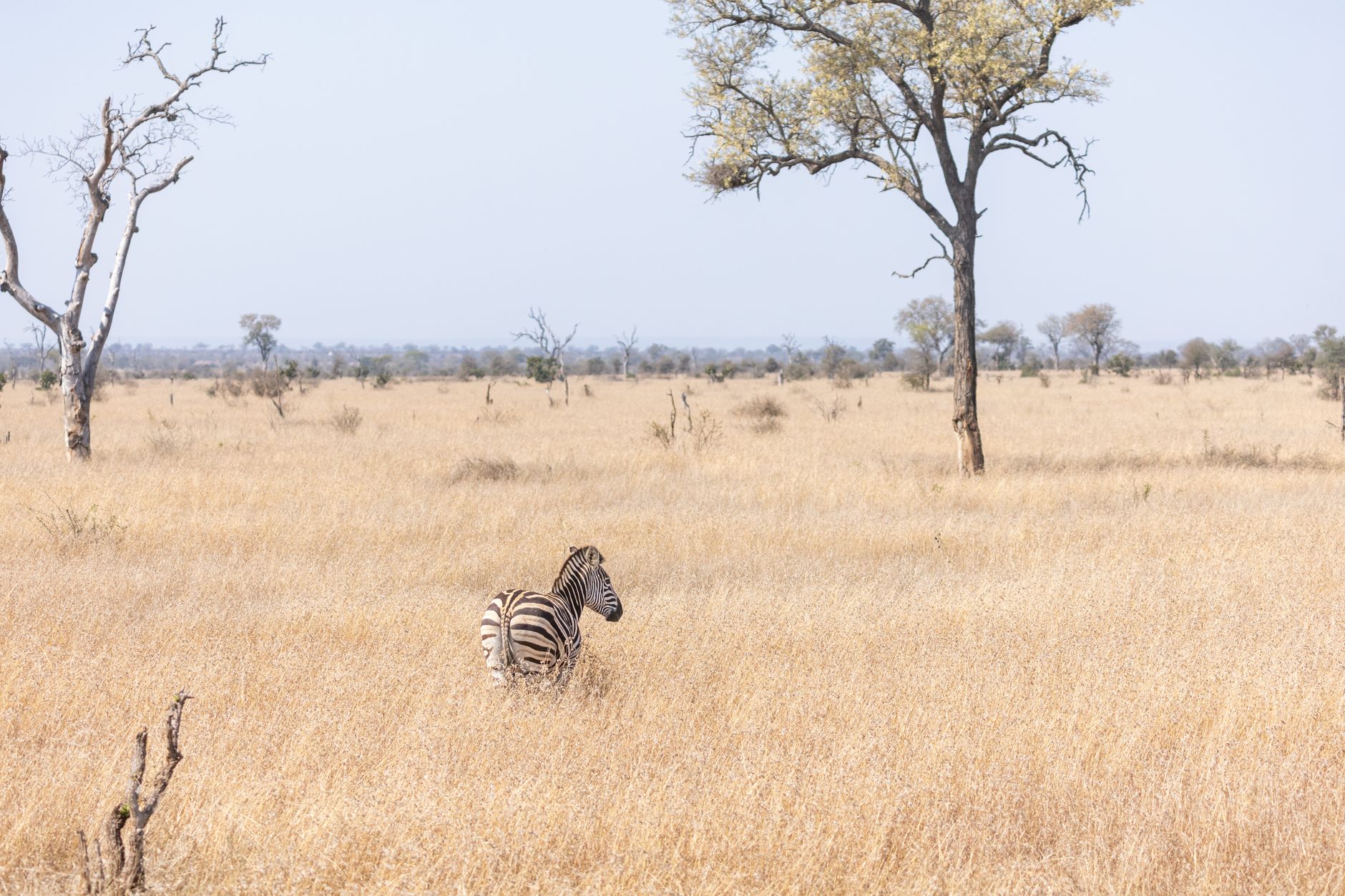
The terrain at Mkhaya is dense acacia thornveld cut through with the Mbuluzi River, which gives the reserve a layered, textured quality that open savanna parks rarely have. Visibility is lower than Hluhluwe’s rolling grasslands, which sounds like a disadvantage until you realize it creates something different entirely – close encounters on foot, unhurried tracking, and the particular tension of moving through thick bush with an armed ranger who actually knows what he’s looking at. The tracking experience here is considered among the most authentic in the region precisely because there is no shortcut to finding animals. You walk, you read the ground, and you wait.
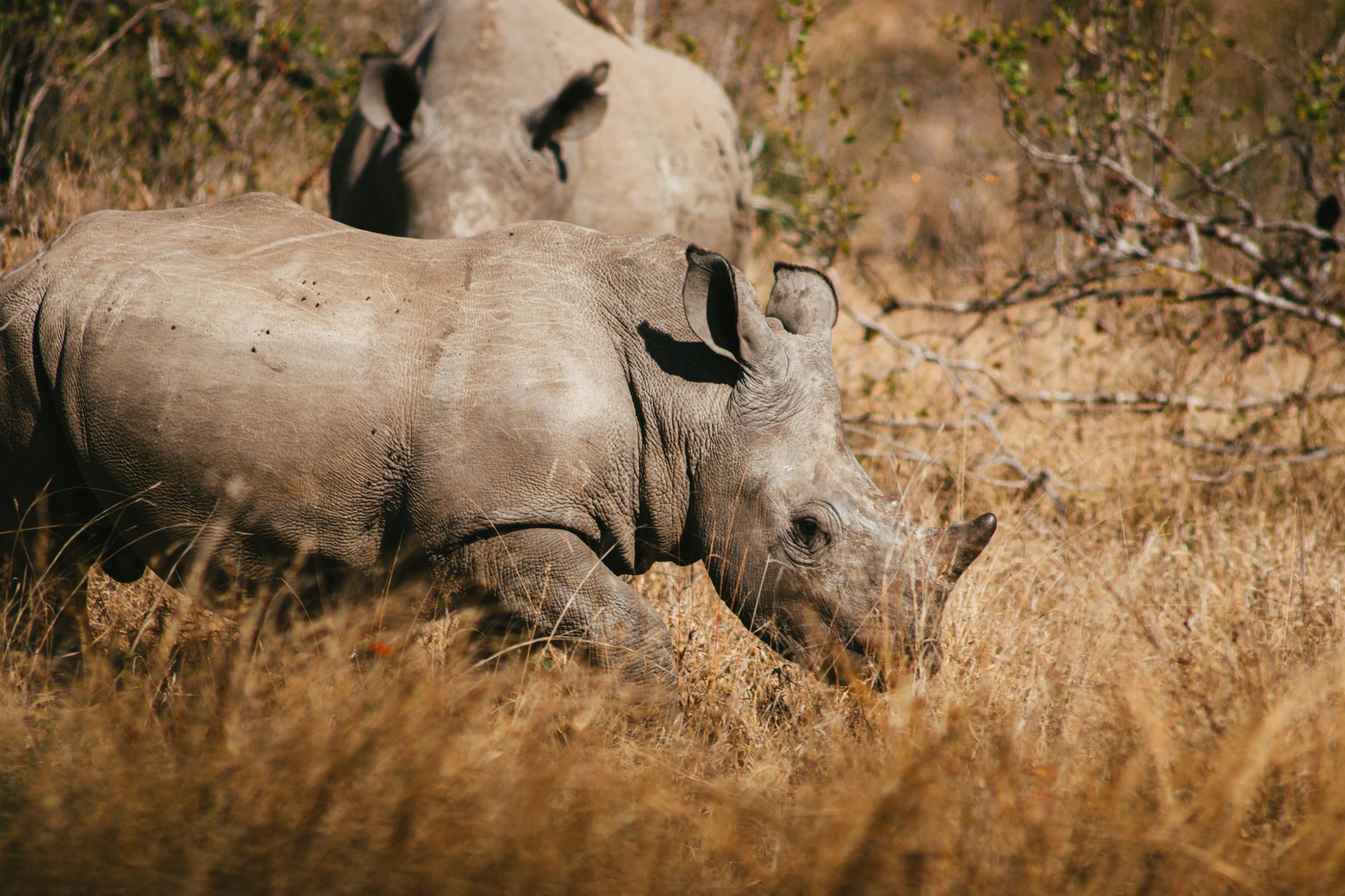
Both black and white rhino roam the reserve in numbers that would surprise visitors who have written off Eswatini as a secondary safari market. The black rhino population especially is noteworthy – this species is notoriously difficult to encounter in the wild due to its solitary habits and preference for dense cover, but Mkhaya’s size and ranger expertise make sightings achievable rather than a matter of pure luck. Elephants, Cape buffalo, sable antelope, and tsessebe round out a wildlife roster that punches well above the reserve’s physical footprint.
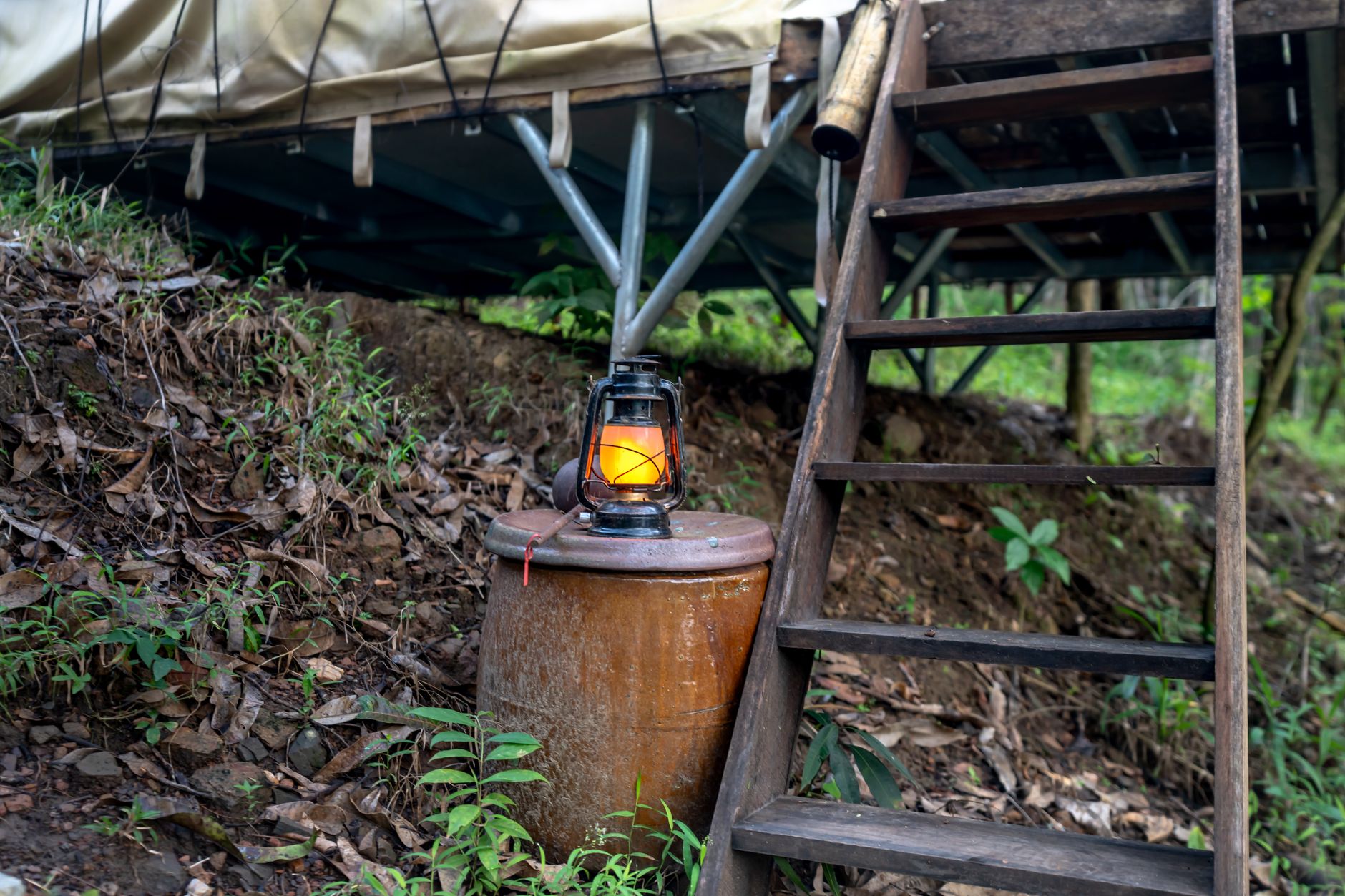
Accommodation is Stone Camp, a small collection of open-sided stone and thatch cottages built directly into a dry riverbed. There is no electricity after a certain hour, no Wi-Fi, and no fence between the camp perimeter and the surrounding bush. Animals move through. That is not a selling point buried in fine print – it is the stated reality of staying there, and it produces a quality of alertness that no five-star lodge with a spa can replicate.
Why Mkhaya Competes Where Hluhluwe Struggles
Hluhluwe-iMfolozi deserves its reputation. It is the oldest proclaimed nature reserve in Africa, it played a central role in saving the southern white rhino from extinction in the 20th century, and its scale allows for self-drive access that opens the experience to a broader range of travelers. None of that is under dispute. But scale and accessibility come with costs. Hluhluwe now absorbs significant tourist volume, and that pressure – combined with South Africa’s chronic poaching crisis – creates a very different atmosphere from what Mkhaya offers.
Eswatini’s political stability and the relatively contained geography of its reserves have allowed Big Game Parks to maintain tighter anti-poaching perimeters. Mkhaya in particular benefits from a community relationship model built over decades, where surrounding populations have genuine economic stakes in the reserve’s survival. This is not a theoretical benefit – it translates directly into lower incident rates and a population of animals that behaves with less of the skittishness common in heavily poached landscapes. A rhino that has not been persistently hunted moves differently, stops differently, and allows a different kind of observation.
For travelers already exploring southern Africa’s less-charted conservation stories – the kind drawn to places like Mozambique’s Niassa Reserve for what off-grid wildlife corridors can offer – Mkhaya fits naturally into that thinking. It rewards the traveler who prioritizes depth over convenience, and who understands that smaller guest numbers are a feature, not a limitation.
Getting There and Planning the Visit
Eswatini sits between South Africa and Mozambique, making it accessible by road from Johannesburg in roughly four to five hours depending on the border crossing used. The Oshoek-Ngwenya crossing into Mbabane is the most frequently used for visitors coming from Gauteng. Mkhaya itself requires booking through Big Game Parks in advance – the reserve does not accommodate walk-in visitors, and availability at Stone Camp is tight enough that last-minute planning rarely works. Transfers from the reserve gate are arranged through the park, as private vehicles are not permitted inside.
The best season for rhino sightings runs through the dry winter months, roughly May through September, when reduced vegetation opens sight lines and animals concentrate around water sources. This aligns with Eswatini’s cool, dry period, which also makes walking more comfortable than the humid summer months when the thornveld is at its thickest.
Visa requirements for Eswatini are minimal for most passport holders – citizens of many countries including the US, UK, and EU member states enter without a visa for stays under 30 days. The local currency is the lilangeni, which trades at parity with the South African rand, and rand is accepted widely throughout the country.
Mkhaya takes a maximum of around 16 guests at any one time. That number alone explains why the experience is what it is – and also why, once word spreads further, the thing that makes it worth going will become significantly harder to find.