
Loango National Park has long held the spotlight as Gabon’s crown jewel – the place where forest elephants wade into surf and buffalo drift across beach grass at dusk. But roughly 450 kilometers inland, along the equatorial spine of the country, Lopé National Park has been quietly doing something that even Loango cannot match: offering close, habituated encounters with western lowland gorillas inside a landscape where dense rainforest meets ancient savanna.
A Park Built on Deep Time
Lopé sits within a UNESCO World Heritage Site designation it shares with surrounding forests, recognized not just for its wildlife but for the extraordinary concentration of prehistoric rock engravings found along its river corridors. The Ogooué River cuts through the park’s northern edge, and the gallery forests lining its banks have sheltered primate populations for tens of thousands of years. That continuity matters. The gorillas here are not recent arrivals managed by a single conservation program – they are part of a population that has existed in this valley since before any conservation designation existed.
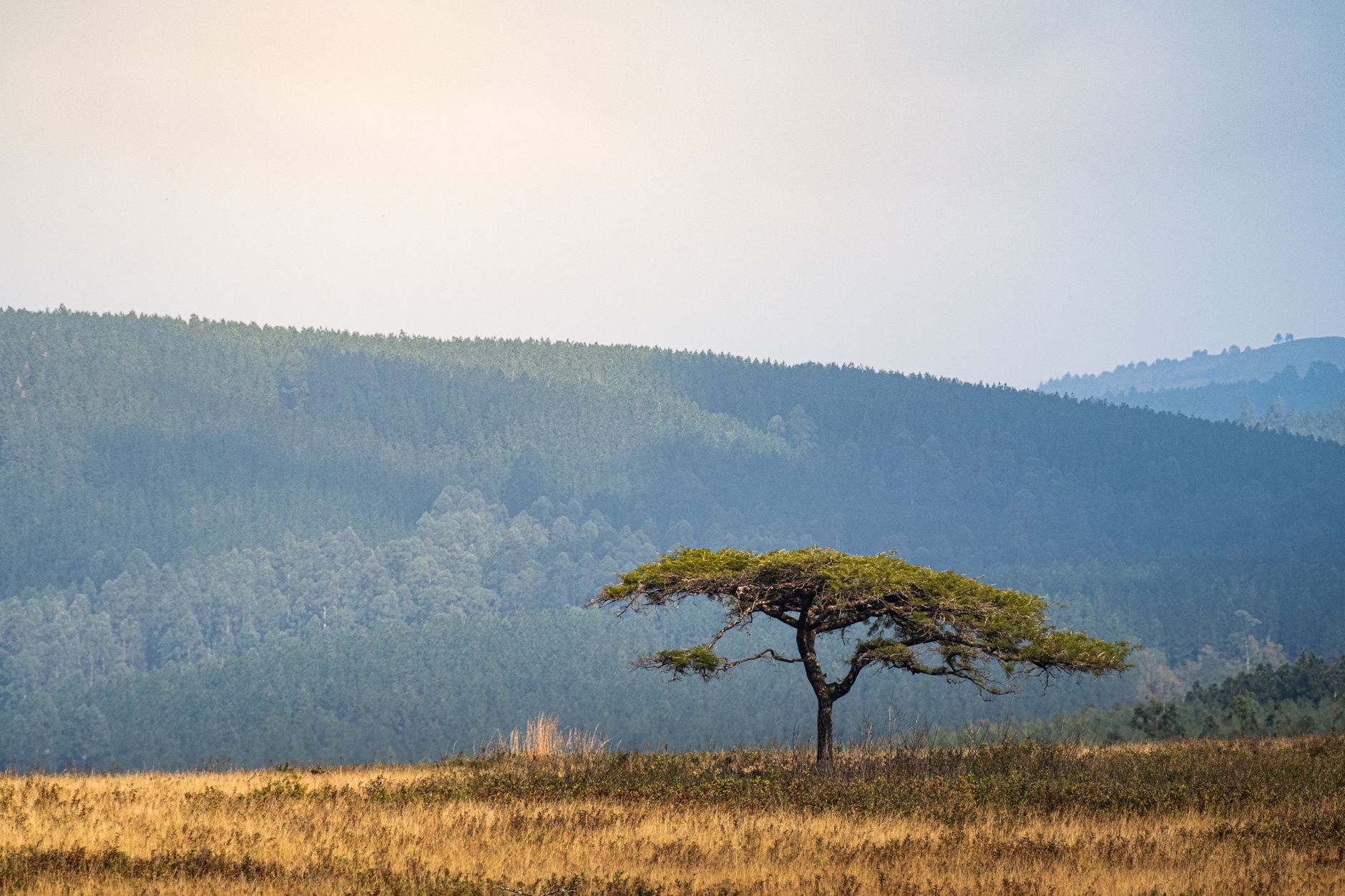
The park covers around 4,970 square kilometers, making it one of the larger protected areas in Central Africa. What sets its terrain apart is the coexistence of two dramatically different ecosystems within the same boundary. The southern portion is dense lowland rainforest, while the north holds open Pleistocene-era savannas – relict grasslands that survived the last major contraction of African forest cover. This means wildlife moves between open and forested habitat depending on season, food availability, and social dynamics, which makes tracking behavior here more varied and unpredictable than in a purely forest-based park.
The Station d’Etudes des Gorilles et Chimpanzés, known as SEGC, has operated within Lopé since the 1980s. It is one of the longest-running great ape research programs in Central Africa, and its work on habituation has produced gorilla groups that can be approached on foot at relatively close range. This is not the fly-in, fly-out model common in East Africa, where brief habituated encounters are tightly rationed. At Lopé, the research station’s presence means the gorillas have been consistently observed over decades, and the quality of those encounters reflects that long relationship.
Getting there requires effort. Most visitors fly into Libreville and connect to the town of Lopé via a train journey on the Transgabonais railway – a route that passes through layered forest and is itself a slow, cinematic way to arrive. The lodge options near the park are limited, which is precisely why the experience has not scaled in the way Loango has. Infrastructure constraints are a genuine barrier, but for travelers willing to plan carefully, that barrier is also the point.
The Gorilla Encounter and What Surrounds It
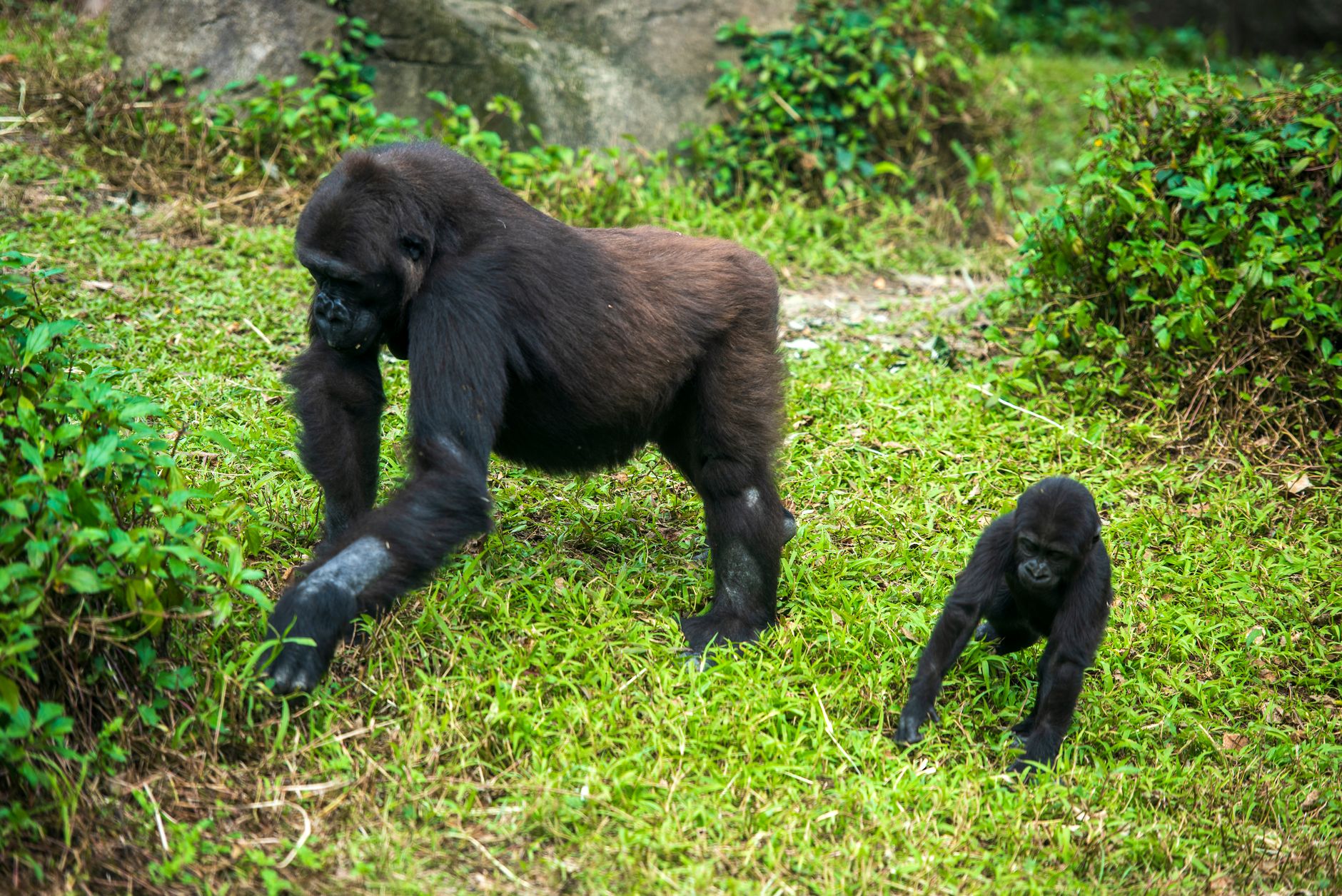
The gorilla groups habituated for visitor access at Lopé are western lowland gorillas, the most numerous gorilla subspecies but among the least observed in wild conditions. Because their rainforest habitat is dense and their natural behavior is to move constantly, most wildlife sightings in Central Africa are brief. At Lopé, decades of SEGC research have produced groups accustomed to human presence, which means the encounters can stretch to an hour or longer – enough time to watch group dynamics, juvenile play, and the particular stillness of a silverback deciding whether your presence is worth acknowledging.
What often goes unmentioned in travel coverage of Lopé is the broader wildlife density. Mandrills – the world’s largest monkey species – gather here in groups that can number in the hundreds, moving through the forest-savanna edge in formations that resemble a kind of organized chaos. Forest buffalo, forest elephants, and sitatunga antelope are regular sightings. The birdlife is extensive, with species that favor both open savanna and closed canopy forest present within the same day’s walk. Lopé does not offer the marine spectacle of Loango – there are no hippos in the surf, no whales offshore – but the interior density of large mammal species is comparable.
The savanna sections of the park are particularly striking in the morning hours, when mist sits low over the grass and the Ogooué catches early light through the trees. Rangers who have worked the park for years describe the experience of watching a gorilla group emerge from the forest edge into the open grassland as genuinely rare – behavior that is more commonly documented here than anywhere else in the species’ range. That forest-to-savanna transition is not just visually distinctive; it offers a window into primate behavior that strictly forested parks simply cannot provide.
Night walks and guided river excursions along the Ogooué add texture to a stay. The river itself is navigable by small motorized canoe, and the gallery forest along its banks holds a different layer of fauna than the upland areas. Crocodiles are present, as are various monitor lizard species and an abundance of aquatic birds. The rock engravings – petroglyphs etched into stone surfaces near the river – are accessible with a guide and represent one of the more unusual cultural dimensions of any wildlife park in the region. Seeing geometric human-made marks carved into rock faces within a few kilometers of active gorilla habitat creates a dissonance that is hard to process in any simple way.
Seasonality matters at Lopé in ways that differ from Loango. The short dry season, running roughly June through August, is generally considered the better period for savanna access and clear sightings on open ground. The long dry season from December through February brings a different character – lower river levels, denser concentrations of wildlife around water sources, and a heat that is dry rather than humid. Neither window is obviously superior; they offer different versions of the park. Travelers who have visited both report that the long dry season’s intimacy around water sources produces some of the more memorable wildlife sequences.
Why This Matters Now
Gabon has been expanding its network of protected areas steadily, and interest in its national parks has grown alongside broader attention to Central African conservation. Loango captures most of that interest because its coastal drama photographs well and its logistics have improved enough to support a modest but consistent tourism flow. Lopé receives a fraction of that attention despite holding equivalent – and in some respects superior – wildlife credentials. The gorilla habituation program alone would justify the journey for anyone serious about great ape encounters, and the landscape’s geological and ecological layering gives it a complexity that rewards multiple days rather than a single-day safari.
The lodge capacity near Lopé remains small, which caps annual visitor numbers in a way that the park’s managers have not aggressively tried to change. Whether that changes as Gabon develops its eco-tourism infrastructure more broadly is an open question – and the answer will determine whether Lopé stays the kind of place where you spend two hours watching a silverback in undisturbed grassland, or becomes something closer to a scheduled experience.