Kyrgyzstan’s Kyzyl-Oi Village Quietly Rivals Karakol for Soviet Wanderers

A Soviet Time Capsule Hidden in the Kara-Köl River Valley
Karakol gets all the credit. The eastern Kyrgyz city near Issyk-Kul draws trekkers heading into the Tian Shan, history tourists tracing Soviet-era architecture, and outdoor adventurers looking for a base camp with functioning guesthouses and wifi. But about 250 kilometers to the west, tucked into a steep river gorge in the Jumgal District, a small village called Kyzyl-Oi has been doing something that Karakol stopped doing decades ago: staying still. And for a certain kind of traveler, stillness is the whole point.
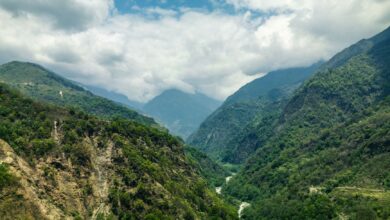
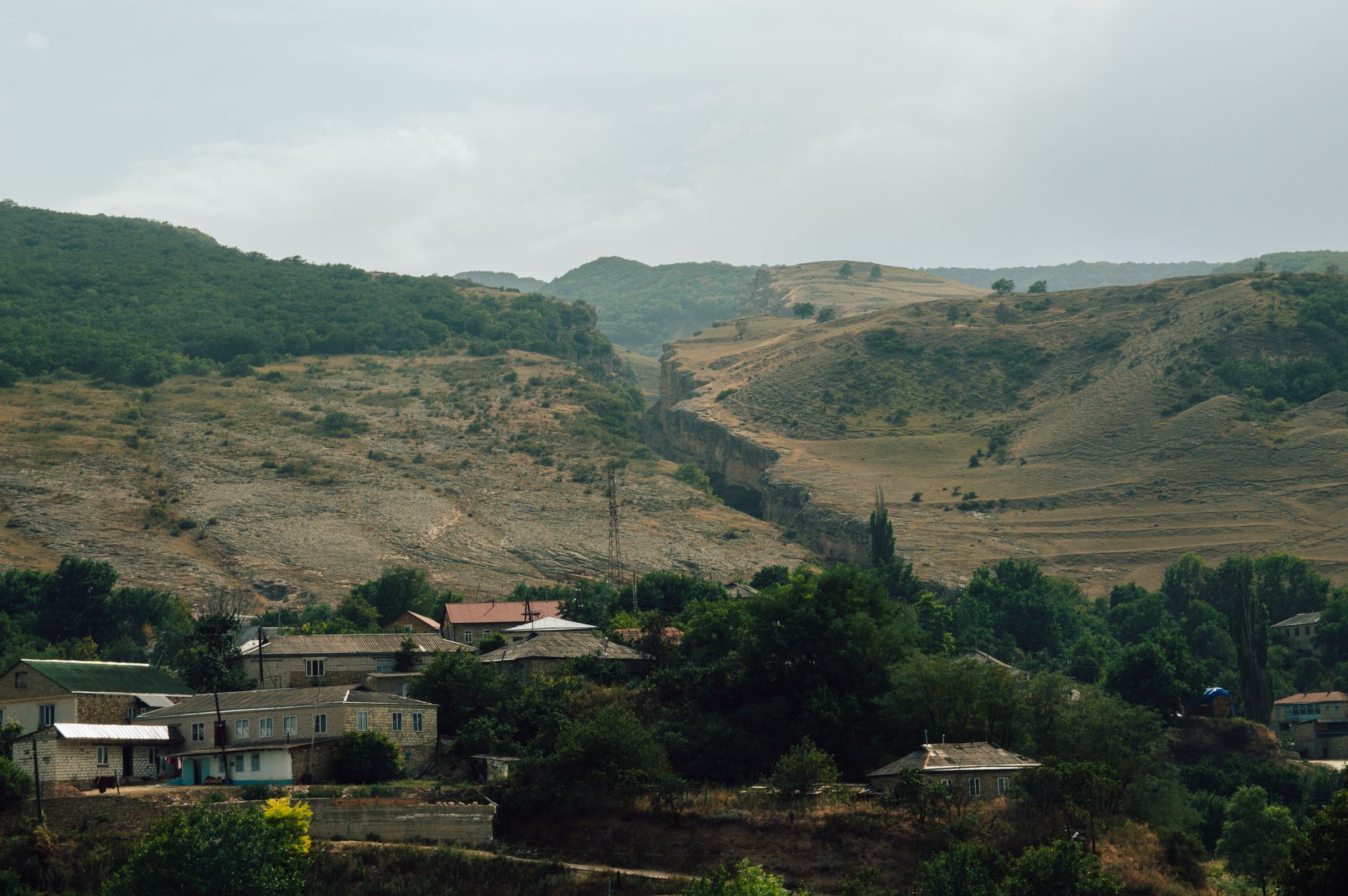
Kyzyl-Oi – which translates roughly as “red valley” – sits at around 1,800 meters in the Suusamyr-Too range, hemmed in by canyon walls that glow amber and copper in the afternoon light. The village has roughly 600 residents, a handful of community-run guesthouses, no international hotel chains, and a street layout that would look completely familiar to anyone who grew up in a Soviet collective farming settlement. That familiarity is not accidental. It is the draw.
What Soviet Architecture Actually Looks Like When Nobody Touched It
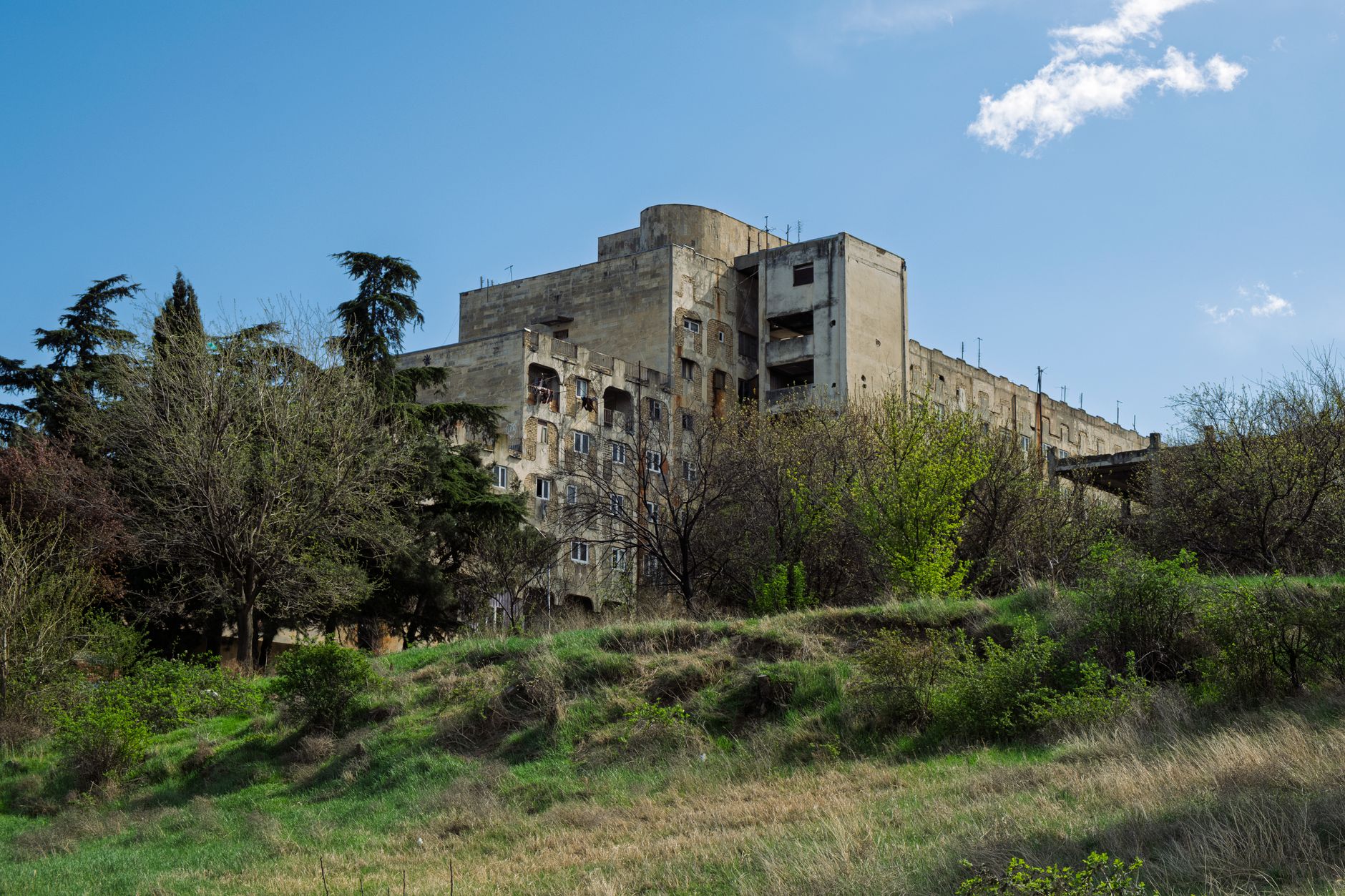
Most towns in Central Asia that carry Soviet-era buildings have also carried out Soviet-era demolitions – replacing the functional concrete and painted brick with whatever globalized architecture money could buy after independence. Kyzyl-Oi did not have that money, which means it also did not have that problem. The village’s administrative buildings, community hall, and residential blocks still wear their original facades: flat-roofed, utilitarian, occasionally decorated with faded murals of agricultural workers and mountain landscapes painted directly onto plaster walls. These are not curated heritage sites. They are just the buildings people still use every day.
Walking through Kyzyl-Oi is less like visiting a museum and more like walking onto an unrestored film set. Wooden fences separate vegetable plots from gravel paths. Hand-painted signs mark the guesthouse doors. The community bathhouse, still functioning, operates on a schedule posted in Kyrgyz and Russian. Soviet-era design valued legibility and collective function over aesthetics, and in Kyzyl-Oi those values never got overwritten. A traveler who has spent time in the Baltic states chasing this same aesthetic will recognize the grammar immediately – though the mountains surrounding Kyzyl-Oi add a visual scale that Riga or Tallinn simply cannot match.
The guesthouses operating here are almost all family-run and coordinated through community-based tourism networks that began organizing in the late 1990s with support from NGOs working in rural Kyrgyzstan. Guests sleep in traditional felt-floored rooms or converted family homes, eat meals cooked from garden vegetables and locally raised livestock, and pay rates that put the income directly into household budgets rather than into a regional tourism operator’s account. The model is not unique to Kyzyl-Oi – it exists across rural Kyrgyzstan – but the village’s physical setting and architectural preservation make it a particularly strong version of the experience.
One detail that consistently catches visitors off guard: the village has a small Soviet-era school still in active use, with a courtyard that includes a painted globe mounted on a concrete pedestal and a bust of a figure – the identity debated, the paint chipping – facing the main entrance. Nobody has moved it. Nobody has recontextualized it with an interpretive sign. It just stands there, as it always has, which is either a statement or an oversight depending on who you ask.
Trekking Out of the Village: The Canyon Walls Are the Attraction
The surrounding terrain gives Kyzyl-Oi a trekking infrastructure that is genuinely underused. The Kara-Köl River gorge extends both north and south of the village, with trails that range from short canyon walks to multi-day routes connecting to the wider Jumgal valley system. Local guides, mostly residents who have formalized their knowledge through community tourism training programs, lead groups through terrain that sees a fraction of the foot traffic hitting the trails around Karakol or Osh.
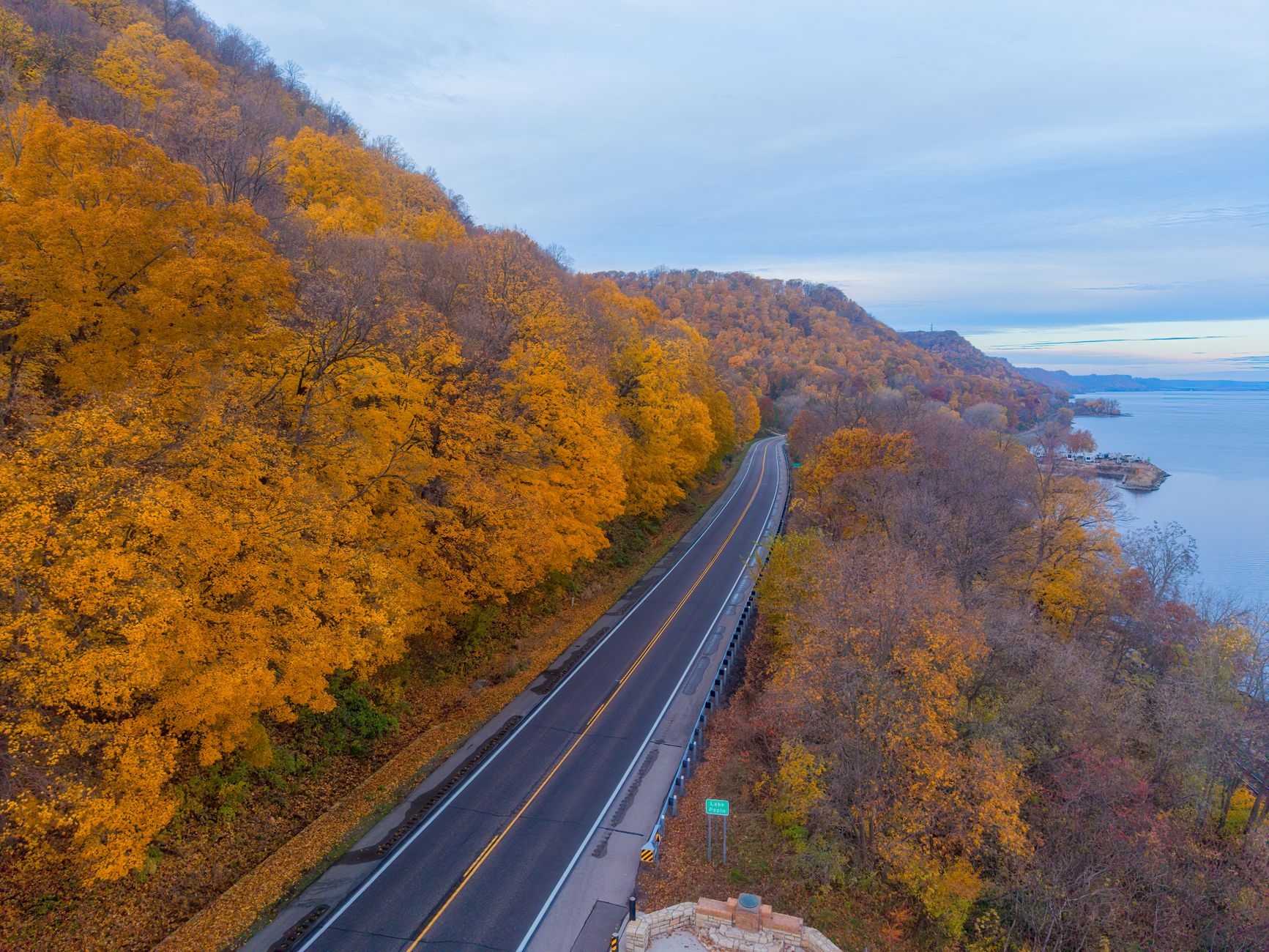
The canyon walls themselves – layered sedimentary rock in bands of red, orange, and grey – are the visual payoff that photographers come for. Morning light hits the eastern walls around 7 a.m. and holds for about two hours before the gorge narrows the angle. The trails are not technically demanding by alpine standards, making Kyzyl-Oi accessible for travelers who want dramatic scenery without glacier crossings or high-altitude exposure. Wildflowers cover the valley floor in June and July. By September, the poplar trees lining the river paths turn yellow against the red rock, and the combination is the kind of thing that ends up as a screensaver.
Getting There, and Why the Difficulty Is Actually Part of the Deal
Kyzyl-Oi is not easy to reach, and that is the structural reason it has stayed what it is. From Bishkek, the journey takes roughly six to seven hours by shared taxi or marshrutka, passing through the Suusamyr Valley via the Too-Ashuu Pass – one of the more dramatic road crossings in the country, sitting above 3,500 meters and frequently snowbound outside of summer months. The road into the village itself is unpaved for the final stretch, and river crossings can complicate things during spring snowmelt. Travelers accustomed to booking a bus ticket and showing up will need to recalibrate.
The logistics, however, are manageable with basic preparation. Guesthouses can arrange transport from Bishkek with enough lead time, and a growing number of Kyrgyzstan-focused travel operators include Kyzyl-Oi as a stop on longer itineraries through the country’s interior. The village has no ATM, so cash in Kyrgyzstani som is essential. Electricity runs on a local system that can be inconsistent, which is worth knowing before arriving with a bag full of devices that need nightly charging.
What the difficulty filters out is the same thing that keeps Karakol crowded: casual drop-ins and day-trippers. Almost everyone who reaches Kyzyl-Oi has made a deliberate choice to go there, which gives the village a quieter, more intentional atmosphere than destinations that traffic moves through by default. The guesthouses are rarely full. The trails are rarely crowded. And the family serving dinner in the guesthouse courtyard is not performing hospitality for a rotating audience of strangers – they are simply having people over, which is a distinction that experienced travelers learn to notice.
The village has no plans to market itself aggressively, no boutique hotel under construction on the canyon rim, and no Instagram geotag that has gone viral – yet. Whether that quiet holds as Kyrgyzstan continues to build its profile as a serious adventure destination is the question worth sitting with over a bowl of shorpo by the fire.
Frequently Asked Questions
How do you get to Kyzyl-Oi from Bishkek?
The journey takes roughly six to seven hours by shared taxi or marshrutka via the Suusamyr Valley and Too-Ashuu Pass. The final stretch into the village is unpaved and can be affected by spring snowmelt.
What is there to do in Kyzyl-Oi?
Visitors explore Soviet-era architecture, trek through the Kara-Köl River gorge with local guides, and stay in community-run family guesthouses. The canyon walls and valley wildflowers are the main scenic draws.
Is Kyzyl-Oi suitable for independent travelers?
Yes, though preparation is essential. There is no ATM in the village, electricity can be inconsistent, and guesthouses should be booked in advance to arrange transport from Bishkek.