
Where the Sahara Meets the Palmery
The Draa Valley runs south from the High Atlas Mountains toward the Saharan edge, cutting through Morocco in a long, sun-baked corridor of mud-brick villages, ancient kasbahs, and date palm oases. Most visitors to Morocco treat this region as a drive-through on the way to Erg Chebbi’s famous dunes – a quick photo stop before the sand. That calculation is changing, slowly but steadily, as a different kind of traveler starts treating the valley itself as the destination.
Marrakech still dominates Morocco’s tourism conversation, and rightly so. The medina is a spectacle unlike almost anything else on the planet. But the city’s popularity has a cost – the riads are packed, the souks are loud, and the distance between authentic experience and tourist performance has widened considerably. The Draa Valley offers something Marrakech cannot: the feeling of arriving somewhere that isn’t quite ready for you yet.
A Landscape Built in Layers
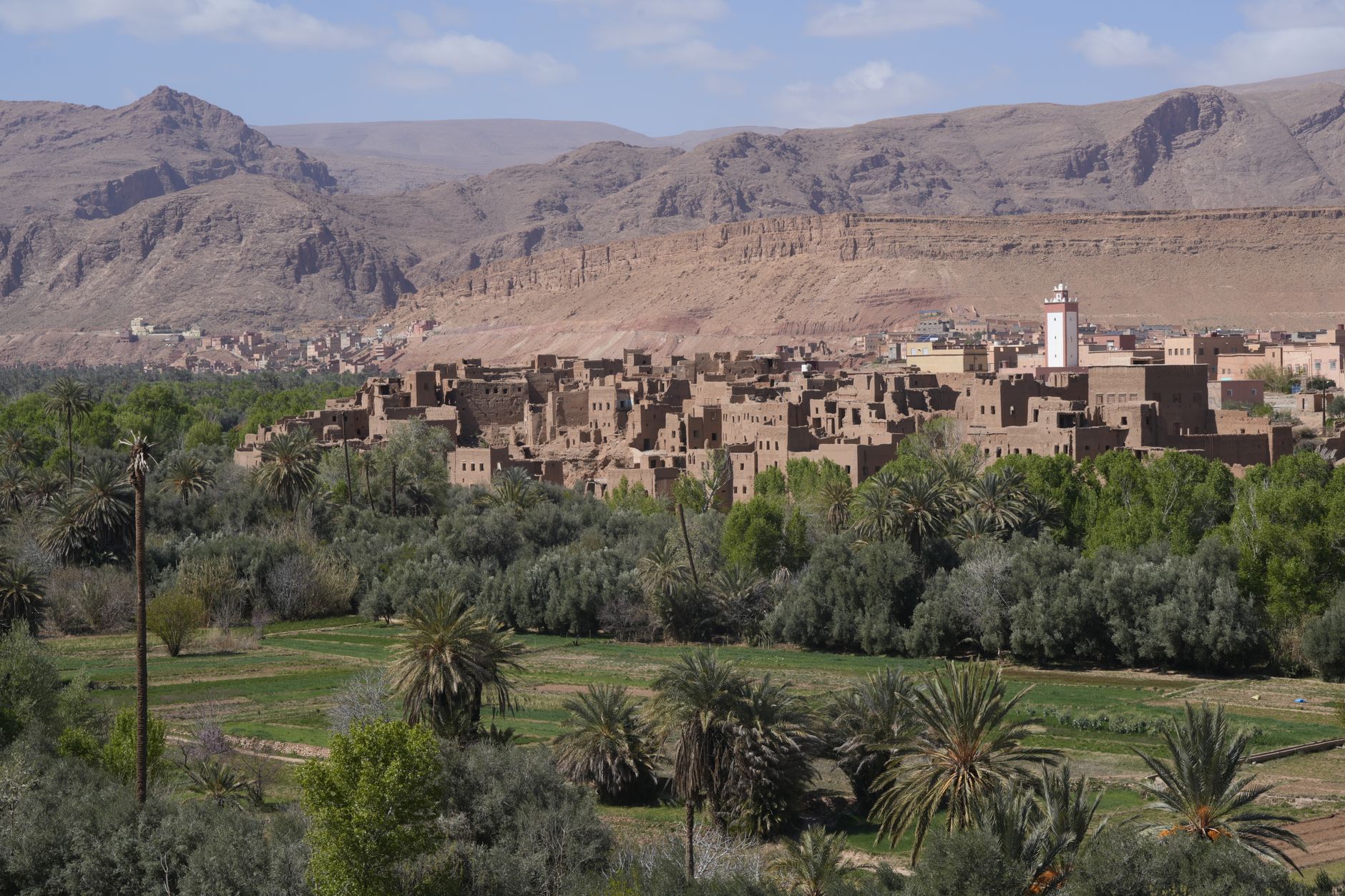
The valley stretches roughly 200 kilometers between Ouarzazate and the desert town of M’Hamid el Ghizlane, and nearly every kilometer contains something worth stopping for. Ksour – fortified collective villages – dot the hillsides in varying states of preservation. Some are still inhabited, their earthen walls patched and re-patched across generations. Others are slowly returning to the landscape, their towers softening in the heat like melting clay sculptures. The visual effect is of a civilization half-remembered, still readable but fading at the edges.
Zagora, the valley’s largest town, functions as a practical base rather than a polished resort hub. The infrastructure exists – guesthouses, guides, transportation connections – but the area has not yet been packaged for mass consumption. Accommodations tend to be small, family-run operations where the host’s knowledge of the surrounding terrain is the primary amenity. Breakfast tends to arrive with dates from the property’s own trees.
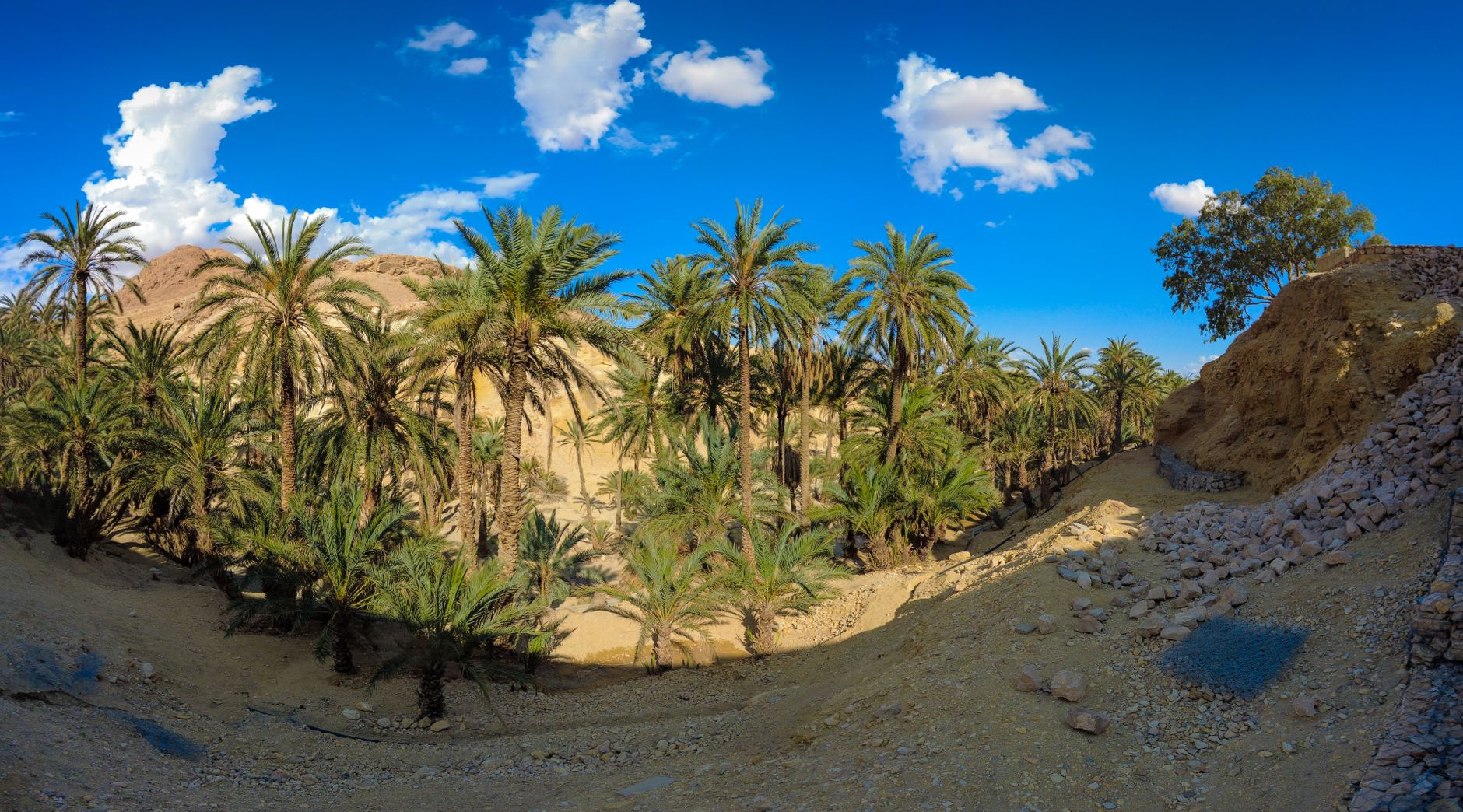
The date palms themselves deserve mention as a travel attraction in their own right. The Draa Valley produces Medjool and Majhoul varieties in significant quantities, and the palmery – particularly around Tamegroute and Tinzouline – creates a kind of lush, green corridor that feels absurd against the surrounding desert plateau. Walking through it in late afternoon light, when the shadows stretch long across the irrigation channels, produces the specific kind of quiet that travelers spend a great deal of money and effort to find.
The Kasbah Question
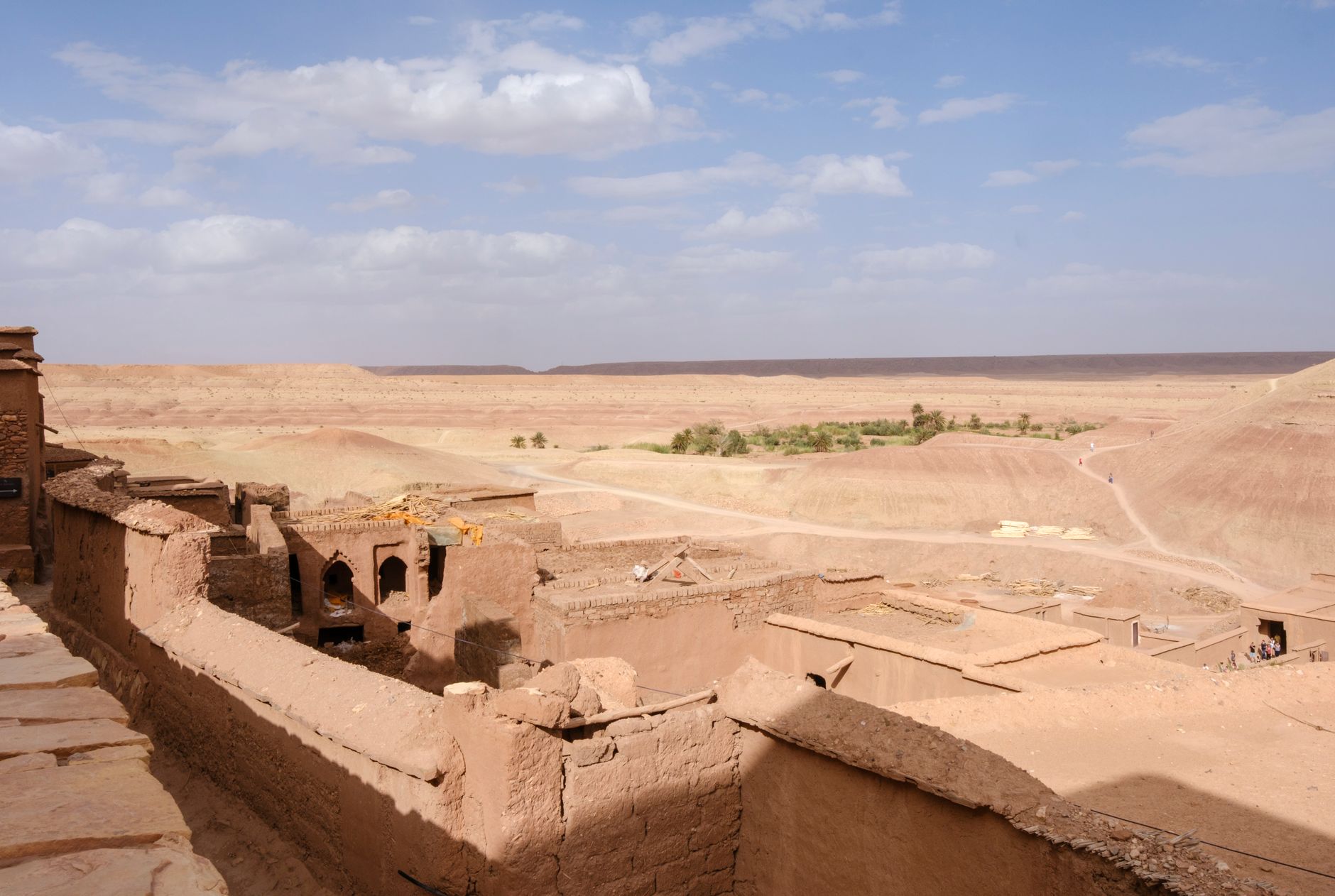
Morocco has kasbahs elsewhere. Aït Benhaddou, a UNESCO World Heritage Site just outside Ouarzazate, is the one most travelers photograph – it has appeared in enough film productions that some visitors report a faint sense of deja vu upon arrival. The Draa Valley’s kasbahs are less curated and, as a result, more interesting. Tamnougalt, a functioning ksar about 20 kilometers south of Agdz, still has residents. Visitors can walk through with a local guide, moving through spaces that aren’t staged for tourism but are simply lived in. The distinction matters more than it sounds.
Kasbah architecture in this region follows a specific logic – thick earthen walls that regulate temperature, decorative geometric crenellations at the roofline, and interior courtyards that organize family life around a common center. The building material, pisé (compressed earth), means these structures are in constant dialogue with their environment, requiring maintenance and slowly degrading without it. Walking through an abandoned ksar is walking through active entropy. That’s not a selling point most travel brochures would use, but it’s exactly what makes the experience worth having.
Getting There Without Losing the Plot
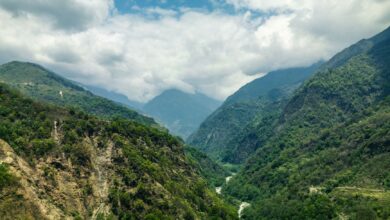
The journey from Marrakech to the Draa Valley runs through the Tizi n’Tichka pass, a winding mountain road that crosses the High Atlas at just over 2,200 meters. The drive takes roughly four hours under normal conditions and deserves to be treated as part of the trip rather than transit. The pass offers views down into valleys that look untouched in the way that only remote mountain terrain can – which is to say, they have been touched considerably, but by farming and herding rather than development, and the result reads as wilderness to eyes calibrated to urban scale.
Ouarzazate, often called the “gateway to the Sahara,” makes a logical overnight stop and has its own film studio complex that has hosted productions ranging from classic Hollywood epics to recent streaming series. It is not a destination in itself, but it provides the transition between the mountain crossing and the valley proper. From Ouarzazate, the road south into the Draa runs through increasingly arid terrain, with the palmery appearing somewhat dramatically after Agdz as though the landscape suddenly remembered it was supposed to be green.
The best months to visit fall between October and April, when temperatures stay manageable and the desert nights turn genuinely cold – a detail that surprises many first-time visitors who arrive expecting uniform heat. Summer in the valley is survivable but demanding, with afternoon temperatures regularly exceeding 40 degrees Celsius in the lower sections. The shoulder months of March and November offer a balance of warmth, lower visitor numbers, and the kind of clear light that makes the earthen architecture glow amber in the hours before sunset.
For travelers who have already explored Morocco’s imperial cities and want to understand the country’s other register – quieter, more austere, less immediately legible – the Draa Valley provides that counterpoint without requiring extreme effort or specialized equipment. The road is paved, guides are available, and the guesthouses, while modest, are genuinely hospitable. What the valley lacks in infrastructure it compensates for in the kind of unhurried access to landscape and architecture that is becoming increasingly difficult to find anywhere in the Mediterranean region.
Tamegroute, near the valley’s southern end, holds a 17th-century library containing manuscripts in Arabic and Amazigh script – some on gazelle skin – that draw scholars and serious travelers who know to ask about it. Most visitors pass through without stopping. That ratio is unlikely to hold much longer.