
The Road Less Photographed
Most travelers who make it to Myanmar put Bagan on the itinerary and call it a discovery. The ancient temple plains are magnificent, no argument there, but they are also well-documented, heavily toured, and increasingly shaped around the expectations of visitors rather than the rhythms of local life. Chin State, tucked into the remote western highlands along the Indian border, operates on an entirely different frequency – one where the tourism infrastructure is thin, the roads are genuinely difficult, and the cultural encounters feel less like exhibits and more like interruptions to someone’s actual day.
The region has long attracted a specific kind of traveler: those chasing what is commonly called the “facial tattoo women of Chin,” a tradition among several Chin subgroups in which women received intricate facial tattoos, usually in their early adolescence. The practice effectively ended decades ago, meaning the women who carry these markings are now elderly, and the window to witness this living tradition is narrowing fast. That urgency is drawing serious cultural travelers away from Bagan’s well-worn paths toward villages most maps barely name.
What the Tradition Actually Was
The facial tattooing tradition varied significantly across Chin’s different ethnic subgroups – the Dai, Mun, Muun, Upra, and others each developed distinct patterns. Some designs were spiderweb-like, covering the entire face in fine geometric lines. Others ran in bold vertical stripes down the forehead and chin. The variation tells you something important: this was not a monolithic cultural practice but a collection of related traditions with distinct meanings tied to specific communities, not a single unified custom.
The explanations for why the practice began range from protective superstition – marking women so that outsiders would not abduct them as wives – to markers of beauty and tribal identity. Neither explanation fully accounts for the regional variation, and most Chin women who wear the tattoos offer their own family histories when asked directly, histories that often contradict the tidy origin stories repeated in guidebooks. The tradition stopped largely due to missionary influence and later government disapproval, which means the youngest tattooed women are now in their sixties at minimum, with most well into their seventies and eighties.

Getting There Without Pretending It Is Easy
Chin State requires a permit for foreign visitors, obtainable through official channels in Yangon or Mandalay, and the paperwork is not purely bureaucratic – it reflects the area’s ongoing political sensitivities. The primary entry point for most travelers is Mindat, reached via a bone-rattling road that ascends from the lowlands through thick forest. The journey from Bagan by road takes the better part of a day in good conditions. In the rainy season, sections of the route become genuinely impassable, and many visitors who attempt Chin during the monsoon months simply turn back.
Kalay (also spelled Kale) offers a second access point from the north, with a different set of villages reachable from there. A small number of guesthouses operate in Mindat, basic by any standard but functional. Guides who speak both the local Chin dialects and English are available but scarce, and booking in advance through a Mandalay-based operator is the only reliable way to arrive with logistics already solved. Travelers who show up expecting the logistical ease of Bagan will have a difficult afternoon.
The villages themselves are spread across steep ridgelines, connected by paths rather than roads in many cases. Reaching the most remote settlements requires several hours of hiking each way, and some can only be accessed with a local guide who knows which trails are actually current. Village elders in several communities have established informal protocols around photography – asking permission through a guide is not just etiquette, it is the only approach that works. Women who have sat for hundreds of photographs over the years can read a camera-first traveler immediately, and some have simply stopped engaging with visitors who arrive treating them as destinations rather than people.
The travelers who get the most out of Chin State tend to share a particular quality: patience. Sitting in a village without an agenda, accepting tea, watching the day move – this is how conversations begin and how real exchanges happen. The cultural encounter that gets remembered is rarely the one that was planned. For travelers drawn to this kind of slow, unscripted cultural immersion, a useful comparison point is Bhutan’s Haa Valley, where a similarly unhurried approach yields encounters the standard circuit never delivers.
Why Chin Outperforms Bagan for This Specific Traveler
Bagan is extraordinary for what it is – an archaeological landscape of ancient Buddhist monuments that rewards slow exploration and early morning light. But the cultural life Bagan once had is largely historical. You study what was. Chin State offers something categorically different: a living community in the middle of a generational transition, where a specific tradition is visibly ending within human lifetimes. That is a different kind of travel experience, one that carries more weight and more ethical complexity.
The complexity is worth sitting with. There is a real tension in traveling specifically to see elderly women who were marked for life as children in a practice they did not choose for themselves. Some women openly enjoy the attention and the income it brings to their villages. Others have grown tired of being photographic objects. A few have become informal community ambassadors who engage visitors thoughtfully on the history of their region. The same village can contain all three types, sometimes in the same household. Navigating that honestly requires a traveler who arrives with curiosity rather than a checklist.
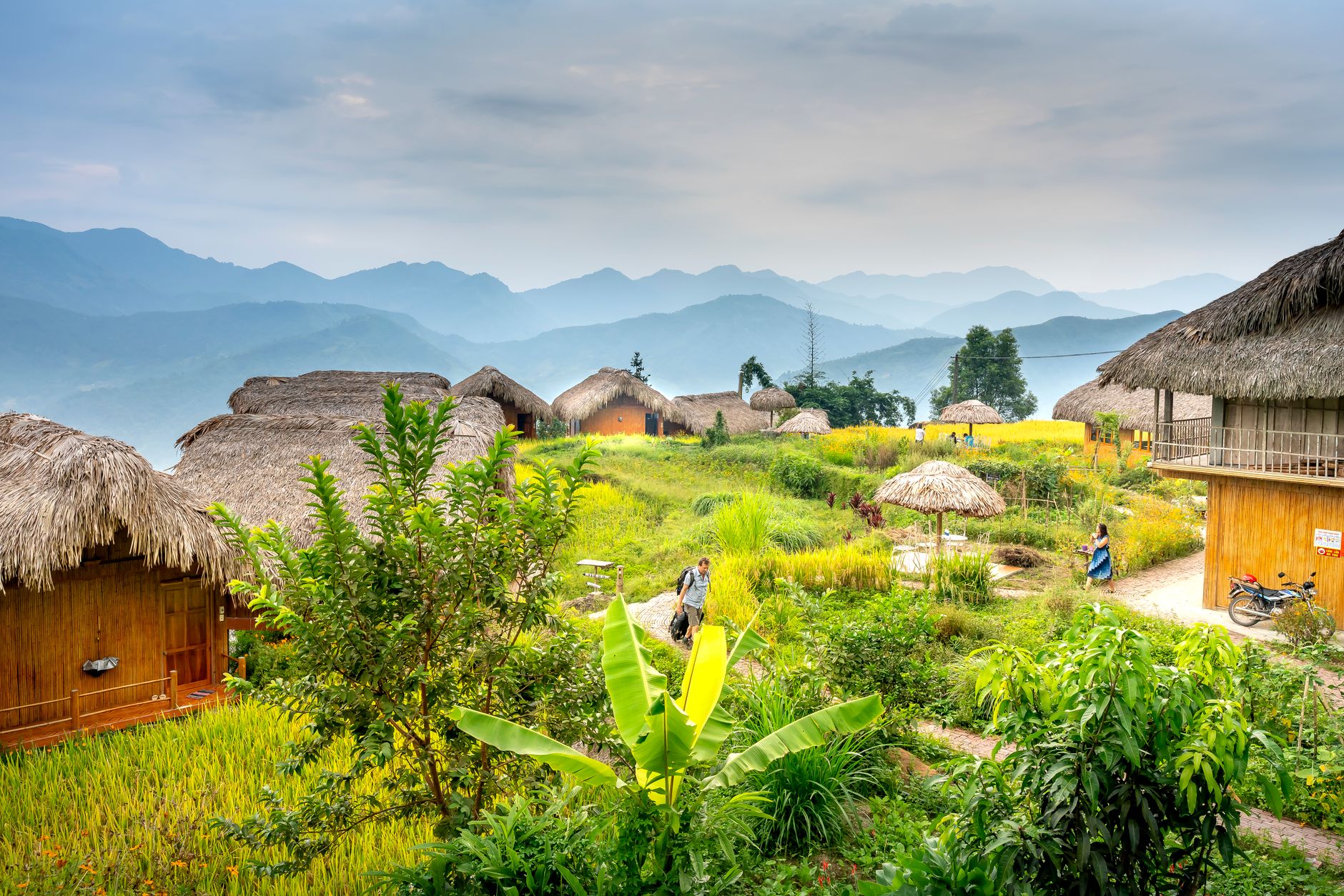
The broader landscape of Chin State also deserves attention that it rarely receives. The highlands are genuinely beautiful – forested, cool, dramatically different from Myanmar’s lowland heat. Falam, the state capital, has colonial-era architecture from the British period that sits quietly unremarked in most travel coverage. Local markets in smaller towns carry textiles, produce, and craft items specific to Chin culture that never make it to the tourist bazaars in Yangon. The food culture draws on Indian influences that reflect the geographic proximity of Mizoram, creating flavor profiles that feel distinct from anything on offer in central Myanmar.
The question that hangs over Chin State as a destination is not whether it can handle more visitors – the infrastructure is thin enough that significant growth would require real investment – but whether the specific cultural draw will still exist in twenty years. The tattooed women are elderly. Their granddaughters wear no marks. When that generation passes, what remains is still a remarkable highland region, but the singular cultural detail that currently draws the most determined travelers will be gone, surviving only in photographs taken by the people who made the journey while there was still time to make it.