Scotland’s Orkney Islands Quietly Rival the Hebrides for Neolithic Wanderers

The Archipelago That Keeps Getting Overlooked
The Hebrides have long held the imagination of travelers drawn to Scotland’s ancient edges – the dramatic coastlines of Skye, the remote mysticism of the Outer Isles, the sheer volume of travel writing devoted to their windswept landscapes. But roughly 25 miles north of the Scottish mainland, across the Pentland Firth, Orkney has been quietly accumulating one of the densest concentrations of Neolithic monuments on the planet, largely outside the mainstream travel conversation.
Orkney’s prehistoric sites are not scattered curiosities. They form a continuous, living landscape – a cluster of monuments around the Heart of Neolithic Orkney UNESCO World Heritage Site that includes standing stones, chambered tombs, ceremonial henges, and the remains of a village older than Stonehenge and the Egyptian pyramids combined. The sheer proximity of these sites to one another means a traveler can walk from one 5,000-year-old monument to the next in under an hour on foot.
The Hebrides do not offer anything quite like this concentration.
What the Stone Circles Actually Tell You
The Ring of Brodgar stands on a narrow isthmus between two lochs on Orkney’s Mainland island. Sixty stones originally formed the circle – around 27 remain standing today – and the site dates to between 2500 and 2000 BCE. Unlike Stonehenge, there are no barriers, no timed entry slots in the off-season, and no obligatory audio guide pressed into your hand at a visitor center. You walk directly among the stones at whatever pace suits you, in whatever weather Orkney decides to provide, which is often sideways rain and horizontal gusts that make the whole experience feel appropriately elemental.
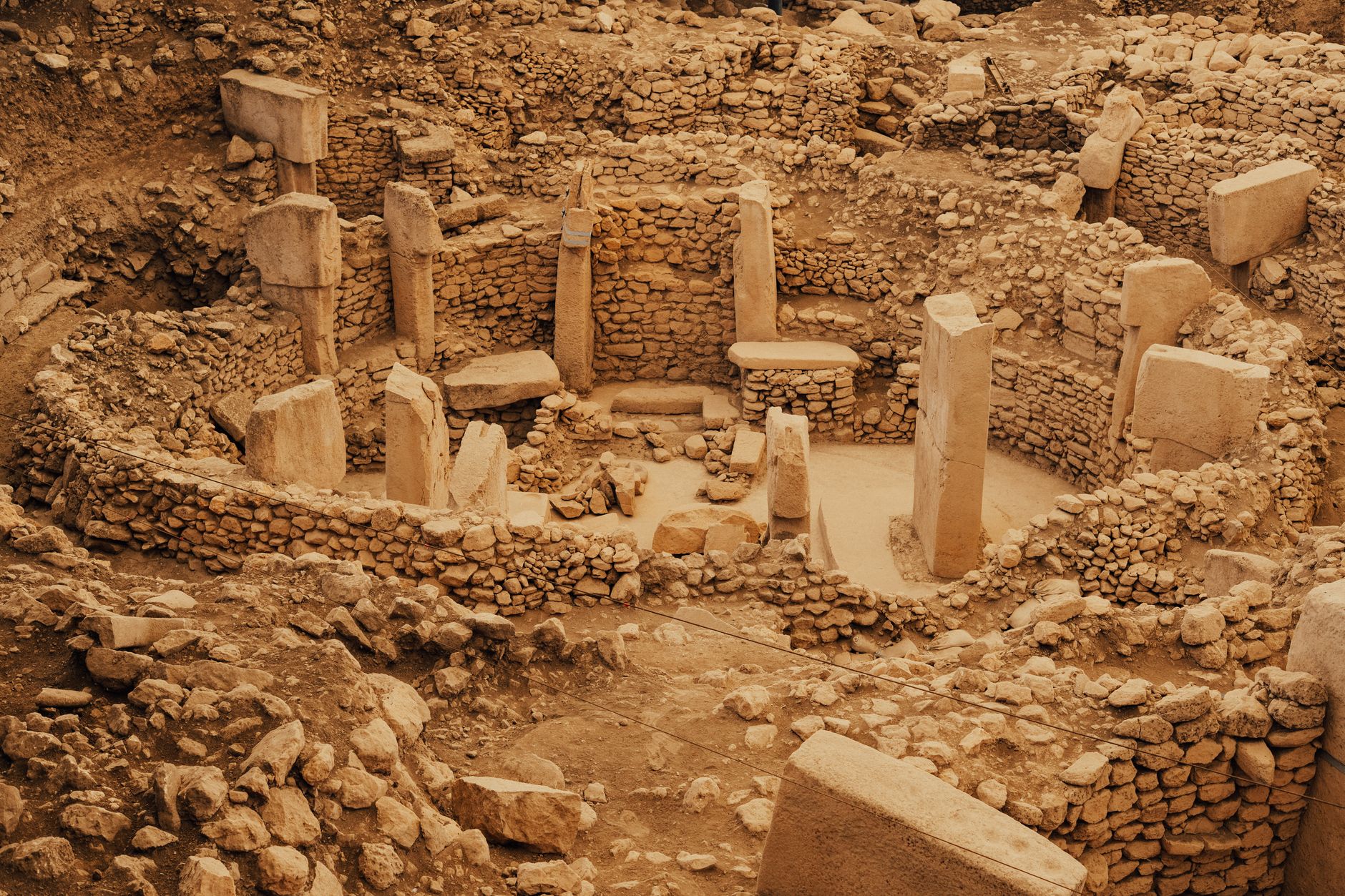
A short walk from Brodgar sits the Stones of Stenness, older still, with four massive monoliths remaining from what was once a larger circle. These stones reach up to six meters in height and carry a presence that stops most first-time visitors mid-sentence. Between these two circles lies the Ness of Brodgar, an active excavation site that has been steadily rewriting what archaeologists understand about Neolithic ceremonial life in northern Europe. The dig season runs in summer, and visitors can sometimes watch the excavation work in progress – a rare experience that adds a living, unfinished quality to what could otherwise feel like static heritage tourism.
Then there is Maeshowe, a chambered cairn designed with such precision that the winter solstice sun illuminates its inner chamber in a direct beam of light. The engineering logic behind this – the deliberate orientation of a stone passage to capture a single astronomical moment – speaks to a sophistication that resists easy summary. Guided tours run inside the cairn, and the internal space, lined with Norse runic graffiti carved by 12th-century raiders who broke in seeking treasure, layers history upon history in a way that few heritage sites can match.
Getting There, Staying There, Understanding the Rhythm
Orkney is more accessible than its northern latitude suggests. Loganair operates flights from Edinburgh, Inverness, and Aberdeen to Kirkwall Airport, the island’s main hub, with journey times short enough to make a long weekend genuinely viable. Ferries run from Scrabster near Thurso and from Aberdeen, with the Scrabster crossing taking roughly 90 minutes to Stromness – a working port town that functions as the islands’ most characterful base. Stromness has independent bookshops, a local museum, stone-flagged streets that run directly along the harbor, and accommodation options that range from small hotels to well-placed self-catering cottages.
The pace of Orkney is slower than the Hebrides circuit, where island-hopping can become its own exhausting itinerary. Here, the concentration of sites on a single main island means travelers can structure days around proximity rather than logistics. Skara Brae, a Neolithic village preserved under sand dunes on the Bay of Skaill, sits roughly 20 minutes by car from Kirkwall. The village contains the remains of stone-built houses with intact furniture – beds, hearths, and shelving – that have survived intact because sand is a better preservative than most archive conditions. Standing at the edge of the settlement, looking down into rooms that functioned as living spaces five millennia ago, is a different kind of encounter than any standing stone provides. It is domestic, immediate, and quietly unsettling.
The islands also reward travelers who stay long enough to move beyond the UNESCO cluster. The Churchill Barriers – causeways built during World War II connecting several of Orkney’s southern islands – lead to the Italian Chapel on Lamb Holm, built by Italian prisoners of war from salvaged materials, corrugated iron, and paint. The interior is a small act of beauty that has nothing to do with prehistory and everything to do with what people build when they need to anchor themselves in an unfamiliar place. It draws visitors who came only for the Neolithic sites and leaves them thinking about something else entirely.
Why This Matters for the Wanderer Who Has Done the Hebrides
Travelers who have already made the pilgrimage to Callanish on Lewis or stood at Dun Carloway broch watching the Atlantic come in will find Orkney does not simply offer more of the same – it offers a fundamentally different argument about what ancient Scotland actually was. The Hebrides carry a Celtic and Norse romance that has been well-packaged by travel culture for decades. Orkney’s story is older, stranger, and considerably less tidy, and for the right traveler, that unresolved quality is exactly the point. The fact that archaeologists are still actively excavating at the Ness of Brodgar, still finding temple complexes that redate assumptions about the scale of Neolithic society, means Orkney is a destination where the historical record is genuinely incomplete – and where a visit today might look quite different from a visit in ten years, once the next dig season finishes.