
The Roman City That Tourism Forgot
Carthage gets the postcards, the guided bus tours, and the prime placement in every Tunisia travel itinerary. But roughly 110 kilometers southwest of Tunis, perched on a hilltop above the Oued Khalled valley, sits a Roman city that most visitors to North Africa will never see – and that is precisely what makes Dougga worth going out of your way to find. Designated a UNESCO World Heritage Site in 1997, it is widely considered the best-preserved Roman town on the African continent, yet it draws a fraction of the crowds that swarm the coastal ruins near the capital.
The reason Dougga survives in such extraordinary condition is partly historical luck and partly geography. Unlike Carthage, which was absorbed into greater Tunis and stripped over centuries for building material, Dougga was never fully reoccupied after the Roman period. The hilltop position that made it strategically valuable in antiquity made it commercially inconvenient in later eras. The ruins were simply left where they stood. Walking through them today feels less like visiting a museum exhibit and more like stumbling into a working city that everyone just stopped showing up to one morning.
What You Actually See on the Ground
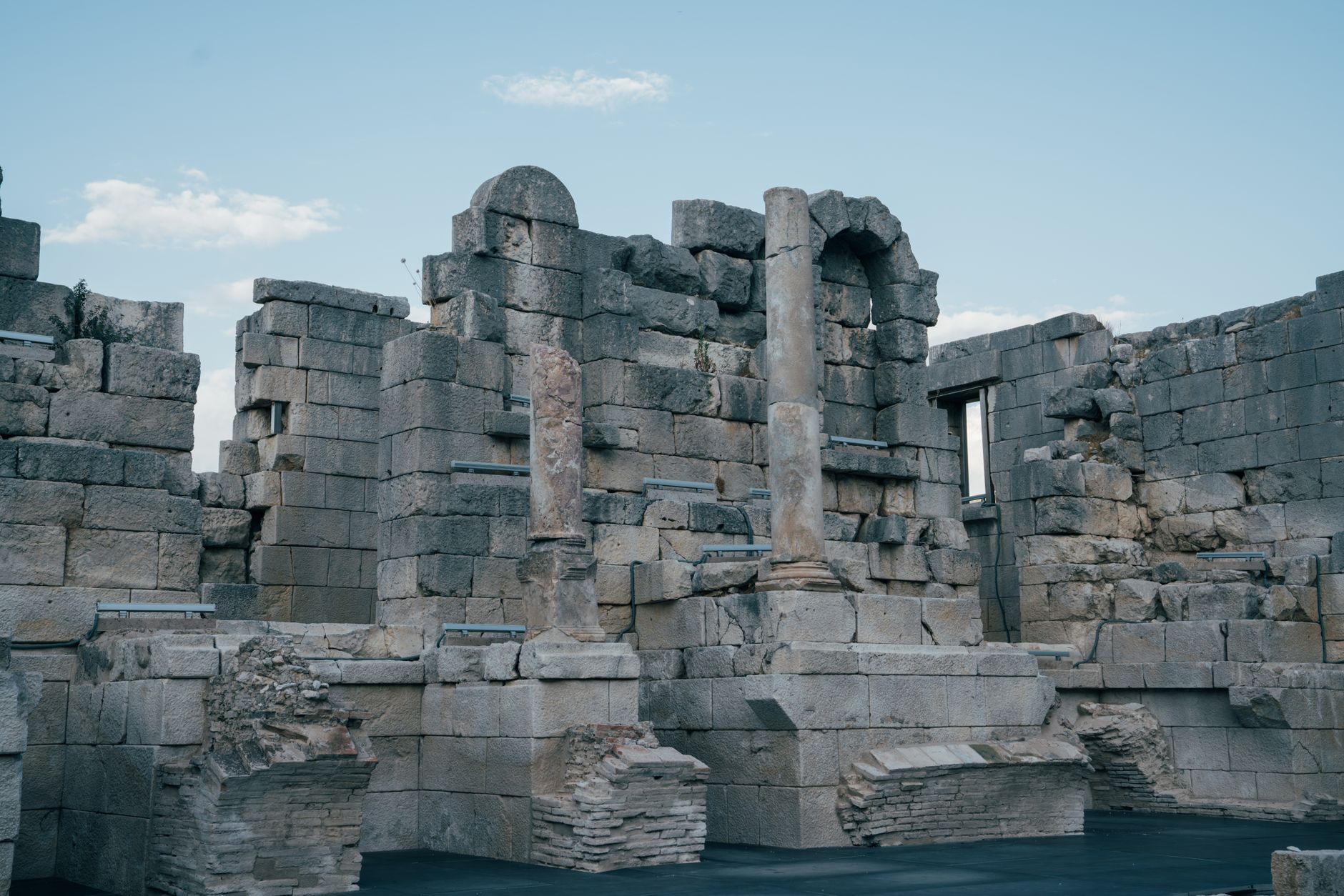
The Capitol temple, dedicated to the triad of Jupiter, Juno, and Minerva, dominates the upper plateau and is the image most associated with Dougga in archaeological literature. Built in 166 CE, its six Corinthian columns still rise to their full height with the original pediment largely intact. Standing in front of it on a clear morning, with the green Tunisian countryside rolling away in every direction and no fence separating you from the stonework, the effect is quietly staggering. There are no velvet ropes. No timed entry windows. On a weekday, you may share this space with a handful of other visitors and the site’s resident cats.
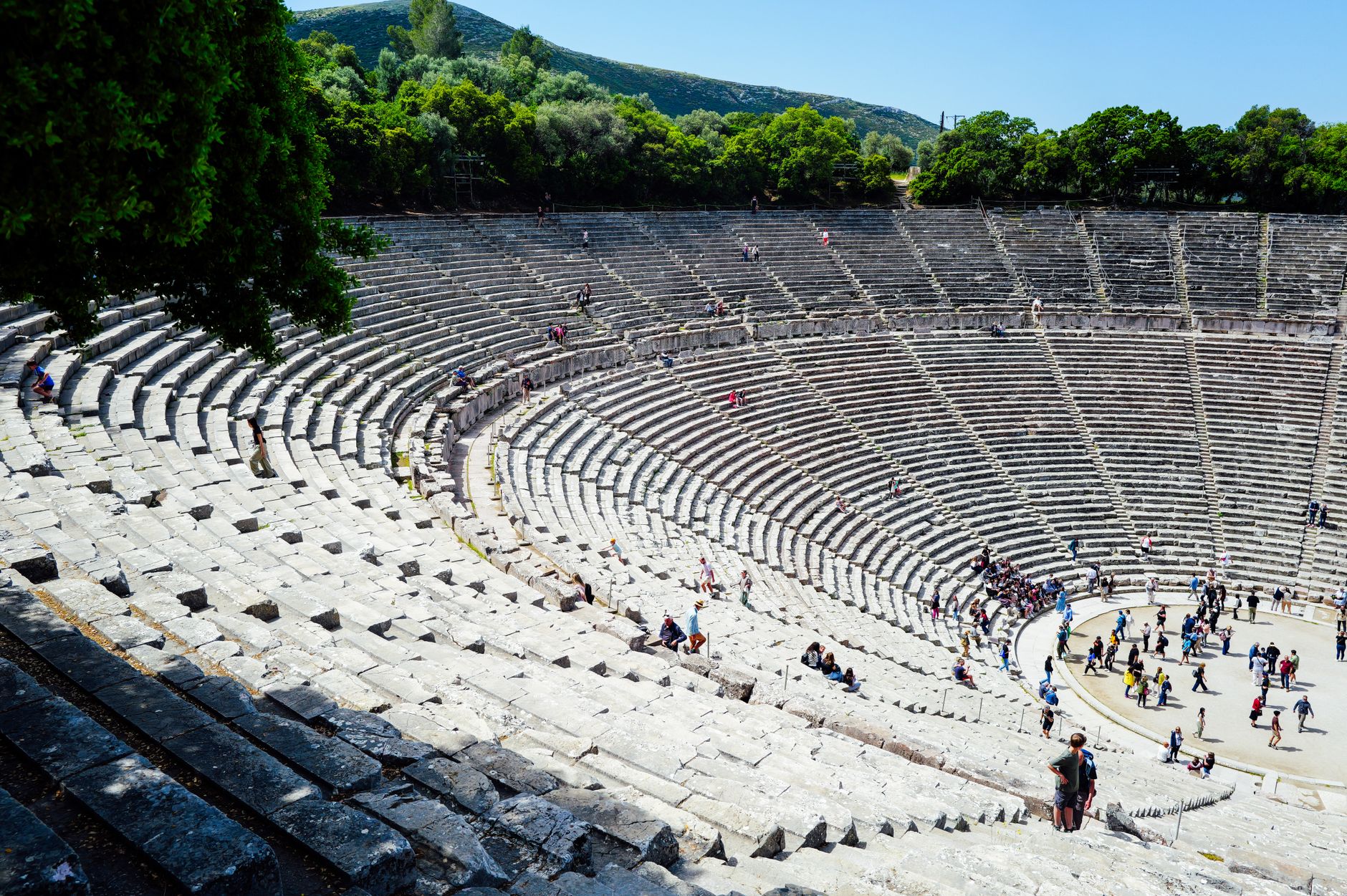
The theater is the other showpiece, carved into the hillside in the second century CE and capable of seating several thousand spectators. It remains functional – the Tunisian authorities have used it for live performances – and the acoustics are intact enough to demonstrate why Roman engineers chose curved stone over open air. Stand at the center of the stage and speak in a normal voice. The sound carries to the back rows without any amplification. It is the kind of detail that makes ancient engineering feel immediate rather than abstract.
Beyond the headline structures, Dougga rewards slower exploration in ways that crowd-heavy sites rarely do. The forum, the market stalls, the bathhouses with their mosaic floors, the Libyco-Punic mausoleum that predates the Roman occupation entirely – all of it sits within a compact area that takes a full half-day to cover properly. The mausoleum in particular is easy to overlook, but it is one of the few surviving monuments from the Numidian period, built for a local ruler and inscribed in two ancient scripts. A replica stands in the British Museum in London; the original is here, surrounded by dry grass and open sky.
The site museum, housed in a former French colonial building near the entrance, holds a modest collection of inscriptions, coins, and sculptural fragments recovered during excavations. It is not large, but the labeling is bilingual and the context it provides for the monuments outside is worth the extra twenty minutes. Most of the major mosaic finds from Dougga are held at the Bardo National Museum in Tunis, which is a reasonable reason to visit both in a single trip.
Getting There Without a Tour Operator
Dougga does not have a train station, and that inconvenience has done more to protect its atmosphere than any preservation policy could. The most common approach is to take a louage – a shared long-distance taxi – from Tunis to the town of Teboursouk, which sits about 5 kilometers from the archaeological site. From Teboursouk, a taxi or a short walk uphill through the modern village of Dougga brings you to the entrance. The journey from Tunis takes roughly two hours depending on connections. Renting a car in Tunis is the more comfortable option, and the drive through the northern Tunisian interior – wheat fields, olive groves, limestone ridges – is worth doing at your own pace.
The site opens daily, with afternoon hours varying seasonally. Admission is inexpensive by any regional standard, and a combined ticket with other archaeological sites in the area is available. Arriving early, before the midday heat builds from late spring onward, makes the physical experience considerably more enjoyable. The hilltop position means there is almost always a breeze, but the Capitol plateau is fully exposed and the stone reflects heat aggressively by noon in July and August.
How It Compares to Carthage
Carthage is a genuinely important site with a difficult story to tell. What remains of the Phoenician and Roman city is scattered across several separate zones inside modern Tunis suburbs – the Antonine Baths, the Byrsa Hill museum, the tophet sanctuary, the Roman villas – connected by roads and neighborhoods rather than by continuous ancient fabric. Each zone requires a separate ticket or inclusion on a combination pass. The visiting experience is fragmented by design, shaped more by what survived urban encroachment than by any coherent archaeological plan.
Dougga is the opposite. It is a single enclosed site where you move from the residential quarters to the civic center to the religious precinct in the same unbroken walk that a Roman inhabitant would have made. The spatial logic of the city is readable. You can orient yourself by the Capitol and navigate outward through streets that are still defined by their original curbing. That continuity of experience – the sense of moving through a place rather than collecting highlights – is what makes Dougga genuinely different from Carthage, not just marginally better at one or two specific monuments.
The visitor count reflects this distinction without fully explaining it. Dougga hosts far fewer annual visitors than Carthage, despite being arguably better preserved and more coherent as a site. Part of that gap is proximity – Carthage sits on the Tunis metro line – and part of it is name recognition, since Carthage carries centuries of literary and historical weight that Dougga cannot compete with in a brochure headline. But for anyone who has already done Carthage and felt vaguely shortchanged by the experience, Dougga is where that debt gets repaid.
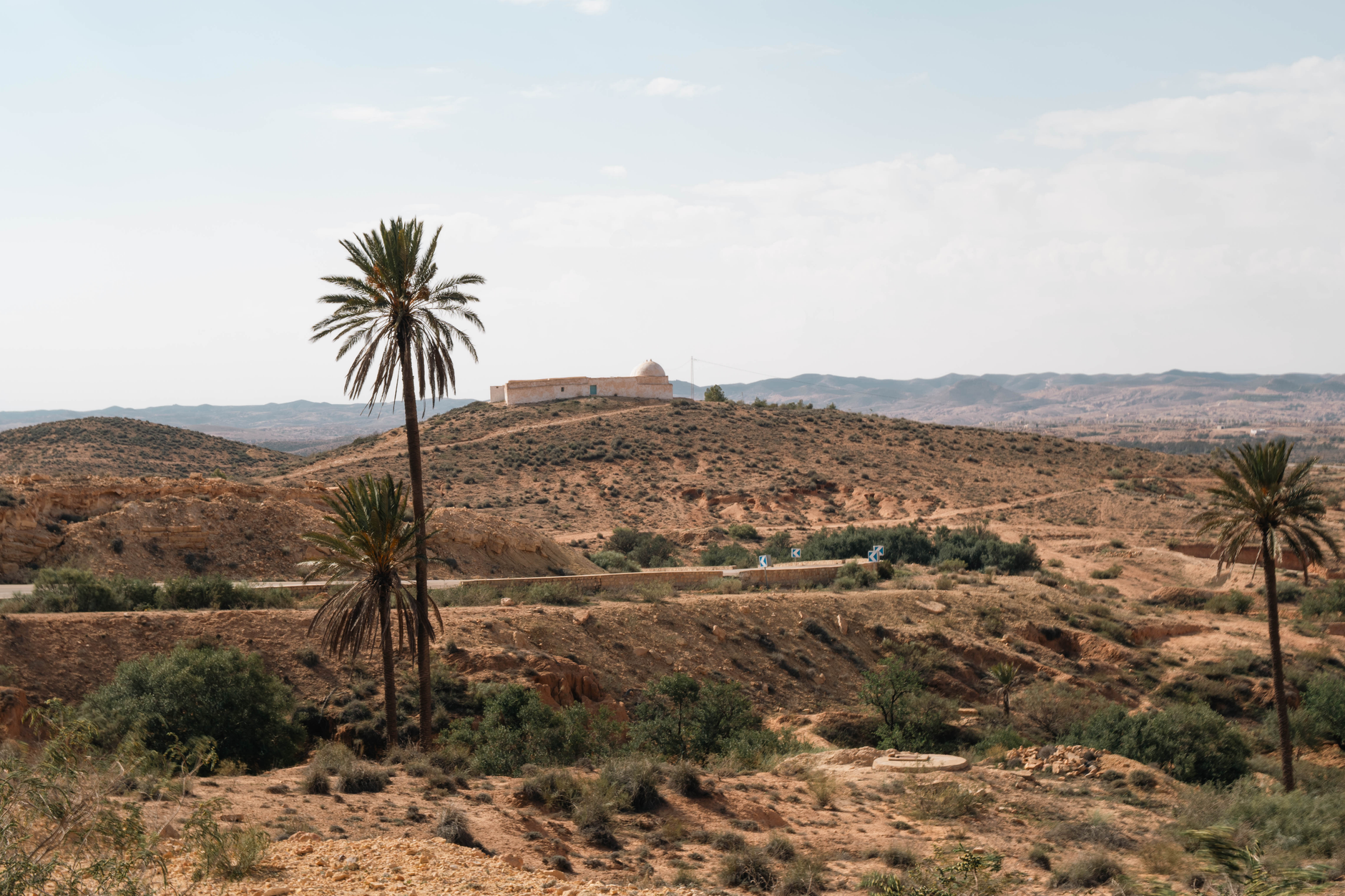
The Libyco-Punic mausoleum at the northern edge of the site is easy to miss if you follow the main path directly to the Capitol, and most visitors do miss it. It stands about 21 meters tall, a three-tiered tower built for a Numidian prince named Ateban somewhere around the second century BCE – predating the Roman conquest of North Africa entirely. The British consul general had its inscribed stone panel removed and shipped to London in 1842, which is how that replica ended up in the British Museum. The hollow where the panel once sat is still visible in the original structure, a specific and unresolved absence that sits at the edge of every conversation about colonial-era archaeological extraction.