Uzbekistan’s Nuratau Mountains Quietly Rival Samarkand for Yurt Wanderers

Where the Silk Road Fades Into Walnut Forests
Samarkand gets the headlines, the Instagram reels, the guided bus tours. Its turquoise domes and madrassas are legitimate wonders, and nobody is arguing otherwise. But roughly 180 kilometers to the northwest, the Nuratau Mountains sit in a kind of deliberate silence – a landscape of terraced walnut groves, mud-brick villages, and high-altitude lakes that most visitors to Uzbekistan never think to visit. The range runs east to west across the Kyzylkum desert’s edge, catching moisture from the steppes in ways that make its valleys unexpectedly green and its communities surprisingly intact.
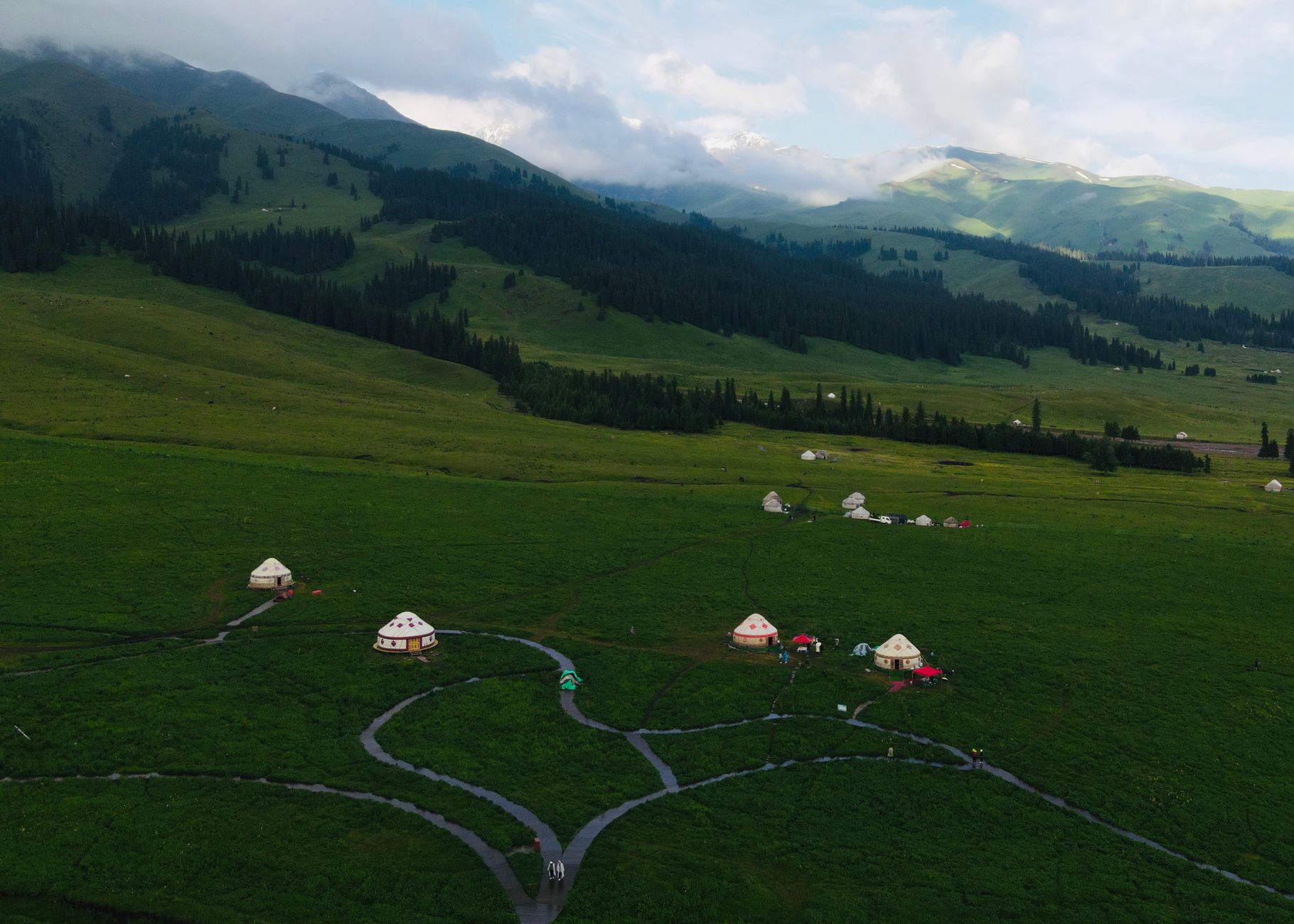
Yurt tourism, the kind that operates through actual family homestays rather than curated resort setups, has been quietly building here for years. Local villages around Lake Aydarkul and the Nurata foothills have organized small cooperatives that place travelers in traditional felt yurts, feed them lagman and flatbread cooked over open fire, and send them on horseback through terrain that sees a fraction of the foot traffic found at Uzbekistan’s UNESCO circuit. The experience is less polished than Samarkand and entirely more personal.
The Villages That Kept Their Shape
The Nuratau-Kyzylkum Biosphere Reserve, established under UNESCO’s Man and the Biosphere Programme, covers a significant stretch of this mountain-to-desert transition zone. Within it, villages like Hayat, Sentyab, and Gurumsoq have retained architectural and agricultural patterns that development pressures flattened elsewhere in Uzbekistan during the Soviet era. Stone houses terrace the hillsides, irrigation channels feed orchards of apricot and pomegranate, and mulberry trees still support small-scale silk production in some households. The continuity here is not performed for visitors. It predates tourism entirely.
That authenticity is part of what draws the kind of traveler who has already done Tajikistan’s Wakhan Corridor and is looking for something that sits at a similar altitude of remoteness without requiring a two-week expedition commitment. The Nuratau villages are reachable in a day from Tashkent or Samarkand, which sounds like a logistical advantage until you realize it also means you have very little excuse not to go.
Life at the Edge of the Kyzylkum
The desert begins where the mountains end, and that boundary is part of the Nuratau’s strange appeal. You can wake up in a yurt with walnut branches overhead, ride a horse through scrubland in the afternoon, and watch the Kyzylkum’s sand horizon go orange at sunset – all within a few kilometers. Lake Aydarkul, a vast artificial lake created by Soviet irrigation projects in the 1960s, forms the northern edge of this zone. It now sustains a small fishing economy and supports yurt camps along its shores where flamingos pass through during migration season.
The food culture in these mountains is worth traveling for on its own terms. Families prepare dishes that differ noticeably from the Samarkand or Tashkent versions of Uzbek cuisine – heavier on dairy from local herds, more reliant on dried fruits from village orchards, and structured around the rhythms of what is growing or being harvested that week. There is no menu. You eat what the household is eating, which is almost always the better arrangement.
Horseback trekking routes through the Nuratau range are increasingly well-documented by local guides, though the trails themselves remain unmarked. Guide quality varies widely, and the most reliable connections tend to come through community-based tourism networks rather than Tashkent travel agencies, which often bolt on a “mountain village day” to a Silk Road circuit without genuine local involvement. Asking specifically for a guide from the village you plan to stay in makes a significant practical difference to the experience.
The range also holds some genuinely unusual wildlife. Nuratau lizards, a species found nowhere else on earth, inhabit the rocky slopes. Marco Polo sheep tracks appear at higher elevations. Birders come for raptors – eagle owls, lammergeiers, and various harriers move through the ridgelines in numbers that justify the detour even for visitors who are not primarily there for wildlife.
Getting There Without a Tour Package
Independent travel to the Nuratau is doable but requires more planning than the Samarkand circuit. Shared taxis from Nurata town – itself worth a few hours for its ancient fortress and sacred spring complex – run irregularly to the mountain villages. Hiring a driver from Samarkand for a two-to-three night loop is the most practical approach for travelers without their own vehicle. Roads into the upper villages are unpaved and require a high-clearance car after rain.
Accommodation booking works almost entirely through direct contact or through community tourism coordinators in Nurata town, not through major booking platforms. That friction filters out a certain type of traveler, which is probably why the villages have retained their character as well as they have.
Why Samarkand Still Wins the Numbers Game
None of this is a case against Samarkand. The Registan is genuinely extraordinary, the Shah-i-Zinda necropolis is unlike anything else in Central Asia, and the infrastructure for visitors there is professional and well-organized. But a circuit that includes only the UNESCO highlights and skips the living landscape to the northwest leaves out a dimension of Uzbekistan that the tile-and-dome photographs cannot communicate.
The Nuratau offers no shortcuts to understanding it. You need a couple of days minimum to feel the rhythm of a village morning – the sound of livestock before dawn, bread baking by mid-morning, the specific quality of afternoon light through walnut branches. One day is not enough, and most itineraries built around Uzbekistan’s main tourist circuit do not budget two.
That time constraint is the real reason the Nuratau remains undervisited, not a lack of interest. Travelers who have been there tend to describe the experience in terms that sound faintly evangelical – the kind of place that reorganizes your sense of what a trip is actually for. The question is whether the growing volume of Uzbekistan tourism overall, which has increased sharply since the country liberalized its visa policy, will eventually shortcut that friction or whether the mountains’ relative inconvenience will continue to protect what makes them worth visiting in the first place.