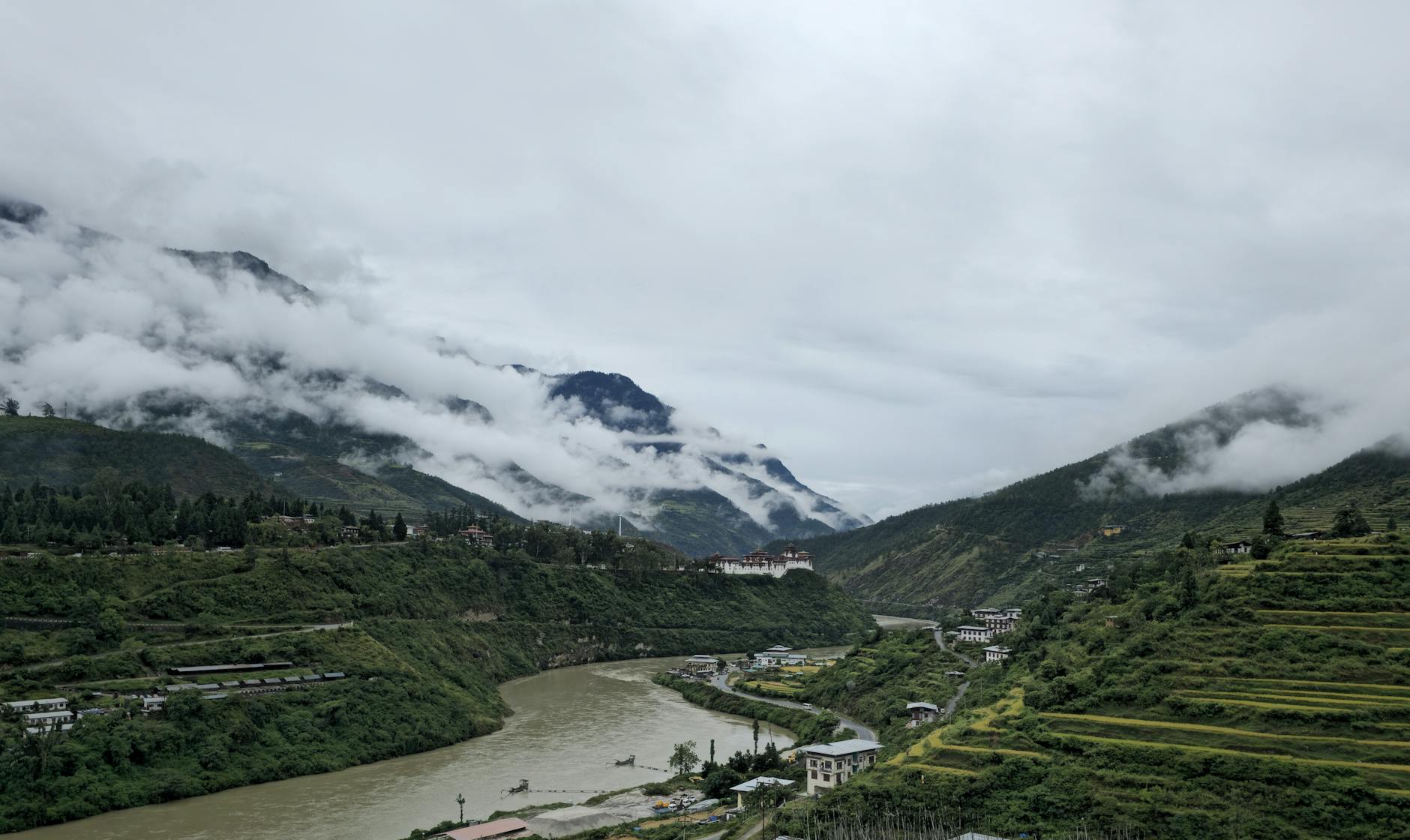

A Valley Hiding in Plain Sight
Paro has long been the default entry point into Bhutan – home to the country’s only international airport, its most photographed fortress, and the trail leading up to Tiger’s Nest. For most visitors, Paro is Bhutan. But roughly 75 kilometers to the east, the Punakha Valley sits in a warmer, lower elevation, flush with rice paddies, jacaranda trees, and a dzong that many architects and historians consider the most beautiful in the country. Most tourists visit it as a day trip from Paro. A growing number are now building their entire Bhutan itinerary around it instead.
The shift is gradual but visible. Guesthouses in Punakha town are filling up earlier in the season. Farmers market stalls catering to visitors have multiplied along the valley road. And local guides are increasingly fielding requests from travelers who specifically want to avoid the tour-group density that now defines Paro’s most popular sites during peak spring season. Punakha is not undiscovered – but it is still running several years behind Paro in terms of visitor saturation, and that gap matters.
What Punakha Actually Offers
The valley’s centerpiece is Punakha Dzong, a 17th-century fortress monastery built at the confluence of the Pho Chhu and Mo Chhu rivers – the “father” and “mother” rivers in Dzongkha. The structure floods with the pale blue blooms of jacaranda trees every spring, which is partly why the February-to-April window has become the valley’s busiest period. But unlike Paro’s Tiger’s Nest, which requires a demanding uphill hike and draws hundreds of visitors daily during peak season, Punakha Dzong is accessible to virtually any traveler and rarely crowded enough to undercut the experience.
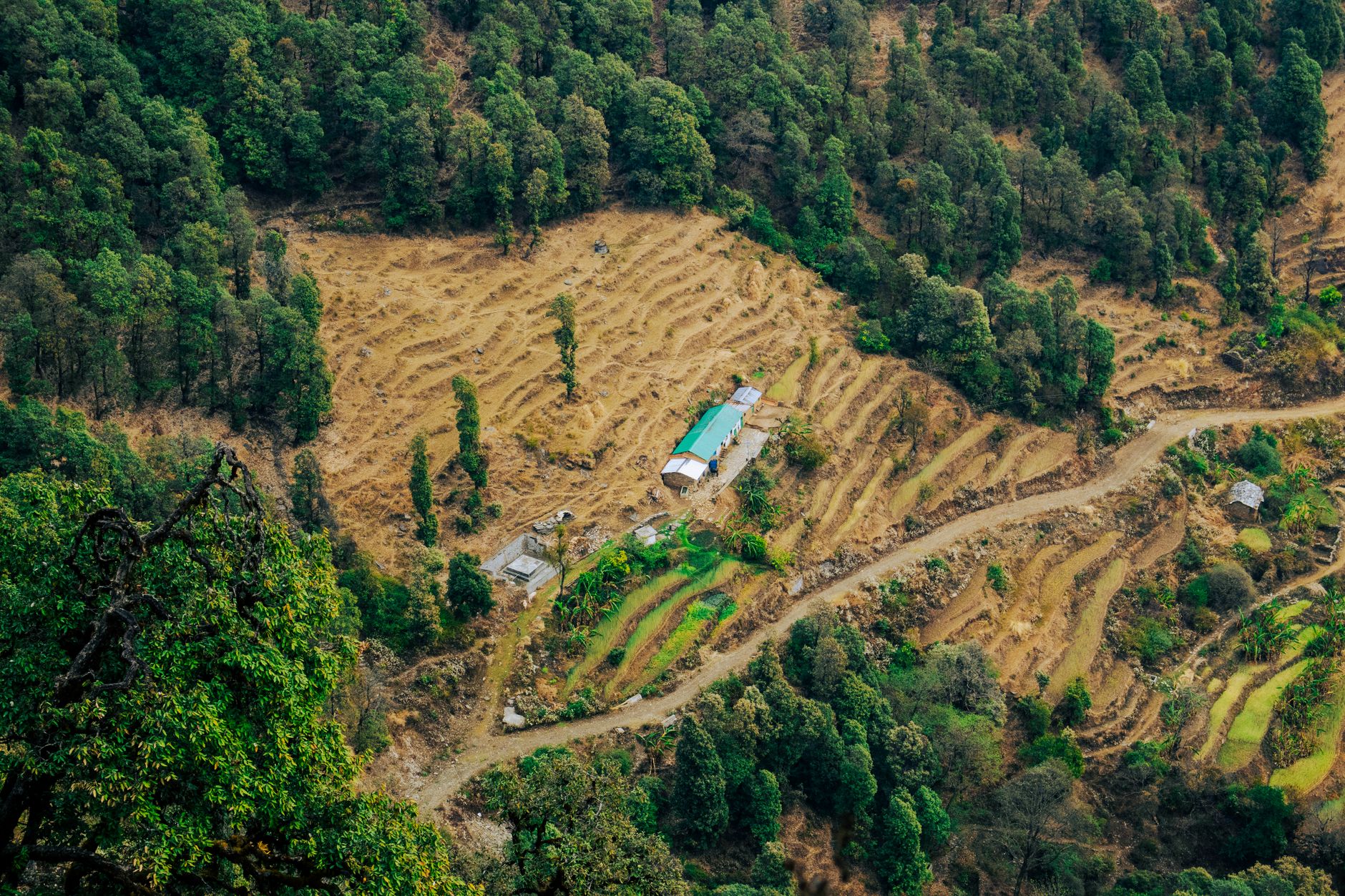
Beyond the dzong, the valley offers a walking culture that Paro increasingly cannot. The Khamsum Yuley Namgyal Chorten, a temple set above the valley on a forested hillside, requires a 45-minute walk through rice fields and pine forest. There are no cable cars, no paved shortcuts, and no crowds. The walk itself is the point – a slow passage through a working agricultural landscape where farmers still plow with oxen during planting season and the only sounds are water and birdsong. Bhutan built its tourism model around high-cost, low-volume travel, and Punakha is where that philosophy still feels intact.
The valley also benefits from its climate. Punakha sits at roughly 1,200 meters, significantly lower than Paro’s 2,250 meters, which means warmer winters and a longer growing season. Visitors in December and January, when Paro can feel cold and austere, find Punakha mild and lush by comparison. That climate advantage has made it particularly popular with travelers who come outside the traditional spring window and want something closer to the Bhutan of travel magazines – green, warm, and photogenic year-round.
The Infrastructure Question
Punakha’s relative quietude comes with tradeoffs. The valley’s accommodation options remain limited compared to Paro, which has attracted several high-end lodge properties over the past decade. Punakha has a handful of boutique guesthouses and a small number of luxury properties, but the selection narrows quickly for travelers expecting the range of options they’d find near the airport. For now, that constraint is also what preserves the valley’s character.
Road access between Paro and Punakha crosses the Dochu La mountain pass at over 3,000 meters. The drive takes roughly two hours in good conditions and is one of the more scenic road journeys in the Himalayas, with views of snow-capped peaks and a cluster of 108 memorial chortens at the summit. But weather can close the pass briefly in winter, and first-time visitors sometimes underestimate the logistical commitment involved in basing themselves in Punakha rather than treating it as a side trip.
Why the Comparison to Paro Matters Now
Bhutan reopened to international tourism in 2022 after a two-year closure, and when it did, it raised its Sustainable Development Fee – the daily charge all tourists must pay – to $200 per person per night. The intent was to attract fewer, more deliberate travelers. The result, at least in Paro, has been a visitor base that is smaller than before but often clustered at the same top-tier sites. The bottleneck at Tiger’s Nest on busy days suggests the fee alone does not distribute visitors more evenly across the country.
Punakha offers a natural release valve for that concentration. Travelers who have already paid a premium to be in Bhutan often arrive expecting an experience that feels personal and unhurried. Paro delivers that in its quieter corners – its lesser-known temples, its back roads – but those require deliberate research to find. In Punakha, the unhurried quality is simply the default. The valley has not yet developed the infrastructure or the reputation to attract mass-itinerary tourism, which means visitors arrive with more realistic expectations and find them exceeded rather than undercut.
There is also a practical argument for spending more nights in Punakha that has nothing to do with crowd avoidance. The valley sits close to several destinations that make logical multi-day extensions – the Phobjikha Valley to the south, which hosts the black-necked crane migration each autumn, and the old capital region of Wangdue Phodrang to the west. Travelers interested in Himalayan destinations that reward slower, deeper itineraries tend to find Punakha more useful as a hub than its reputation suggests. It is not simply a day trip with a pretty dzong – it is an axis point for a different kind of Bhutan trip altogether.
The local guide community in Punakha is smaller and less formalized than in Paro, which cuts both ways. Visitors get more personal attention and a stronger connection to the valley’s specific culture and history. But the infrastructure for independent trip-planning – detailed English-language signage, tourist information centers, curated walking maps – is thinner on the ground. Travelers who arrive expecting the polished visitor experience of a mature destination will need to adjust. Those who arrive prepared to move at the valley’s pace, on its terms, tend to leave with something Paro, for all its attractions, is finding harder to offer: the feeling of having been somewhere before everyone else figured it out.
Frequently Asked Questions
Is Punakha Valley worth visiting instead of Paro in Bhutan?
Yes – Punakha offers a less crowded experience with warmer weather, scenic rice paddies, and the iconic Punakha Dzong, making it a strong alternative or complement to Paro.
What is the best time to visit Punakha Valley?
February to April is peak season when jacaranda trees bloom around the dzong, but Punakha’s lower elevation keeps it mild and green well into winter, making it viable year-round.