
The Brazilian Amazon gets the magazine covers, the documentary narrators, and the bucket-list checkbox. But tucked into the Bolivian lowlands, a small river town called Rurrenabaque has been quietly building a case that it deserves just as much attention – and for travelers willing to look past the obvious, it may actually offer more.
A Town at the Edge of Two Worlds
Rurrenabaque sits on the Beni River in the Bolivian Amazon basin, roughly 400 kilometers north of La Paz. Getting there is half the experience: a 45-minute flight over the Andes deposits you from cold, thin-aired altitude into thick, humid lowland heat with a suddenness that feels almost theatrical. The town itself is small – one main street of restaurants and tour operators running parallel to the river – but it functions as the gateway to two very different ecosystems: the jungle and the pampas.
That dual access is what separates Rurrenabaque from most jungle destinations. Travelers who book a pampas tour spend days drifting down slow-moving waterways watching capybaras graze on the banks, anacondas sunning themselves on branches just above the waterline, and pink river dolphins surfacing beside the boat without any apparent concern for the humans watching them. It is wildlife viewing with a casualness that safari lodges in Africa charge a premium to replicate.
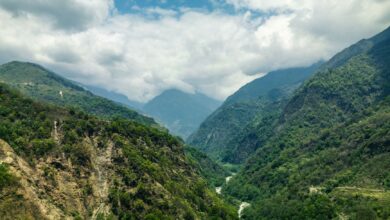
The jungle tour is a different register entirely. Madidi National Park, which begins practically at the town’s doorstep, is consistently ranked among the most biodiverse protected areas on the planet. The park spans from Andean cloud forest all the way down to lowland tropical jungle, creating an elevation gradient that stacks ecosystems on top of each other. A single guided walk through Madidi can produce sightings of species that visitors to better-known Amazon destinations wait days to see – if they see them at all.
Local indigenous communities, particularly the Tacana people, have played a direct role in shaping how Madidi is managed and visited. Community-run ecotourism operations inside the park offer guided experiences led by people who grew up reading the forest rather than studying it from textbooks. The practical result is a quality of nature interpretation that is difficult to find elsewhere at this price point.
What the Jungle Actually Delivers
The standard critique of jungle tourism is that the promise rarely matches the experience – you hear the wildlife far more than you see it, the insects are aggressive, and the lodge is never quite as rustic-chic as the photos suggested. Rurrenabaque sidesteps several of these complaints, not through luxury, but through proximity. Because the wildlife density in Madidi and the surrounding pampas regions is genuinely high, even a two-day tour tends to produce the kind of encounter that elsewhere requires a full week of searching.
On the pampas specifically, the wildlife is accessible in a way that feels almost implausible. Boat trips along the waterways encounter caimans in numbers that make clear these are not staged or baited encounters. Guides regularly pull the boats to the bank to point out anacondas – sometimes large ones – draped across tree roots in full daylight. Travelers who want to swim with river dolphins can do so in designated areas where the dolphins approach by choice, drawn by curiosity rather than feeding programs.
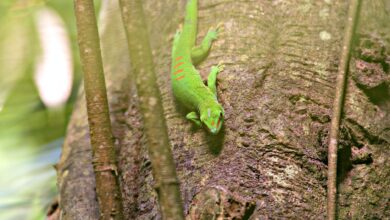
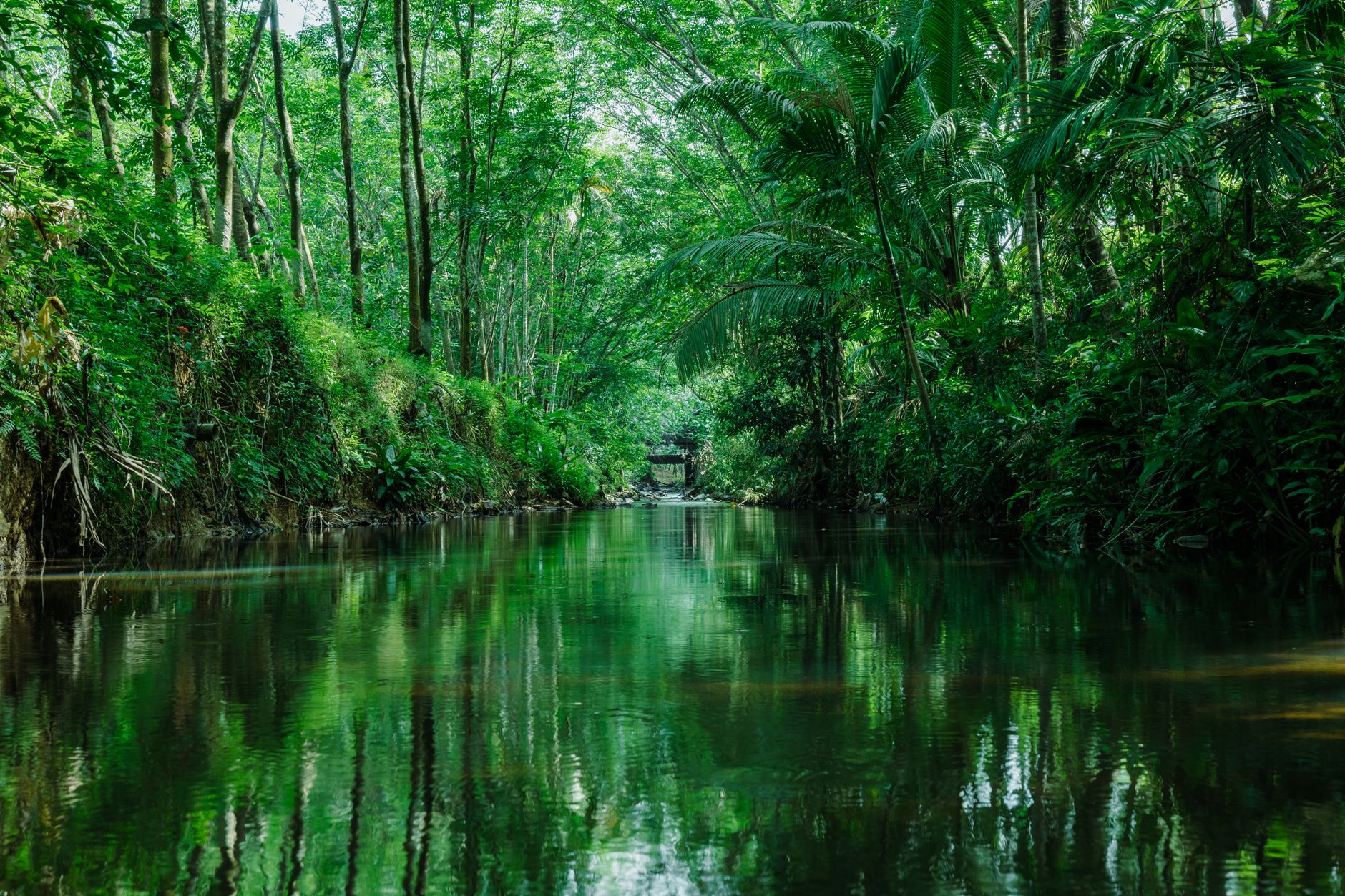
The jungle side of the experience skews more toward flora and the subtler signs of animal life: tracks, calls, the architecture of termite mounds, the way different tree species compete for canopy light. Guides with deep local knowledge turn what might otherwise feel like a walk through undifferentiated greenery into something closer to reading a detailed map. Poison dart frogs, rarely seen without instruction, become easy to spot once someone explains what to look for and where.
Accommodation ranges from basic riverside lodges to more intentionally designed ecolodges that use solar power and source food locally. Neither end of the spectrum is going to satisfy someone whose baseline is a five-star resort. But for travelers who came specifically to be inside the ecosystem rather than insulated from it, the rougher edges are part of what makes Rurrenabaque feel authentic rather than packaged.
The cost structure is another reason the destination attracts serious jungle seekers over casual tourists. A multi-day pampas and jungle combination tour, including accommodation, meals, transport, and guiding, runs at a fraction of what comparable experiences cost in Ecuador, Peru, or Brazil. That affordability is not a sign of inferior product – it reflects Bolivia’s general cost structure and a tourism industry that has not yet optimized itself for extracting maximum spend per visitor. For travelers who know that, it is a significant advantage.

Getting There and Timing It Right
The flight from La Paz to Rurrenabaque, operated by small domestic carriers, takes under an hour but requires flexibility – flights cancel or delay frequently due to weather, and the airstrip at Rurrenabaque sits in a valley that can close without much warning. The alternative is an overland journey of roughly 18 to 20 hours on roads that range from paved to deeply challenging. Most travelers who have done both routes agree: book the flight, but pack the patience. Bolivia’s Yungas Road, which runs through some of the same mountain terrain on the descent toward the lowlands, gives a sense of how dramatic and unforgiving this geography can be.
Timing matters significantly. The dry season, roughly May through October, is widely considered the better window for pampas tours – water levels drop, wildlife concentrates around remaining waterways, and visibility improves. The wet season brings its own rewards in the jungle, where rain coaxes out amphibians and plant life in ways the dry months do not, but flooding can limit access to certain areas and make trails difficult. Most operators are transparent about what each season offers, which makes it possible to calibrate expectations rather than arrive with the wrong ones.
What Rurrenabaque has not done is solve the tension at the center of every successful ecotourism destination: the more attention it gets, the harder it becomes to preserve the low-impact character that made it worth visiting. Infrastructure has grown gradually, and the community-based tourism model offers some protection against the worst outcomes of overcrowding. But the question of how many visitors the pampas and Madidi can absorb before the experience begins to erode is one the town has not yet had to answer at scale – and nobody is quite sure where that threshold sits.