
When the Sky Becomes the Floor
Salar de Uyuni sits at roughly 3,600 meters above sea level in southwestern Bolivia, spanning nearly 11,000 square kilometers of blinding white salt crust. For most of the year, it looks exactly like what it is: a vast, ancient lakebed that dried out tens of thousands of years ago, leaving behind a flat expanse of hexagonal salt tiles cracked by the sun. But for a few weeks each year, between December and April, thin sheets of standing water turn the entire surface into a perfect mirror – and photographers from every corner of the world show up with tripods, wide-angle lenses, and a willingness to stand ankle-deep in saline water at 5 a.m. just to catch the light.
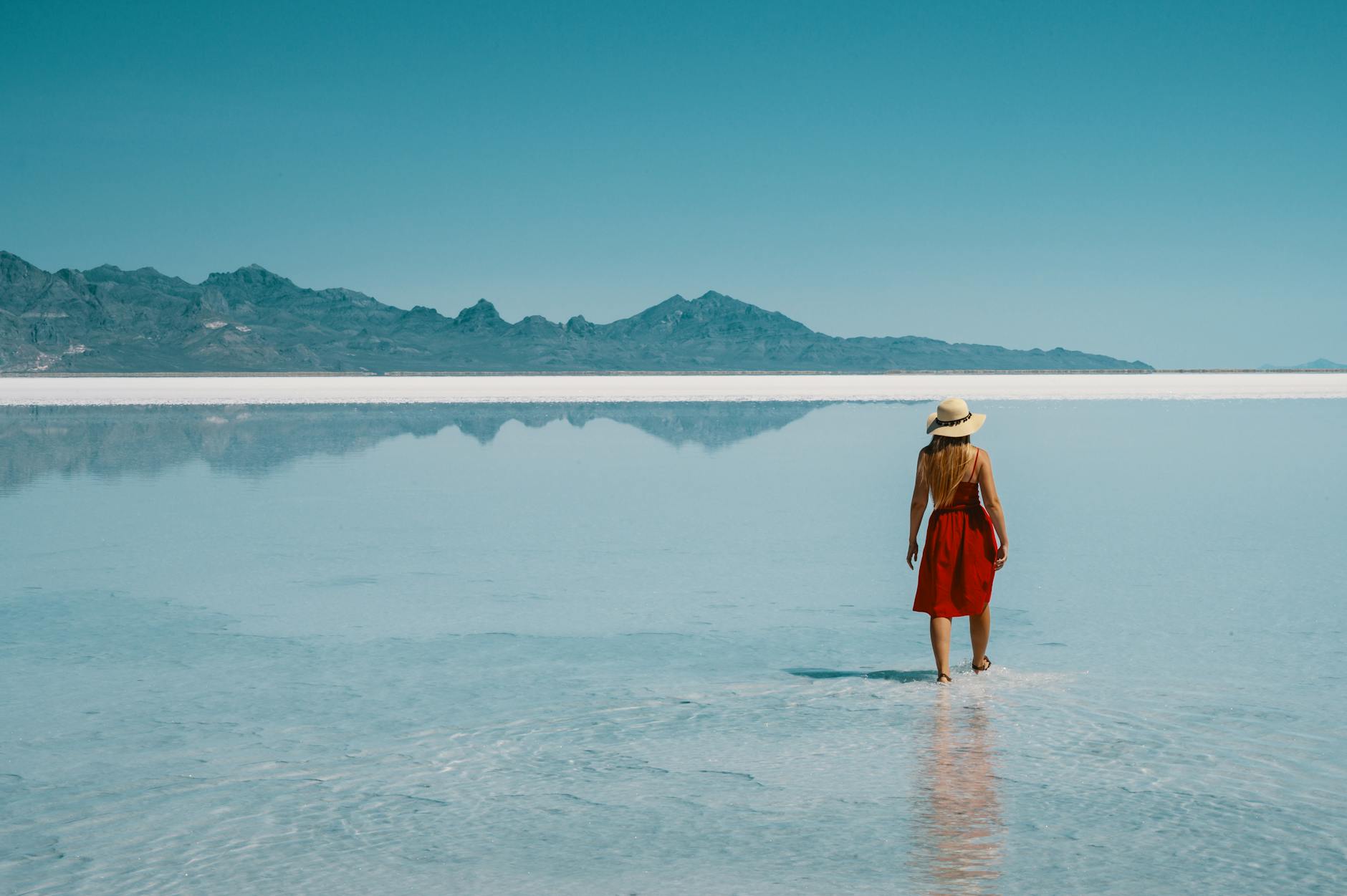
The phenomenon is not new. Local communities and regional tour operators have known about the wet season flooding for generations. What has changed is the scale of global attention around it. The mirror effect has become one of the most photographed natural events in South America, drawing not just wildlife and landscape photographers but portrait shooters, commercial crews, and social media creators chasing a specific kind of image: a person standing in what appears to be infinite sky, with no horizon line visible anywhere in the frame.
What Actually Creates the Mirror
The physics behind the effect are simple but specific. When seasonal rains flood the flats with a shallow layer of water – typically just a few centimeters deep – the stillness of the air at dawn and dusk allows the surface to become completely calm. Because the salt crust is nearly perfectly flat, the water has no current or slope to disturb it. The result is a reflection so precise that the boundary between sky and ground effectively disappears. Colors from sunrise and sunset register in the water with the same intensity as they appear overhead, which is why the best images from Uyuni tend to look digitally manipulated even when they are straight out of the camera.
The window for catching the mirror in peak condition is narrow. Too much rain and the water becomes cloudy with dissolved minerals; too little and the surface is patchy, breaking the illusion. Wind is the other variable – even a light breeze ripples the surface enough to shatter the reflection. Photographers who have made multiple trips to Uyuni often describe the experience as chasing conditions rather than a location. You can book the flight, hire the guide, and still spend three days looking at a mediocre reflection because the wind picked up at the wrong hour.
The Logistics of Getting There – and Staying Long Enough
Most visitors arrive via Uyuni town, a small city in the Potosi department that has built an entire tourism economy around the salt flats. Flights connect from La Paz, the administrative capital, with the journey taking under an hour by air compared to roughly ten hours by bus on roads that range from acceptable to genuinely rough. The town itself is functional rather than luxurious – a grid of simple hotels, tour agency storefronts, and restaurants catering mostly to backpackers and budget travelers. A handful of mid-range properties have opened in recent years, but Uyuni has not yet attracted the kind of high-end resort development that appears in other dramatic landscapes, like the underground hotel concepts taking root in Chile’s Atacama Desert.
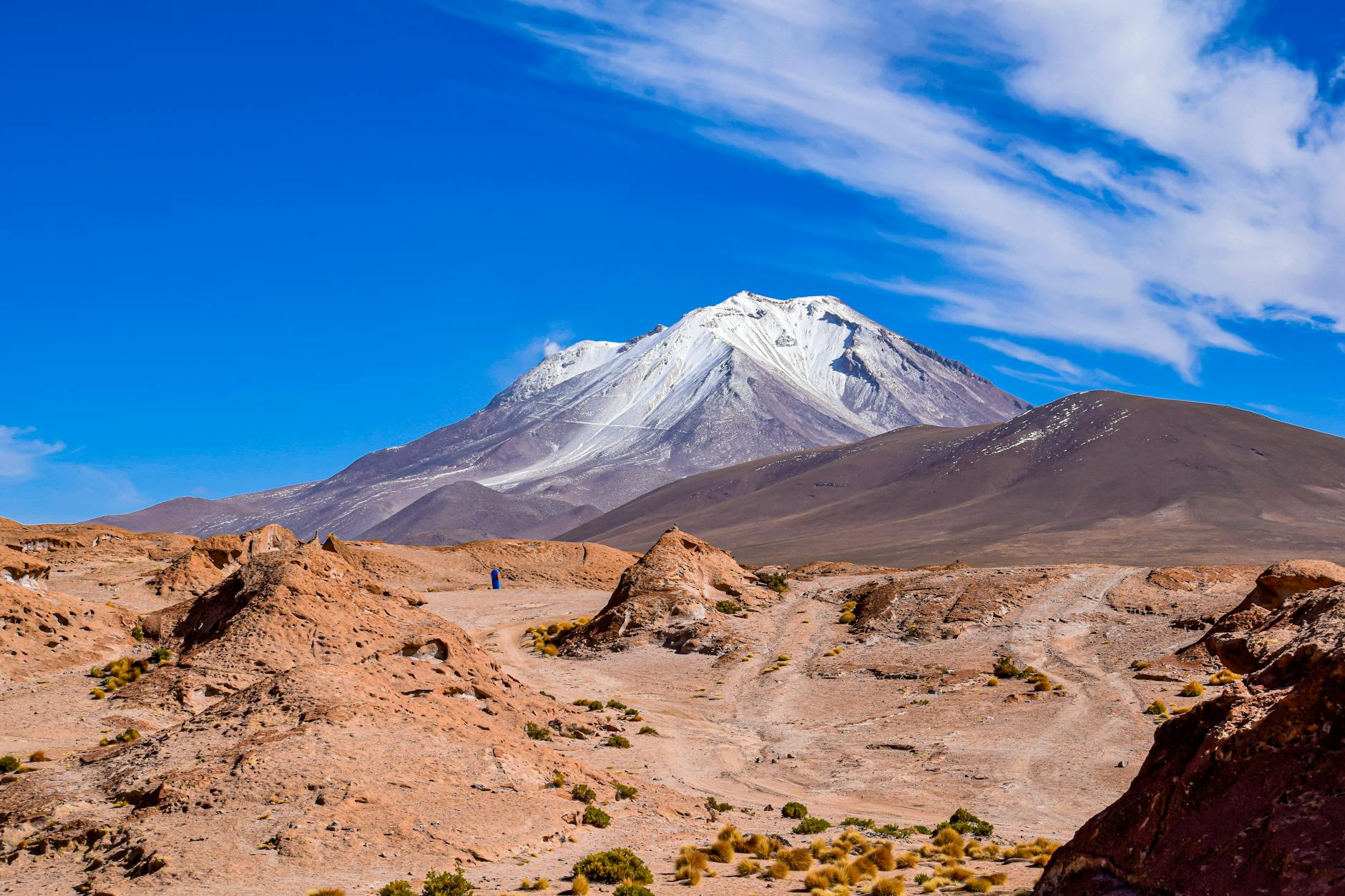
The standard approach for photographers is to hire a local guide and 4×4 vehicle for a multi-day trip across the flats and the surrounding Altiplano. Guides know where the water tends to pool most consistently, which sections of the crust are safe to drive on after rain, and how to read the conditions for the critical early-morning windows. Going without a guide is technically possible but widely discouraged – the flats offer almost no navigation landmarks, cell service drops out quickly, and the terrain after rain can be deceptively unstable in spots where the salt crust has softened.
Timing a visit correctly requires paying attention to Bolivian weather patterns that do not always behave predictably from year to year. The wet season runs from November through March, but the most reliable mirror conditions tend to cluster in January and February. Photographers who track online communities devoted to Uyuni imagery will often share real-time condition reports, and some tour operators have begun offering rough daily updates on water depth and clarity. Even so, there is no guarantee. One travel photographer who made the trip in late January described waking before 4 a.m. on four consecutive mornings before finding the stillness and light that produced the images she had planned for months.
Altitude is the factor that surprises many first-time visitors. At 3,600 meters, Uyuni sits high enough that altitude sickness is a genuine concern, particularly for travelers arriving directly from low-elevation cities. Spending a day or two acclimatizing in La Paz or Sucre before heading out to the flats is standard advice, and physical exertion – including hiking around with heavy camera gear – hits harder than expected when the air is this thin. Photographers who need to move quickly to catch changing light find themselves slowing down whether they want to or not.
What Draws Photographers Specifically
The Salar creates a particular kind of creative challenge that few locations can match. The absence of a horizon line forces photographers to think differently about composition, depth, and scale. Standard landscape rules about thirds and leading lines stop working in the obvious ways. What replaces them is an almost abstract approach: figures suspended in color, geometric patterns from the salt tiles visible through shallow water, lone cacti on small islands rising out of the reflection without any visual context to anchor them.
Portrait photographers find it equally disorienting – in the best possible sense. A person standing on the flats during mirror season appears to float. Their reflection falls directly below them with perfect symmetry. The color of the sky wraps around the subject in every direction. It is a setup that requires almost no post-processing to look dramatic, which is partly why images from Uyuni spread so quickly across visual platforms.
Commercial shoots have started making the location a regular destination for fashion and automotive campaigns. The scale allows for a kind of visual isolation that is nearly impossible to achieve in a studio or on a more accessible location. The logistics are harder, the weather unpredictable, and the altitude uncomfortable – but the payoff is a background that looks like nothing else on earth, which is exactly what certain clients want.
What no image fully prepares visitors for is the silence. The Altiplano at dawn, with no wind and a few centimeters of still water stretching to the edge of the visible world, produces a quiet that feels physical. Some photographers describe standing on the flats at first light as one of the stranger sensory experiences of their careers – not because of what they see, but because of what they cannot hear at all.