
The Road That Built Its Own Reputation
Bolivia’s Yungas Road – officially named the North Yungas Road and stretching roughly 69 kilometers from La Paz down into the Amazon basin – has carried the nickname “Death Road” since the 1990s, when a Inter-American Development Bank report once identified it as one of the world’s most dangerous roads by vehicle fatality count. That reputation brought curiosity seekers. What kept them coming back, and what now draws a different kind of traveler entirely, is the riding itself: a near-continuous descent of more than 3,600 meters through cloud forest, waterfalls, sheer cliff faces, and fog so thick it turns the trail into something closer to a fever dream than a bike route.
Patagonia has long owned the cycling adventure conversation in South America. Its gravel roads, wind-scoured passes, and dramatic Torres del Paine scenery photograph beautifully and market even better. But serious cycling adventurers – the kind who plan routes around raw terrain rather than Instagram backdrops – have quietly been shifting attention north. Yungas offers something Patagonia cannot: a single-day descent so technically varied and atmospherically strange that it resets what riders believe a cycling experience can actually feel like.
What the Terrain Actually Demands
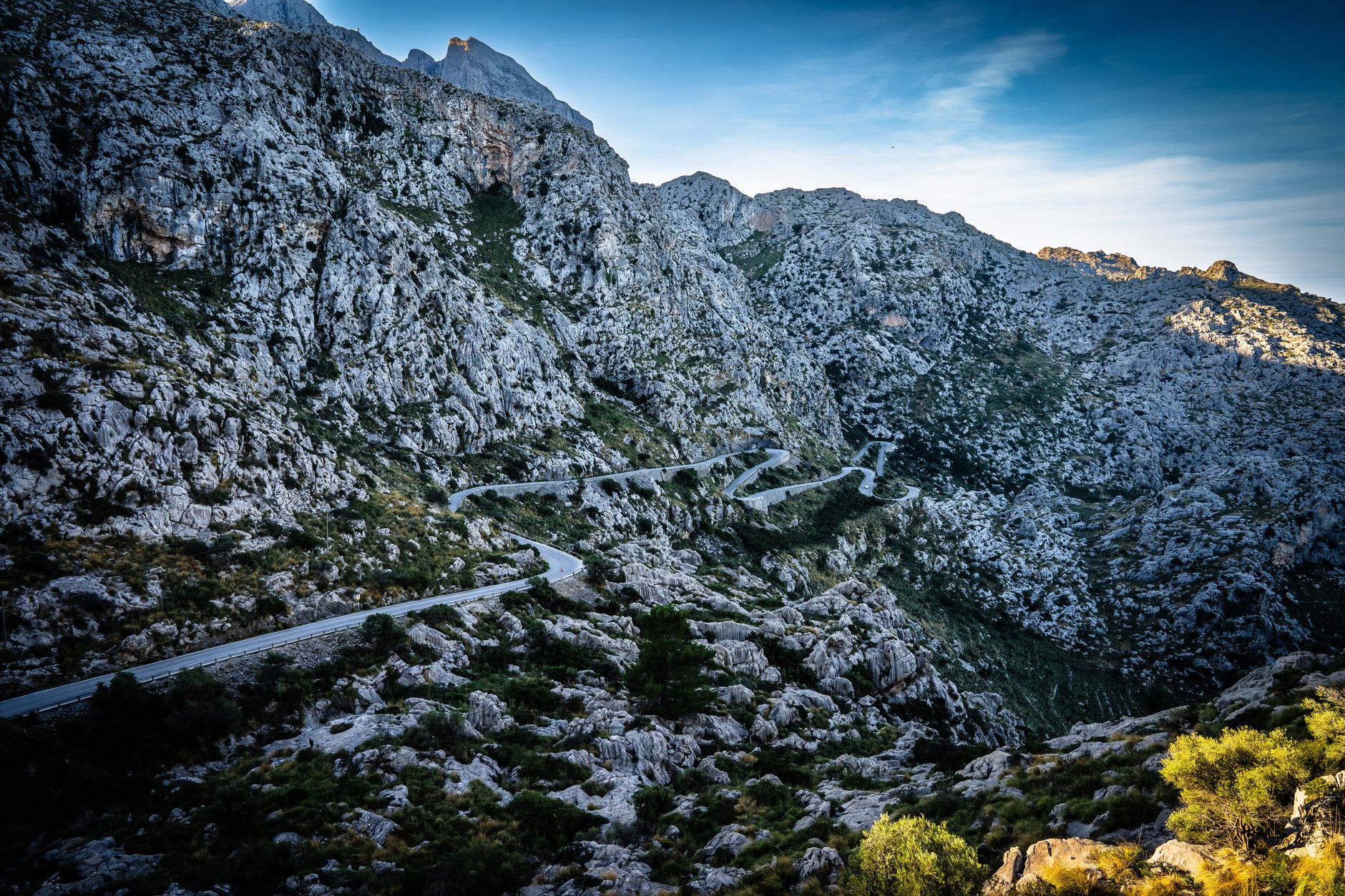
The standard guided descent begins at La Cumbre pass, sitting above 4,650 meters in the Andes, and ends near Coroico at around 1,100 meters. Riders spend the first section on paved road before hitting the original dirt track – narrow, unpaved, and carved directly into the mountainside with drops of hundreds of meters on the left side and rock walls on the right. There are no guardrails on most of the route. During rainy season, which runs roughly from November through March, waterfalls pour directly across the road surface. Riding through them is not optional.
The physical demand is real but not extreme by endurance standards – most riders complete the descent in three to four hours. The challenge is almost entirely technical and psychological. Loose gravel, sudden blind corners, and visibility that can drop to near zero in cloud cover require constant attention. Riders who approach it as a casual tourist activity tend to struggle. Riders who treat it as a technical mountain bike route tend to have the better experience, and the better story afterward.
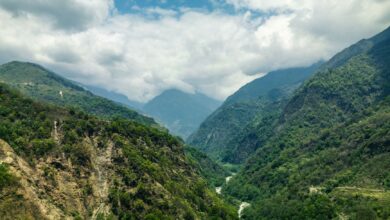
The biodiversity shift across that vertical drop is extraordinary. Starting in high-altitude scrubland where almost nothing grows above knee height, the route passes through successive climate zones until the air becomes humid and warm, the vegetation transforms into dense tropical forest, and the road is flanked by hanging moss and flowering plants that weren’t visible an hour earlier. There is no equivalent experience in Patagonia – that region’s terrain is vast and visually striking, but it stays within a relatively narrow ecological range. Yungas compresses multiple ecosystems into a single morning.
How to Actually Plan the Trip
Most visitors base themselves in La Paz, which sits at altitude and requires acclimatization before the ride. A minimum of two to three days at altitude is the standard recommendation before attempting any strenuous activity above 3,500 meters. La Paz offers a full range of outfitters running guided Yungas descents, and the tour operator market here is mature enough that gear quality – particularly bike quality – varies significantly between companies. Bringing your own helmet is worth considering regardless of what the tour includes, and riders with mountain biking experience should specifically ask about suspension travel and brake condition before accepting whatever bike is handed to them.
The broader Yungas region beyond the road itself is largely underdeveloped for tourism, which is a meaningful part of its appeal. The town of Coroico at the bottom of the descent has accommodation and food, and some riders extend their trip into the lower Yungas valleys – a different experience entirely, slower and more rural, with small farms producing coffee and coca at elevations that feel nothing like the altiplano above. That contrast, between the world you left that morning and the one you arrive in by afternoon, is something Patagonia’s more homogeneous landscape simply doesn’t offer.
Where Yungas and Patagonia Actually Diverge
The comparison to Patagonia is useful precisely because it clarifies what each destination does and doesn’t offer. Patagonia is a multi-day, often multi-week proposition. The Carretera Austral in Chile and the Ruta 40 corridor in Argentina reward cyclists who want long-distance grinding through remote terrain, with the satisfaction accumulating over hundreds of kilometers. Yungas is the inverse: a single concentrated hit of extreme terrain, altitude, ecological variety, and sensory overload compressed into one descent. Neither experience is superior – they serve genuinely different appetites.
What makes Yungas worth the direct comparison is that it has begun attracting the same caliber of rider that Patagonia draws – people with real technical skill who travel specifically for terrain, not for comfort or convenience. The growth of gravel cycling as a discipline globally has sent more riders looking for routes that challenge bike-handling rather than just endurance. Yungas delivers that in a format that requires minimal gear, minimal planning, and minimal time away from other travel. You can fly into La Paz, ride Yungas on day four, and fly out a week later having had an experience that sits alongside anything Patagonia offers in a rider’s memory.
The elevation change alone – more than 3,600 meters in under 70 kilometers – produces a physical sensation that is genuinely difficult to replicate anywhere. The ears pop. The temperature climbs noticeably. The clothes that were appropriate at the top become unnecessary by the bottom. For cycling adventurers interested in destinations that deliver on terrain rather than just scenery, the northern Andes more broadly are underrated relative to the attention southern Patagonia absorbs. Yungas is the clearest example of that imbalance.

The one thing Yungas has not resolved is the safety question that built its notoriety in the first place. Deaths on the cycling route still occur – not frequently, but regularly enough that the risk is not theoretical. Outfitter quality matters more here than in almost any other adventure cycling context, and riders who cut costs on guiding or equipment are accepting a genuinely elevated risk. Patagonia’s dangers are mostly climatic and logistical. Yungas presents a specific, concentrated physical hazard on every blind corner above a vertical drop. That distinction won’t deter the riders this road is built for – but it is the reason Yungas will never fully replace Patagonia in the mainstream adventure travel conversation, even as it continues to outperform it for the people who know what they’re looking for.