
The Rainforest Malaysia Forgot to Overpromote
Taman Negara gets the brochures, the package tours, and the airport billboards. It has earned that visibility – at roughly 130 million years old, it is widely cited as one of the oldest rainforests on earth, and the infrastructure built around it reflects decades of investment in visitor access. But in the Malaysian state of Sabah, on the island of Borneo, a different forest has been quietly doing something Taman Negara no longer can: offering genuine solitude in primary lowland dipterocarp rainforest, with wildlife density that stops experienced naturalists cold.
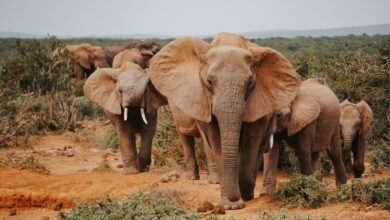
Danum Valley Conservation Area covers around 438 square kilometers of almost entirely undisturbed forest, managed by the Sabah Foundation and accessible through a single research-linked lodge. There are no budget guesthouses at the trailhead. There is no canopy walkway built for casual day-trippers. What exists instead is a forest so intact that Borneo pygmy elephants walk through the lodge grounds at night, and researchers from universities worldwide maintain long-term study plots within walking distance of where guests sleep.
What “Primary Forest” Actually Means Here
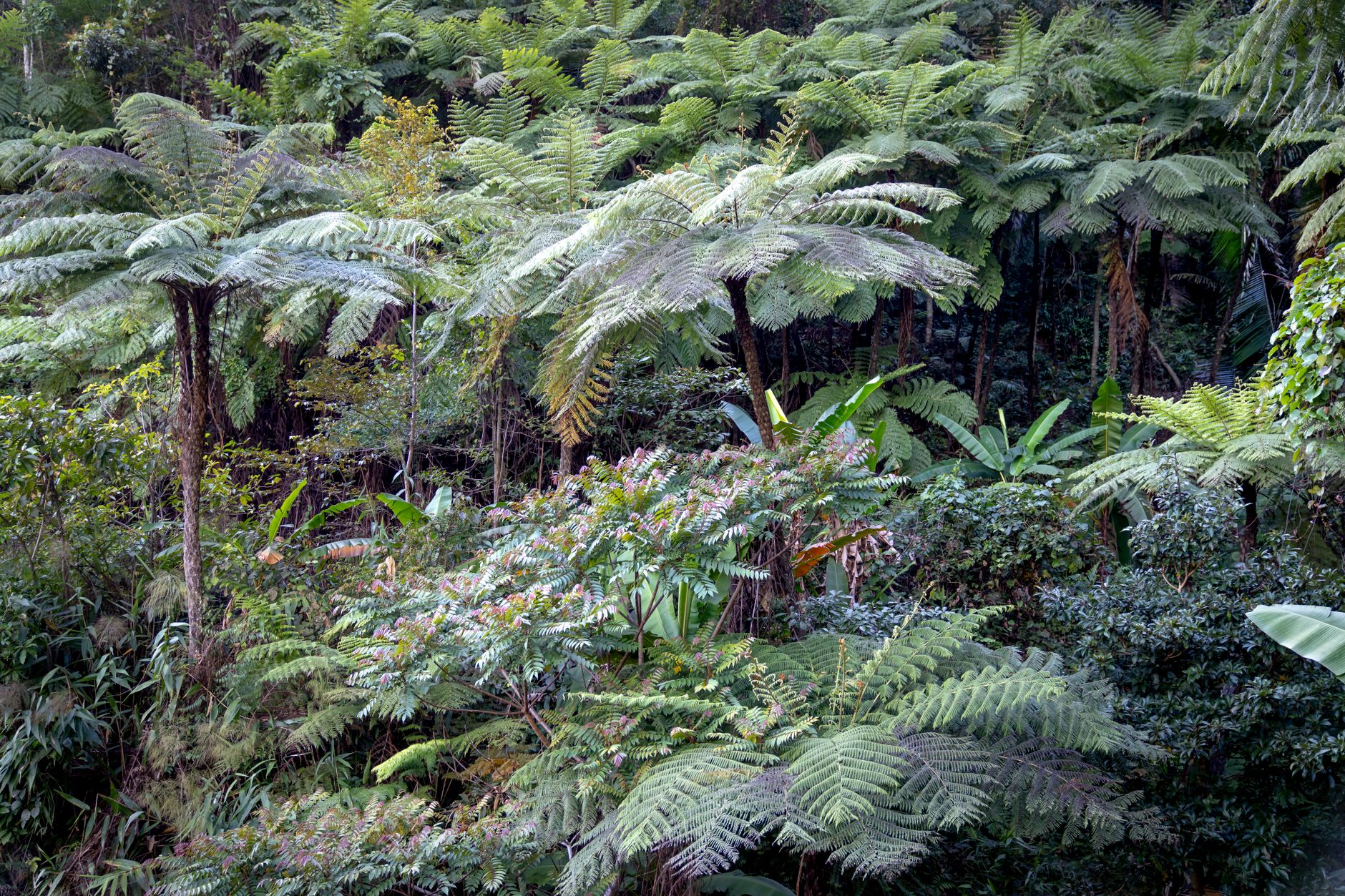
The distinction between primary and secondary rainforest sounds academic until you stand inside both. Secondary forest – regenerated after logging, agriculture, or other clearing – grows back dense and green, but it lacks the structural complexity that takes centuries to develop. The massive emergent trees, the rotting nurse logs hosting dozens of separate plant species, the multi-layered canopy that creates dozens of distinct microhabitats – these are features of old forest, and they are what determine whether certain animals can survive there at all.
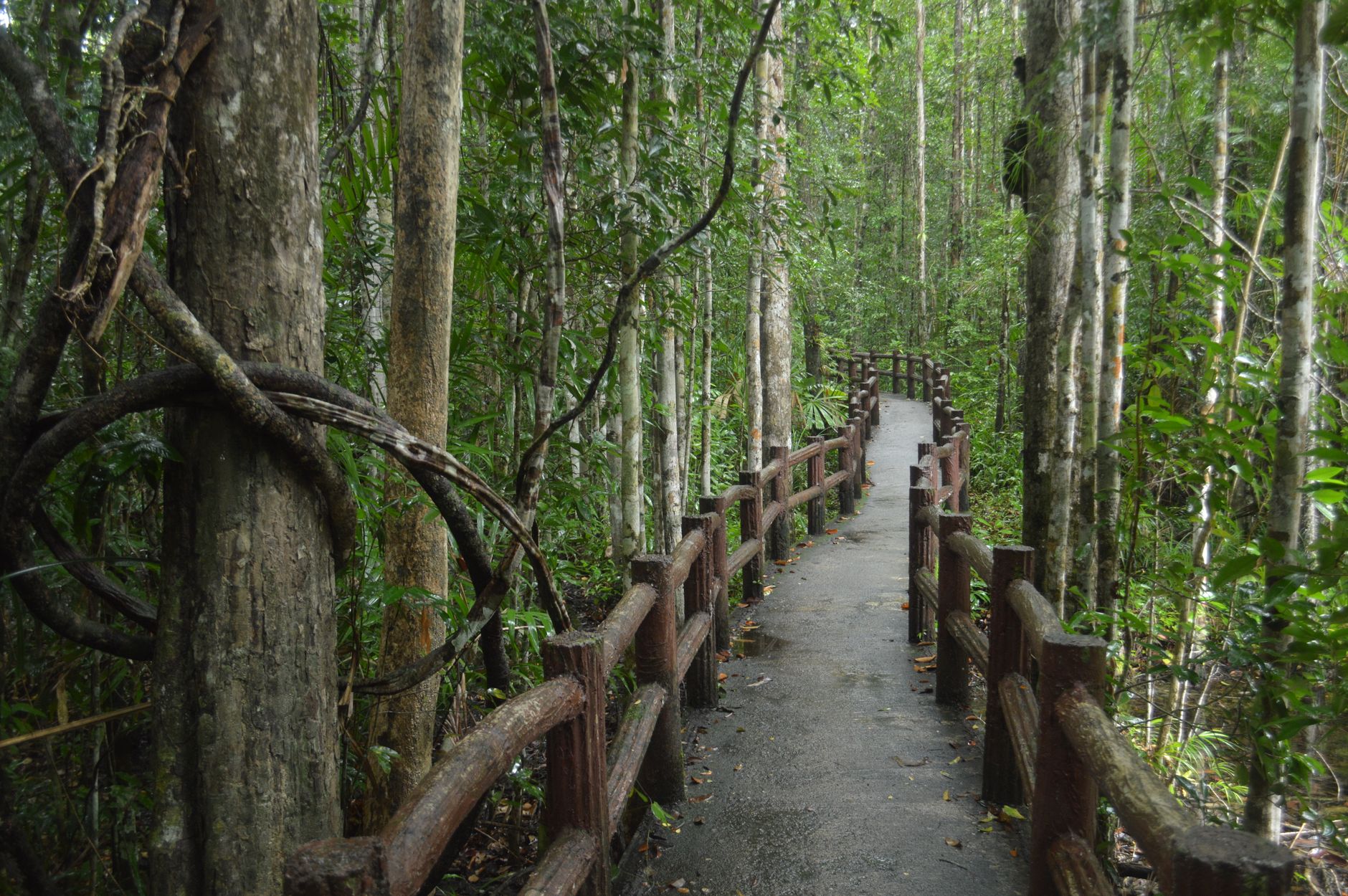
Danum Valley’s forest has never been commercially logged. That single fact separates it from the vast majority of accessible rainforest in Southeast Asia. The trees here include emergent dipterocarps exceeding 60 meters, their buttress roots fanning out at the base like the fins of some enormous structure. Walking the trails at dawn, you pass through a forest where the light never quite reaches the ground directly – it filters down in layers, shifting, green-tinted, and quiet in a way that processed or semi-managed forest simply does not replicate.
Taman Negara, by comparison, sits within a national park that borders significant agricultural and settled land on multiple sides. Its core is protected, but edge effects and visitor volume – particularly along the Tembeling River corridor and near Kuala Tahan – mean that larger mammals have pulled back from areas that once held them reliably. Wildlife sightings in Taman Negara have become increasingly unpredictable near the main access points, which is a reasonable trade-off for a park that serves a wide visitor demographic but a real limitation for anyone traveling specifically to observe primary forest fauna.
The Wildlife Case for Borneo’s Interior
Borneo holds a specific and irreplaceable suite of animals. The Bornean orangutan, the pygmy elephant, the clouded leopard, the Sunda pangolin, the proboscis monkey – none of these exist in Taman Negara. They are island endemics or near-endemics, and Danum Valley’s position within a larger landscape corridor connecting to the Maliau Basin and Ulu Segama Malua forest reserves means populations here are not isolated remnants. They are part of a functioning ecosystem large enough to sustain viable breeding groups.
Orangutan sightings at Danum are not guaranteed – this is wild forest, not a rehabilitation center – but they are consistent enough that multi-day guests have a reasonable expectation of an encounter. The access road into the valley, driven at dusk, is reliably productive for sambar deer, bearded pigs, and occasionally elephants crossing between forest blocks. Night walks near the river produce flying squirrels, civets, and slow lorises in the beam of a headlamp. The volume of activity is not manufactured by feeding stations or habituation programs – it exists because the habitat is still whole.
For birders specifically, Danum Valley is in a different category than almost any other accessible site in the region. The endemic Bornean birds – Bornean bristlehead, endemic hornbill species, the array of pittas that require old-growth forest floor – are present here in concentrations that draw ornithologists on dedicated research trips. The forest interior is quiet enough that bird calls carry clearly, and the lack of heavy foot traffic means birds along the main trails have not developed the wariness that characterizes wildlife near popular visitor corridors.
The lodge itself – Borneo Rainforest Lodge – operates with deliberately limited capacity. A strict cap on visitor numbers is not a marketing angle; it is a condition of the access agreement with the Sabah Foundation, which manages the conservation area primarily for research. The side effect is that guests on the trails in the early morning are often completely alone, a condition that has become genuinely rare in any rainforest with international name recognition.
Getting There, and What It Costs
Danum Valley is not convenient to reach, and that inaccessibility is structural rather than accidental. The nearest city is Lahad Datu in eastern Sabah – a functional but not touristic town reached by domestic flight from Kota Kinabalu or Kuala Lumpur. From Lahad Datu, the lodge operates a dedicated transfer along roughly 80 kilometers of private road through what was formerly a logging concession. The road itself passes through a landscape of recovering forest, secondary growth, and oil palm on its outer sections before the vegetation closes in and the road narrows into the conservation area proper.
The cost is high by regional standards. A stay at Borneo Rainforest Lodge is priced at a level that reflects both its operational isolation and its deliberate exclusivity – budget travelers will find the nightly rate difficult to justify against cheaper alternatives elsewhere in Sabah. What it buys, however, is a ratio of guide-to-guest attention and a caliber of naturalist knowledge that most accessible wildlife destinations cannot match. Guides at Danum are trained in specific forest ecology, not general tourism, and the difference shows within the first hour on the trail. Whether that premium is worth it depends entirely on what a traveler is actually looking for – which is the right question to ask before booking either Danum or Taman Negara in the first place.