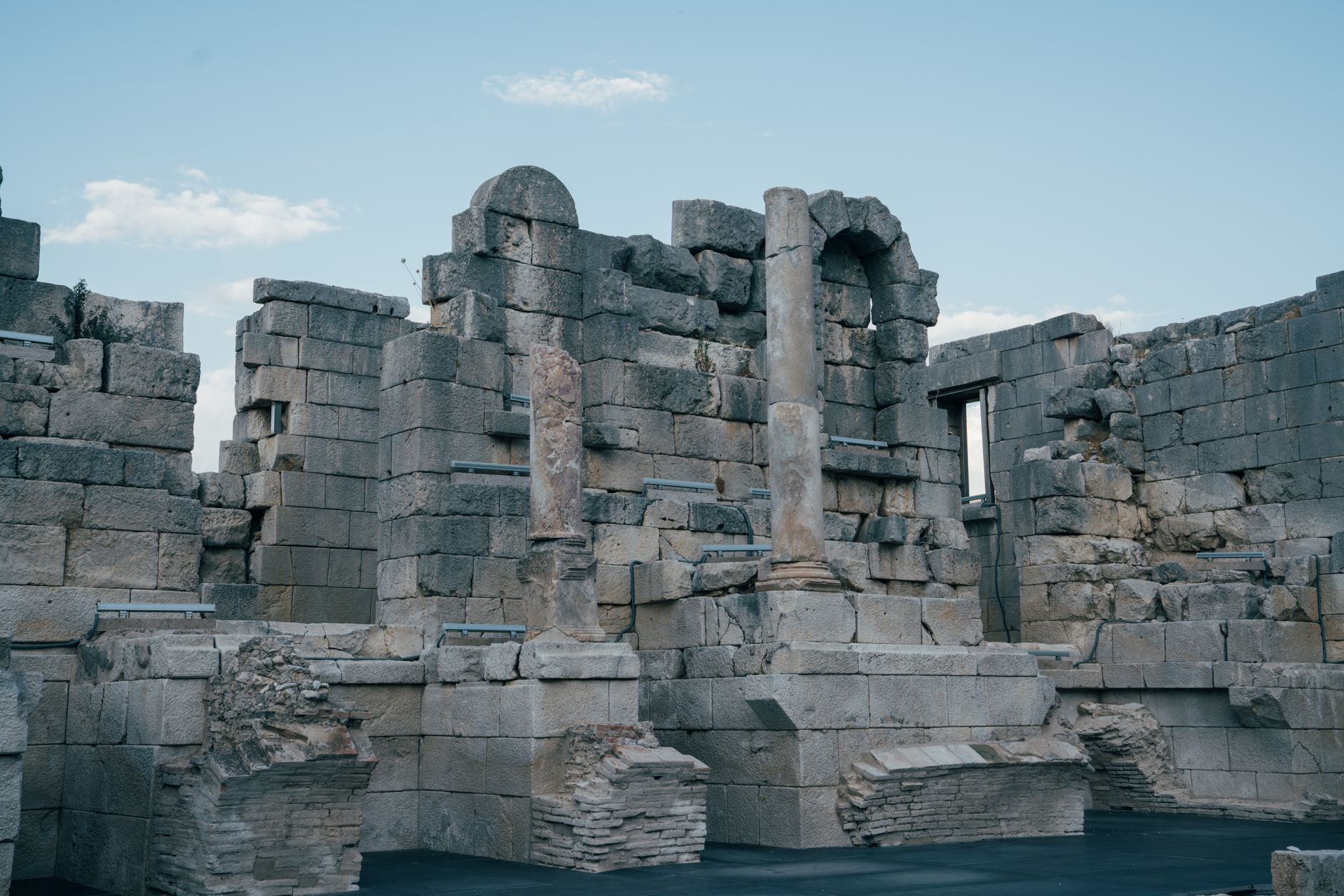

Pompeii gets the pilgrimages, the HBO series, the airport souvenir shops. Leptis Magna gets almost no one. Tucked along the Mediterranean coast of northwestern Libya, roughly 130 kilometers east of Tripoli, this ancient city sat at the crossroads of Roman ambition and North African trade for centuries – and today it stands in a state of near-total preservation that most Italian ruins can’t match. The stones are still there. The arches still reach. The harbor still traces the outline of a port that once shipped olive oil across an empire.
What keeps travelers away is obvious: Libya’s political instability since 2011 has effectively closed the country to conventional tourism. There are no package tours, no Airbnbs, no guided day trips from a coastal resort. Getting to Leptis Magna requires research, risk calculation, and in most cases coordination with specialist tour operators who navigate the country’s current access conditions. For a certain kind of traveler – the kind who treats difficulty as a filtering mechanism – that calculus is exactly the point.
Leptis Magna is not a hidden gem. It is a UNESCO World Heritage site that simply has no crowd.
What Rome Left Behind
The city’s origins predate Rome by several centuries – Phoenician traders founded it, Carthage expanded it, and then Rome absorbed it into its provincial network around 146 BC. But Leptis Magna’s real moment came when the emperor Septimius Severus, who was born there in 145 AD, turned his hometown into a showcase of imperial architecture. What followed was a building campaign that produced a forum, a basilica, a colonnaded street, a harbor complex, and a triumphal arch – all constructed in a compressed period that left the city with an unusual coherence of scale and ambition. Pompeii was frozen mid-life by catastrophe. Leptis Magna was frozen at its peak, then slowly buried by sand.
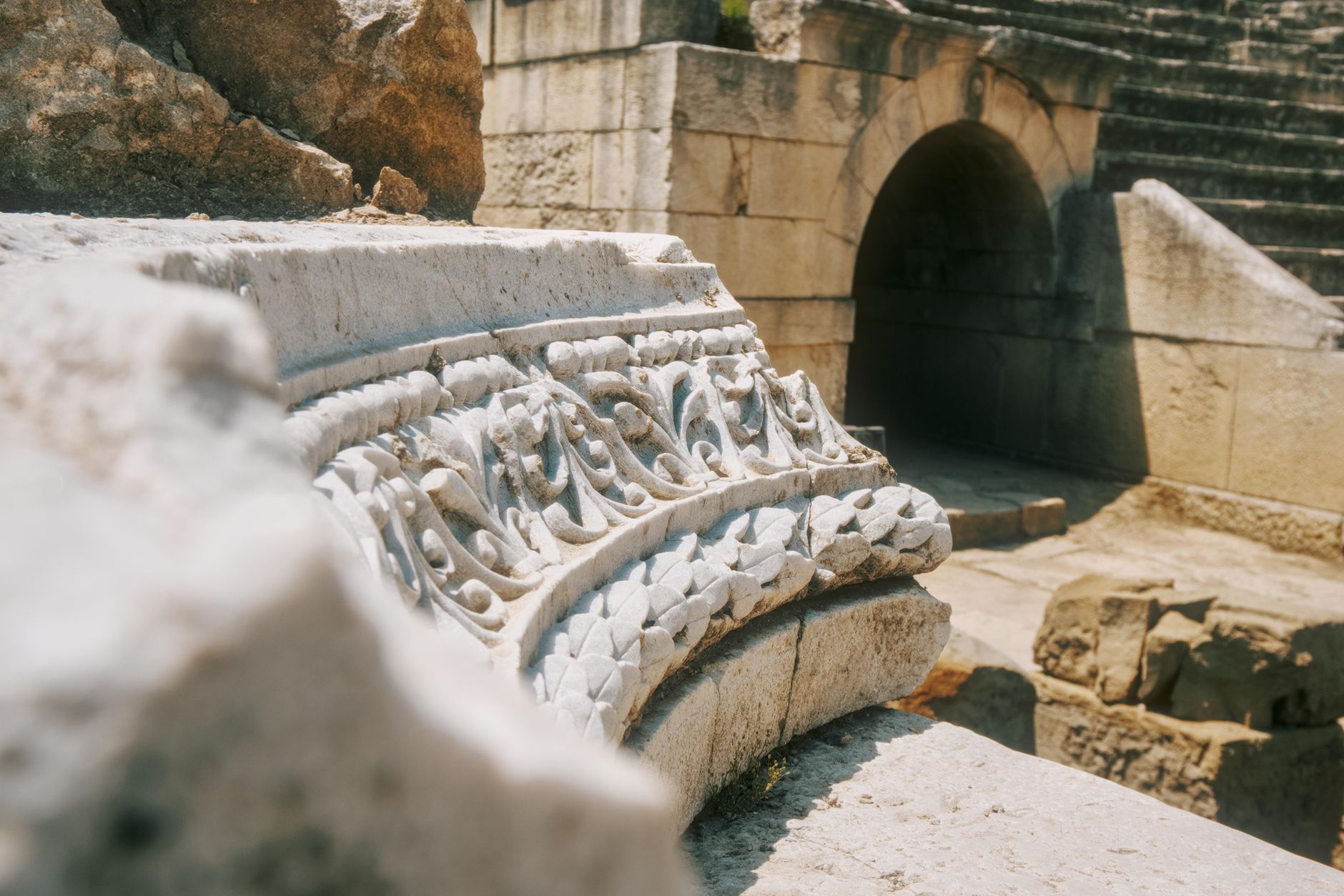
The sand is a large part of why so much survives. When the city was gradually abandoned after the Arab conquest of the seventh century, the Sahara did what it does – it moved north and covered things. Centuries of dune encroachment protected columns, mosaics, and carved marble from the kind of casual looting and stone-scavenging that stripped other Roman sites across the Mediterranean. When Italian archaeologists began systematic excavations in the early twentieth century, they found structures still standing to considerable height, decorative carving still crisp, and spatial relationships between buildings that allow visitors today to actually read the city rather than guess at it. The forum of Septimius Severus, for instance, is bordered by arcades with Medusa heads carved into the spandrels – stone faces staring out from arches, undamaged, their detail intact in a way that stops you mid-step.
The theater is the moment most visitors describe as the site’s emotional center. Built in the first century AD and partially restored, it seats several thousand people and faces the sea. Stand at the orchestra level and look toward the stage backdrop – a two-story screen of columns in Cipollino marble, quarried in Greece, shipped across the Mediterranean, and set into place by people whose names no one recorded. The scale is not abstract. It is in front of you, touchable.
Getting There When Getting There Is Complicated
Libya does not have a straightforward tourism infrastructure, and this requires direct acknowledgment rather than enthusiasm-driven glossing. The country has operated under a split governance structure for years, with competing authorities controlling different regions. Tripoli and the northwest – where Leptis Magna sits – have maintained a degree of relative stability compared to other parts of the country, but conditions shift and any travel planning should involve real-time consultation with your government’s foreign affairs advisories as well as operators with current on-the-ground contacts. Several European specialist tour companies have run small-group tours to Leptis Magna in recent years during periods of relative calm, and the model typically involves coordinated logistics, local guides with established security networks, and itineraries built around minimizing unnecessary movement. This is not DIY travel.
The practical entry point for most international travelers is Tripoli’s Mitiga International Airport. From there, the drive to Al Khums – the modern town adjacent to the ruins – takes roughly two hours along the coastal highway. The site itself is managed by Libya’s Department of Antiquities, and access typically requires coordination in advance. Photography is generally permitted, though rules around specific areas have varied depending on current site management. Travelers who have visited in recent years consistently report that the experience of being at Leptis Magna almost alone – sometimes the only foreigners on-site for an entire day – is disorienting in the best possible way. There is no queue for the arch of Septimius Severus. There is no recorded audio tour playing in six languages. There is just the site, in silence, under Mediterranean light.
The town of Al Khums itself offers limited facilities, and most organized tours base in Tripoli with day excursions to the ruins. Tripoli has functional hotels at several price points and a medina worth walking, but the city’s hospitality infrastructure is calibrated for business travelers and aid workers rather than tourists. Expect competence, not polish. The experience of visiting Leptis Magna is not curated – which is precisely why the ruins, when you reach them, feel unmediated in a way that heavily managed heritage sites rarely do.
The Archaeology in Context
Leptis Magna is not the only Roman site in Libya worth noting. Sabratha, west of Tripoli, has a theater with an extraordinary three-story stage backdrop that has been partially restored and is frequently cited as among the finest preserved theatrical architecture in the Roman world. Cyrene, in the east of the country, is a Greek city that became Roman – a different civilizational layer with a different visual character. Together these three sites form a kind of argument about Libya’s pre-Islamic past that the country’s isolation from tourism has largely kept to academic circles rather than public awareness. For travelers with a serious interest in classical antiquity, Libya functions as an alternative itinerary to the Turkey-Greece-Italy circuit – less refined, more raw, with the particular quality of places that have not yet absorbed the gaze of mass tourism.
The preservation stakes are real. Conflict and instability have damaged some Libyan heritage sites, and Leptis Magna itself has faced threats including looting during periods of reduced oversight. UNESCO and international archaeological bodies have monitored conditions at the site, and there have been documented incidents of vandalism and illegal excavation in the years since 2011. The ruins have survived two thousand years of North African history – but modern instability, it turns out, moves faster than desert sand. Travelers who reach the site today are seeing something in a state of active vulnerability, not just ancient grandeur.
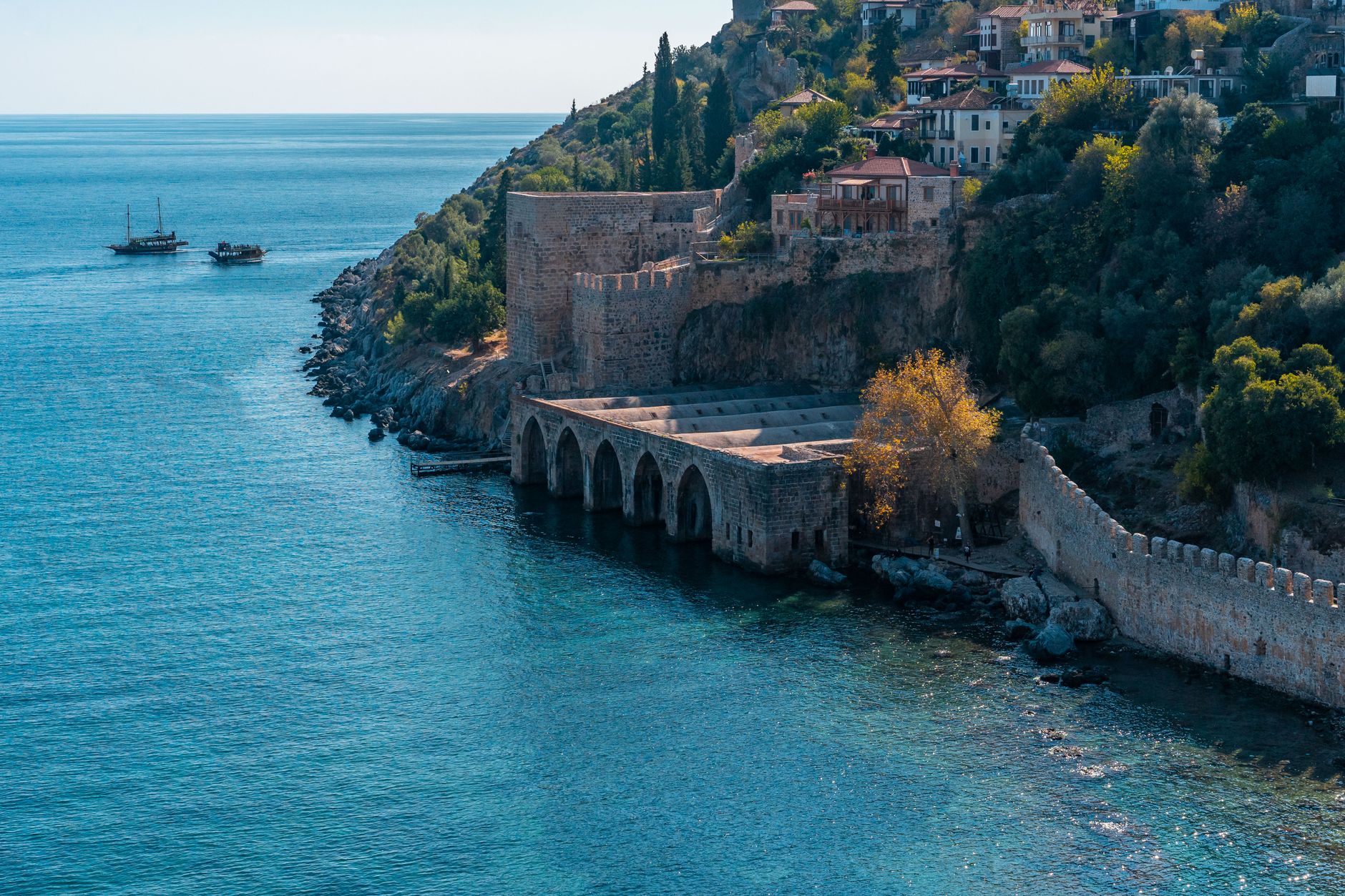
What Pompeii offers is a perfected visit: studied, narrated, contextualized, and crowded with the evidence of its own fame. What Leptis Magna offers is the city without its interpretation – columns that require you to do the imagining yourself, an amphitheater with actual lions carved on the entrance passages and no explanatory placard telling you how to feel about them. The harbor silts have long closed the port to ships, but the outline of the quay is still there, still readable as a structure that once received grain, oil, and goods from across the ancient world.
Septimius Severus, who rebuilt this city in his own image and then left it for Rome, never returned. His ashes were brought back to Leptis Magna after his death in York in 211 AD – an emperor shipped home to a city that outlasted his dynasty by centuries, then outlasted the empire itself, then outlasted everything that came after except the sand that covered it and the stone that refused to collapse.