Botswana’s Makgadikgadi Pans Quietly Rival the Okavango for Salt Flat Seekers

Africa’s Other Great Wilderness
The Okavango Delta gets the glossy magazine covers, the luxury safari lodges, and the wildlife documentaries. Meanwhile, roughly 300 kilometers to the east, the Makgadikgadi Pans sit in near silence – a vast, ancient lakebed turned salt flat that rewards the travelers willing to look past Botswana’s more famous headline act.
What the Pans Actually Are
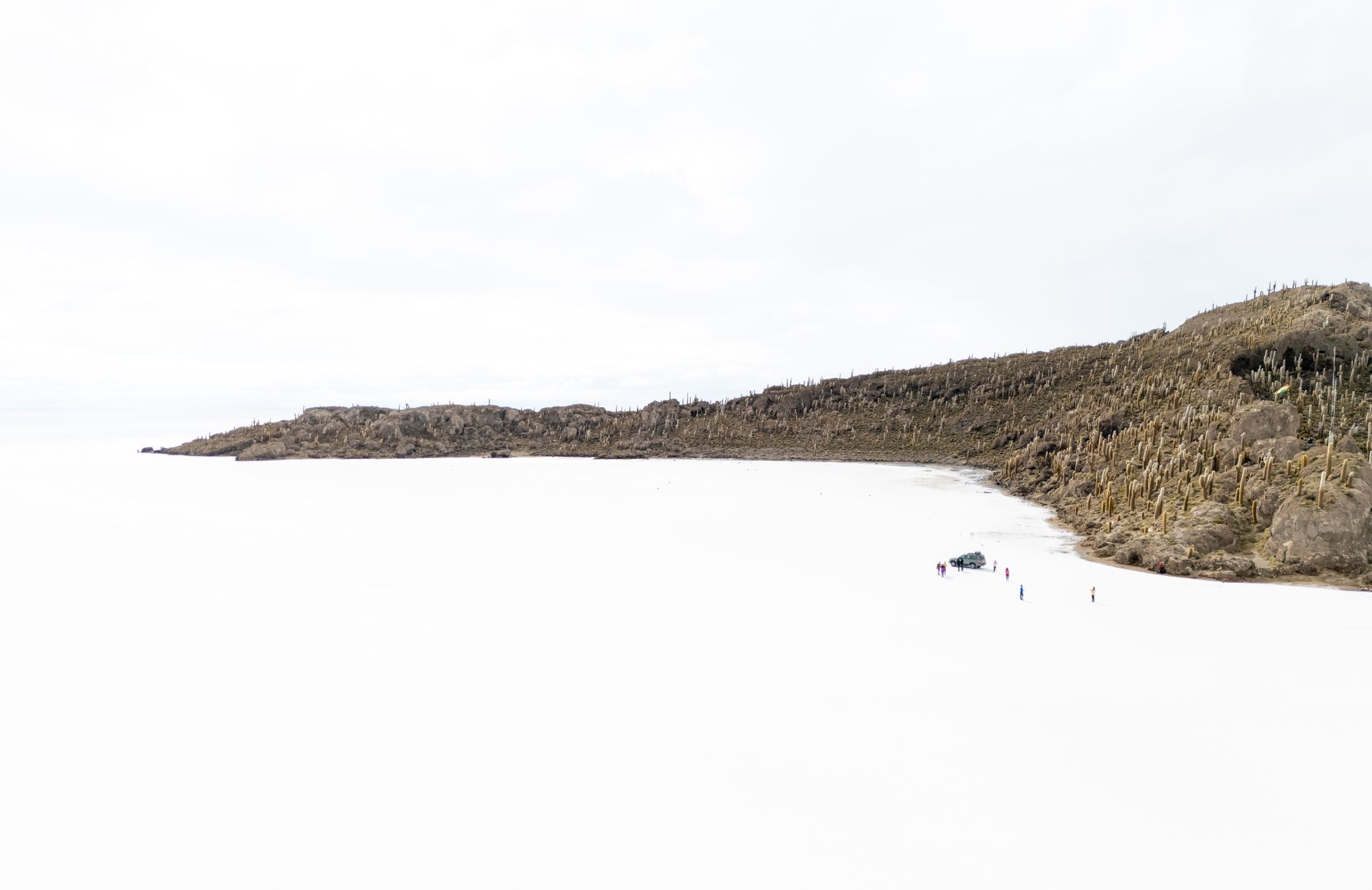
The Makgadikgadi is among the largest salt flat systems on Earth, covering an area roughly the size of Switzerland. It is what remains of a prehistoric super-lake that dried up tens of thousands of years ago, leaving behind two main pans – Ntwetwe and Sowa – plus a network of smaller flats, grasslands, and islands rising from the otherwise featureless terrain. The scale is genuinely disorienting. Standing at the center of either pan on a clear day, the horizon curves away in every direction with nothing to interrupt it.
Unlike the Salar de Uyuni in Bolivia, which pulls enormous package-tour crowds and suffers the visual clutter that follows, the Makgadikgadi remains logistically demanding enough to filter out casual visitors. There are no paved roads across the pans, no visitor centers stocked with selfie frames, and no designated parking lots. Getting there requires a 4×4 vehicle, some navigation confidence, and a willingness to camp or stay in one of the handful of remote bush camps scattered along the edges.
The seasonal shift here is worth planning around. During the dry season, roughly May through October, the pans bake hard and white under relentless sun, and the sky takes on that particular pale blue that only exists above flat, reflective ground. Then the rains arrive and a shallow layer of water transforms the surface into a mirror so precise that the horizon disappears entirely. Both states are worth seeing. Most salt flat photographers chase the wet season for the reflection shots; most wildlife travelers prefer the dry season, when large herbivore herds migrate through the surrounding grasslands.
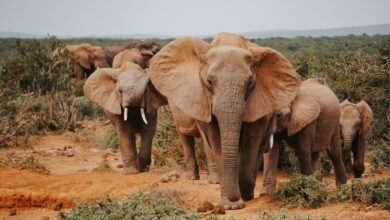
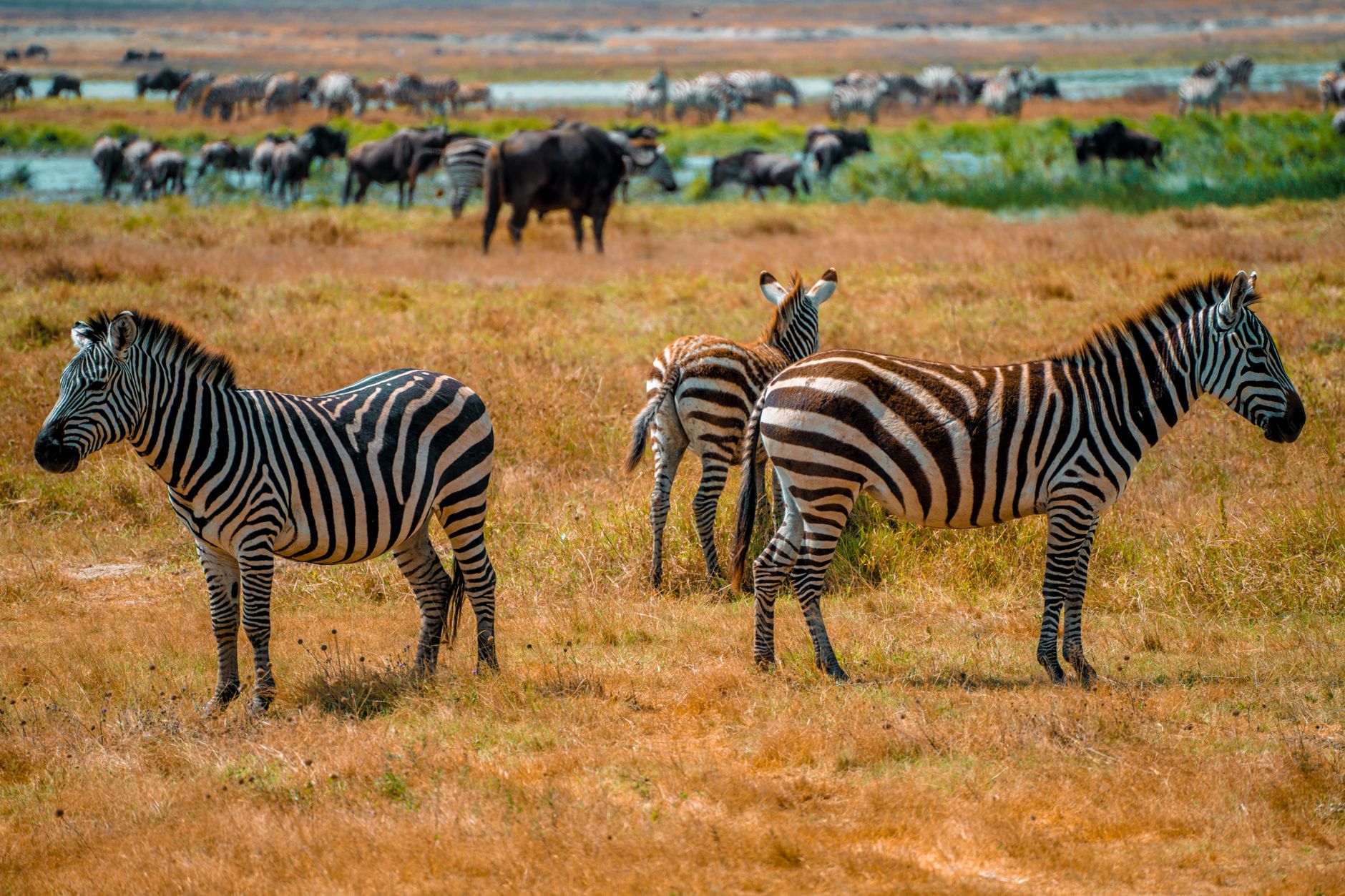
The wildlife component surprises people who assume the Makgadikgadi is simply a stark, empty landscape. The pan edges and the Nxai Pan section to the north support zebra migrations that – during peak movement – rival anything happening in the Serengeti in terms of raw numbers. Meerkats are a fixture, particularly around the Makgadikgadi Pans National Park boundary near Baines’ Baobabs, the famous cluster of ancient trees that has been photographed and painted since the 19th century. Brown hyenas, bat-eared foxes, and vast flocks of flamingos drawn to the mineral-rich water after rains round out an ecosystem that functions nothing like a typical savanna safari.
The Experience of Scale
There is a particular kind of travel experience that requires removing all the familiar reference points – no trees, no hills, no buildings, no cellular signal – and the Makgadikgadi delivers this completely. Guests at the remote camps on the pan edges consistently describe the same thing: an initial unease at the emptiness, followed by a settling into it that makes the noise of ordinary life feel very far away. This is not hyperbole; it is the predictable psychological effect of spending 48 hours somewhere with no ambient sound except wind and no light pollution whatsoever.
Guided quad bike excursions onto the pans have become one of the more popular ways to experience the interior without requiring a specialist driving permit. Several camps run these at dawn and dusk, when the light changes the color of the salt surface from blinding white to amber to pale pink within the span of about 20 minutes. The experience of riding across the flat at low speed in near silence, watching that color shift happen, is the kind of thing travel writers normally struggle to describe without reaching for overwrought language. The visual is simply unusual enough that it needs no embellishment.
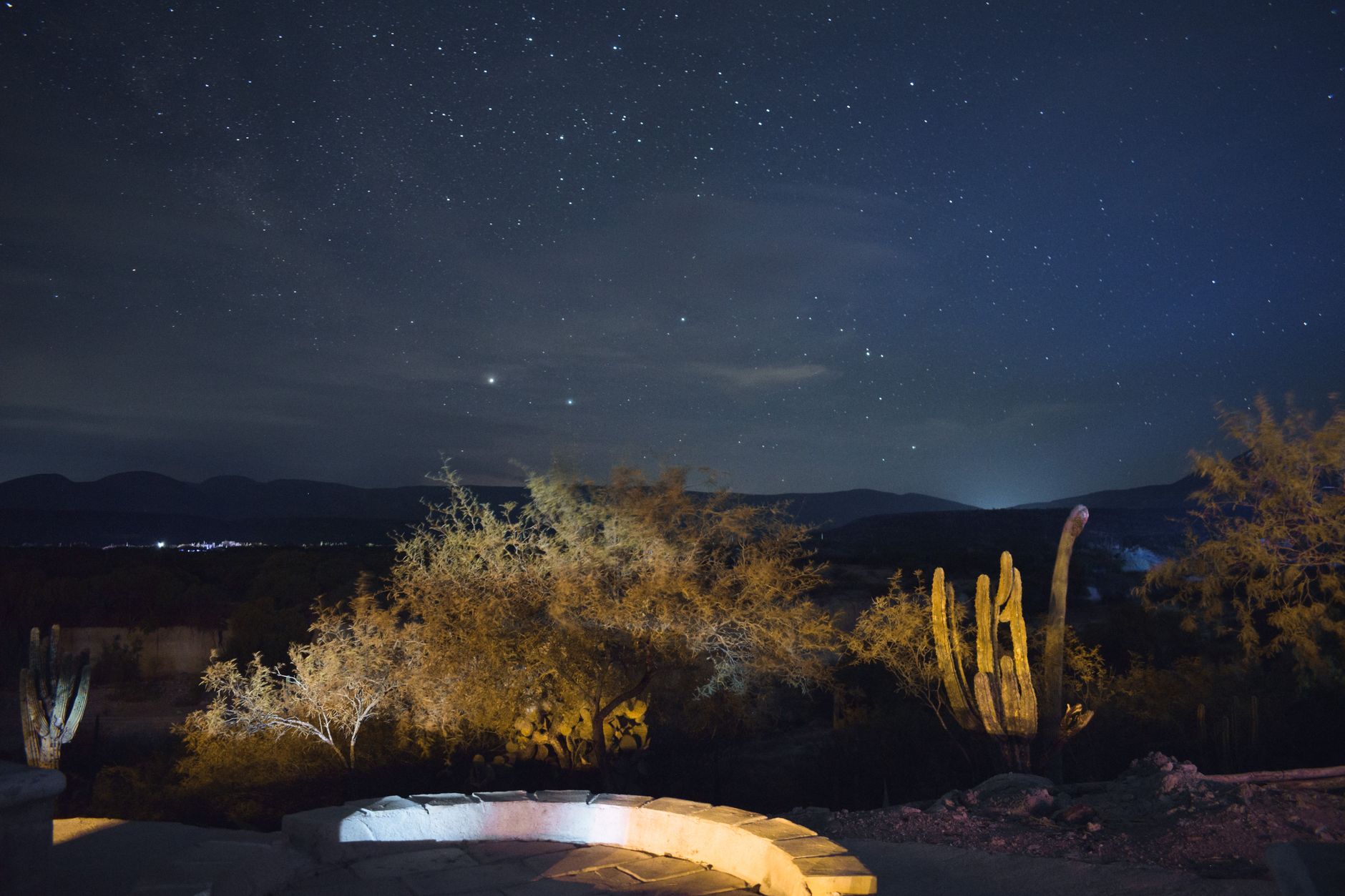
Stargazing on the pans ranks alongside the Atacama and the Namib as one of southern Africa’s most spectacular night sky experiences. The combination of altitude – the pans sit at roughly 900 meters above sea level – minimal humidity, zero light pollution, and the pan’s own reflective surface on wet-season nights creates conditions that amateur astronomers actively seek out. Some camps have built their programming specifically around this, offering telescope access and guided constellation sessions as core activities rather than add-ons.
The Baines’ Baobabs site, accessible via a short drive from Kubu Island on the edge of Sowa Pan, functions as something of an anchor point for visitors who want historical and visual context. David Livingstone and Thomas Baines both passed through this region in the 1860s, and Baines painted the baobabs in 1862. Those same trees are still standing – gnarled, enormous, and surrounded by cracked salt flat – and the comparison between his original painting and the current view is startling in its accuracy. The landscape has not changed.
For travelers who have already made the journey to Uganda’s Bwindi Impenetrable Forest or other off-the-beaten-track African destinations, the Makgadikgadi fits naturally into a pattern of seeking out places that require more effort but return something that mass-market destinations cannot replicate. The pans do not offer comfort as their primary selling point. They offer strangeness, silence, and an environment so unlike the default safari experience that first-time visitors often describe it as the part of their Botswana trip they talk about most.
Getting There and What to Expect
The main access point is Maun, Botswana’s safari hub, from which the Makgadikgadi is approximately four hours by road – assuming dry season conditions. Fly-in options exist via small charter aircraft to bush airstrips near the major camps, which cuts travel time significantly but adds cost. Self-drive travelers should budget for at least three days minimum to avoid spending the bulk of their time in transit. The pans are large enough that a single afternoon visit from Maun tells you almost nothing about what the place actually is.
Accommodation ranges from ultra-luxury tented camps with elevated platforms and private plunge pools, priced accordingly, to basic campsites where the amenities stop at a fire ring and a pit toilet. The budget option, frankly, delivers the more authentic experience – waking up on the pan edge with no buffer between you and the environment is different from waking up inside an architecturally designed tent with a curated view. Both exist, both have their appeal, but travelers who choose comfort over proximity often leave feeling like they watched the Makgadikgadi through glass rather than standing inside it. Whether that matters depends entirely on what you came for.