
Africa’s Other Great Frontier
Kenya has held the spotlight for decades when it comes to African cultural tourism – the Maasai have become almost synonymous with the continent’s tribal identity in Western travel imagination. But roughly 900 kilometers to the northwest, Ethiopia’s Omo Valley holds something far less filtered: a concentration of indigenous communities so distinct from one another, and so removed from the rhythms of modern life, that anthropologists have compared the region to a living mosaic of human culture. Travelers who have made it there tend to come back with a quiet intensity about the place, as if they’ve seen something they’re not quite sure how to explain.
The Omo Valley runs along the lower Omo River in southwestern Ethiopia, bordered by South Sudan and Kenya, and it is home to somewhere between 16 and 20 distinct ethnic groups – including the Mursi, Hamar, Karo, Dassanech, and Banna peoples – each with their own language, body decoration traditions, cattle-herding customs, and ceremonial calendar.
What separates the Omo Valley from the more well-traveled cultural corridors of East Africa is precisely its inaccessibility. There is no luxury safari circuit here, no airstrip hopping between glamorous tented camps. Getting there requires effort, which is exactly why the experience still feels genuine.
The Communities That Draw Serious Travelers
The Mursi are probably the most photographed group in the valley – their women’s tradition of wearing large clay lip plates has made them recognizable worldwide – but arriving in a Mursi village with a camera extended and no context is a fast way to misread the culture entirely. The Mursi are cattle herders living in an area prone to conflict over grazing land, and their ceremonies, including the famous Donga stick-fighting rituals among young men, speak to a society that has maintained its own codes of honor and masculinity for generations. Visitors who spend more than a single morning begin to understand the social architecture beneath the surface aesthetics.
The Hamar, concentrated around the town of Turmi, are perhaps the most accessible starting point for first-time visitors to the region. Their bull-jumping ceremony – in which young men must run across the backs of a line of cattle to prove readiness for marriage – draws travelers who time their visit around the lunar calendar, since these rites happen unpredictably. The whipping ceremonies involving women, who request and even encourage the ritual scarring as a display of devotion, tend to unsettle visitors who arrive expecting performance rather than practice. This is not a cultural show. It is a living tradition, and the distinction is felt immediately.
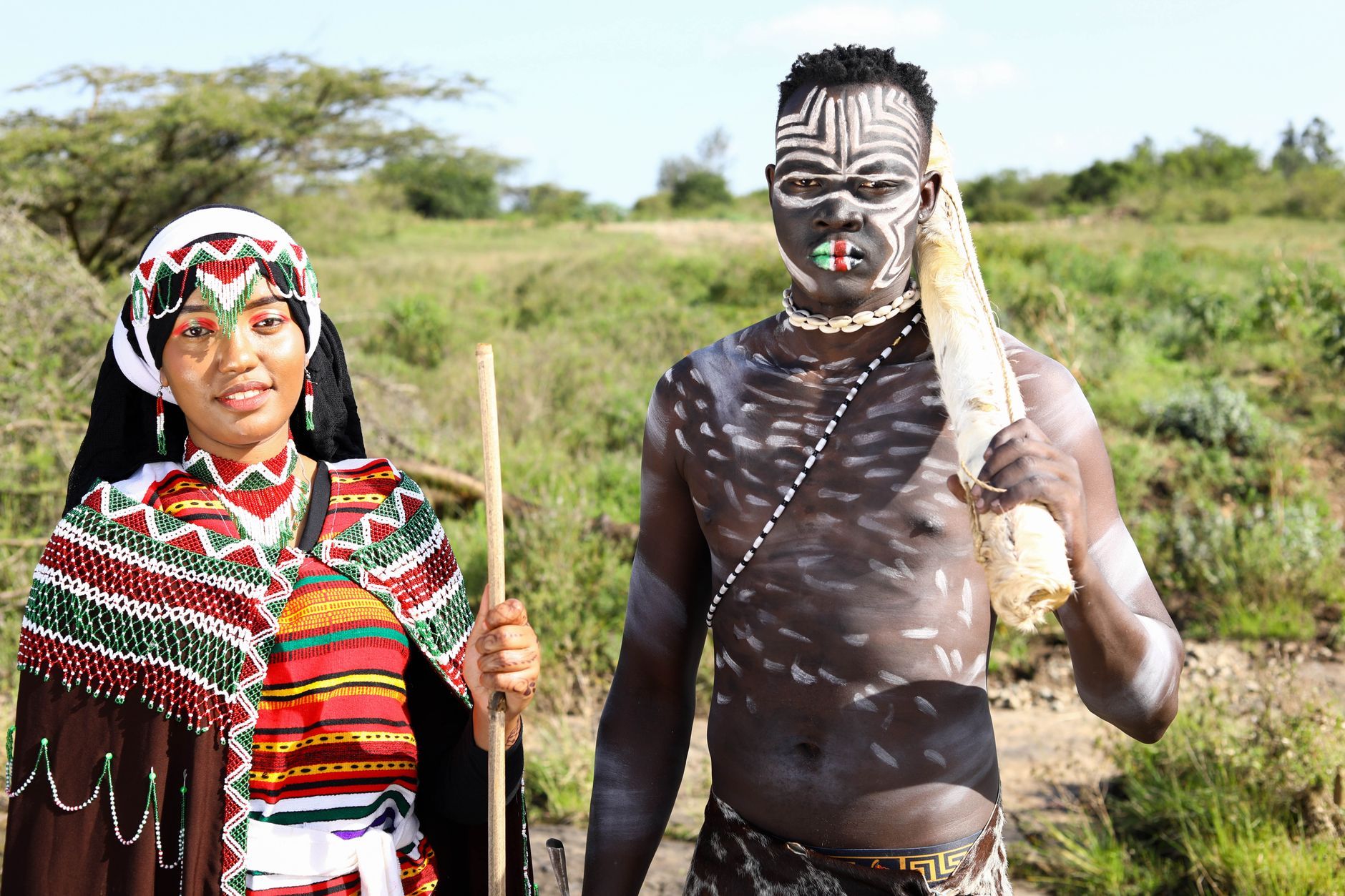
The Karo, living along the Omo River’s banks near Kolcho village, are known for elaborate body painting using white chalk, ochre, and charcoal – patterns applied before dances and ceremonies that are not replicated anywhere else in the region. Their population is small, estimated in the low thousands, which makes encounters feel less like tourism and more like an introduction.
Logistics, Access, and What to Expect
The practical reality of visiting the Omo Valley is that it demands real planning. The nearest city is Arba Minch, accessible by domestic flight from Addis Ababa, and from there the journey south into the valley involves hours on rough roads. A four-wheel drive vehicle with a knowledgeable local guide is not optional – it is the baseline. Guides who have grown up in the region and speak local languages offer something no app or guidebook can replicate: they know which villages are holding ceremonies, which communities are in the middle of conflict cycles and therefore closed to outsiders, and how to introduce visitors in ways that don’t immediately reduce the interaction to a transaction.
Accommodations range from basic guesthouses in Jinka and Turmi to a small number of eco-lodges that have opened in the past decade. None approach the polish of Kenya’s high-end safari properties, and that is part of the point. Travelers who arrive expecting seamless comfort tend to struggle. Those who arrive expecting complexity tend to leave with something lasting. Photography etiquette requires attention – most communities have moved toward negotiated fees for photographs, and engaging with that honestly rather than trying to circumvent it produces better interactions and better images.
The dry seasons, running roughly from October through February and June through September, offer the most reliable road access. The rainy season turns many tracks impassable, and even experienced guides will reroute or cancel. Flexibility in itinerary is not a luxury – it is how the Omo Valley works. Anyone who has tried to run this trip on a tight schedule has usually ended up frustrated.
Why the Omo Valley’s Moment Is Now – and Why That Carries Risk
Development pressure on the region is real and accelerating. Large-scale irrigation projects along the Omo River have already altered water levels that communities downstream depend on for flood-retreat agriculture, a practice as old as the settlements themselves. As the Ethiopian government continues to develop the region’s agricultural and hydroelectric potential, the conditions that have preserved the valley’s cultural isolation are quietly eroding. Travelers who want to experience the Omo Valley as it exists today – before the infrastructure that makes it easier to visit also makes it less worth visiting – are looking at a narrowing window. The question worth sitting with before booking is not whether the trip is comfortable. It is whether the traveler is ready to encounter a place that is genuinely on its own terms.
Frequently Asked Questions
Which ethnic groups can travelers encounter in the Omo Valley?
The valley is home to more than 16 groups including the Mursi, Hamar, Karo, Dassanech, and Banna, each with distinct traditions, languages, and ceremonial practices.
What is the best time of year to visit Ethiopia’s Omo Valley?
The dry seasons from October to February and June to September offer the most reliable road access. The rainy season makes many tracks impassable even for four-wheel drive vehicles.