
Where the Martian Landscape Meets the Desert Floor
Petra gets the postcards, the travel show segments, and the bucket-list checkmarks. But roughly 60 kilometers to the south, Wadi Rum sits in a silence so complete you can hear the wind shifting sand between rock faces that rise 1,700 meters from the desert floor. The valley has been a protected area since 1998 and a UNESCO World Heritage Site since 2011, yet it still draws a fraction of Petra’s annual visitors – a gap that works entirely in favor of anyone willing to sleep under its sky.
The comparison to Petra is not a knock on either destination. Petra is extraordinary. But Wadi Rum offers something Petra structurally cannot: you can stay inside it. Overnight camping in the protected desert area, in tents pressed against sandstone cliffs painted in ochre and rose, is not a novelty add-on. It is the point. And for a growing number of travelers who want their adventure to last longer than a day hike, Wadi Rum is becoming the primary destination rather than a detour on the way back to Aqaba.
What Wadi Rum Actually Is
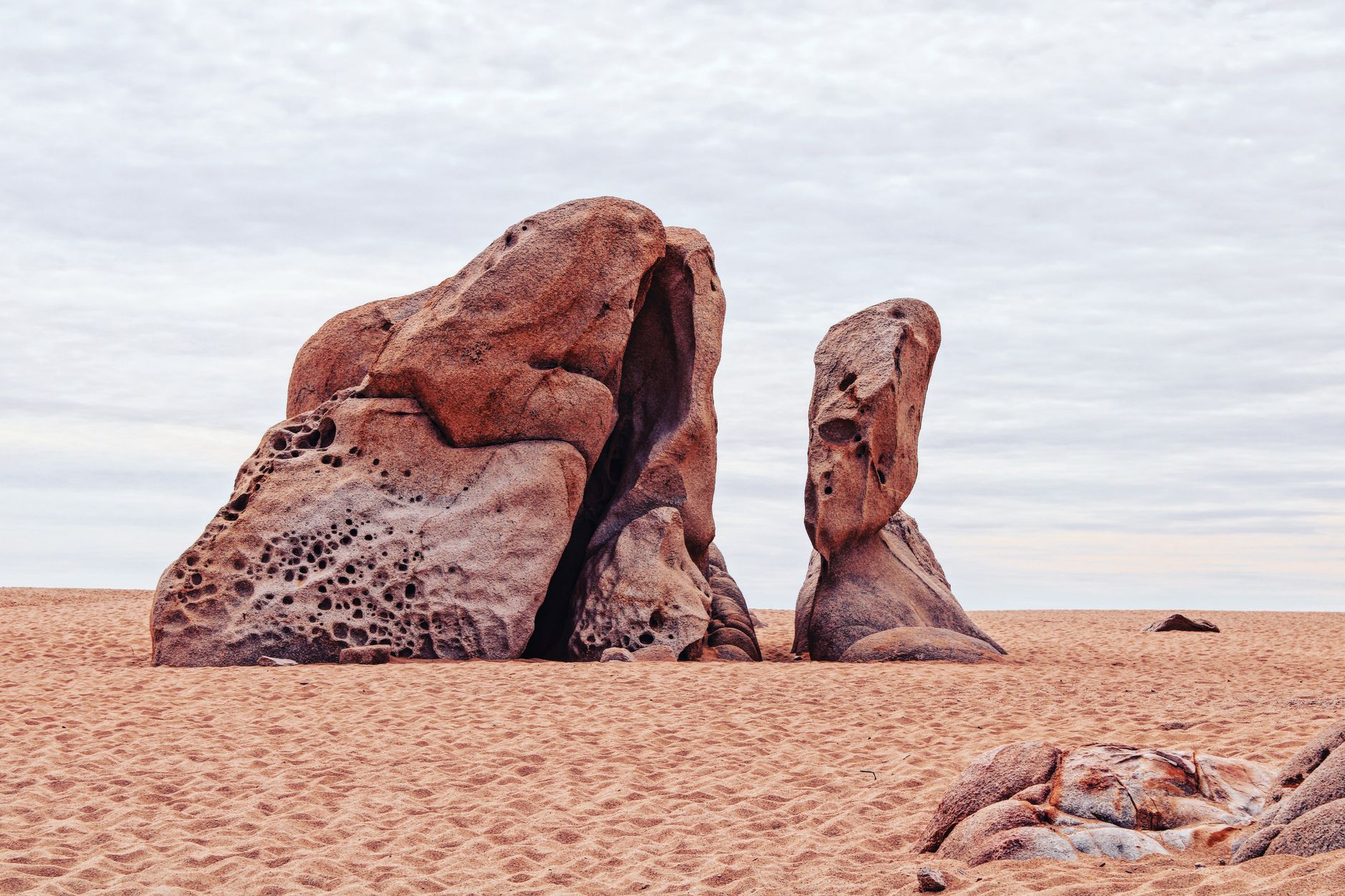
The protected area covers around 720 square kilometers of desert, containing a landscape so visually alien that film productions have used it to stand in for Mars – and before those films, Lawrence of Arabia described the valley in writing with the kind of reverence that still shapes how visitors approach it. The terrain is built from sandstone and granite carved over millennia by wind erosion into arches, canyons, narrow siq passages, and free-standing pillars. The color shifts through the day from pale sand at midday to deep amber at golden hour to a purple-grey after sunset that feels almost fictional.
The valley is inhabited by the Zalabia and Zuwaideh Bedouin communities, who have lived here for generations and now operate the majority of the desert camps, jeep tours, and camel excursions within the protected area. This is not a theme park version of Bedouin culture constructed for tourism. It is an active community that has adapted to the economics of desert tourism while maintaining its own rhythms – meals cooked in zarb pits buried underground, tea poured three times per tradition, guides who know which canyon catches the last light best in each season.
The Camping Question: Bubble Tents, Bedouin Fires, or Both
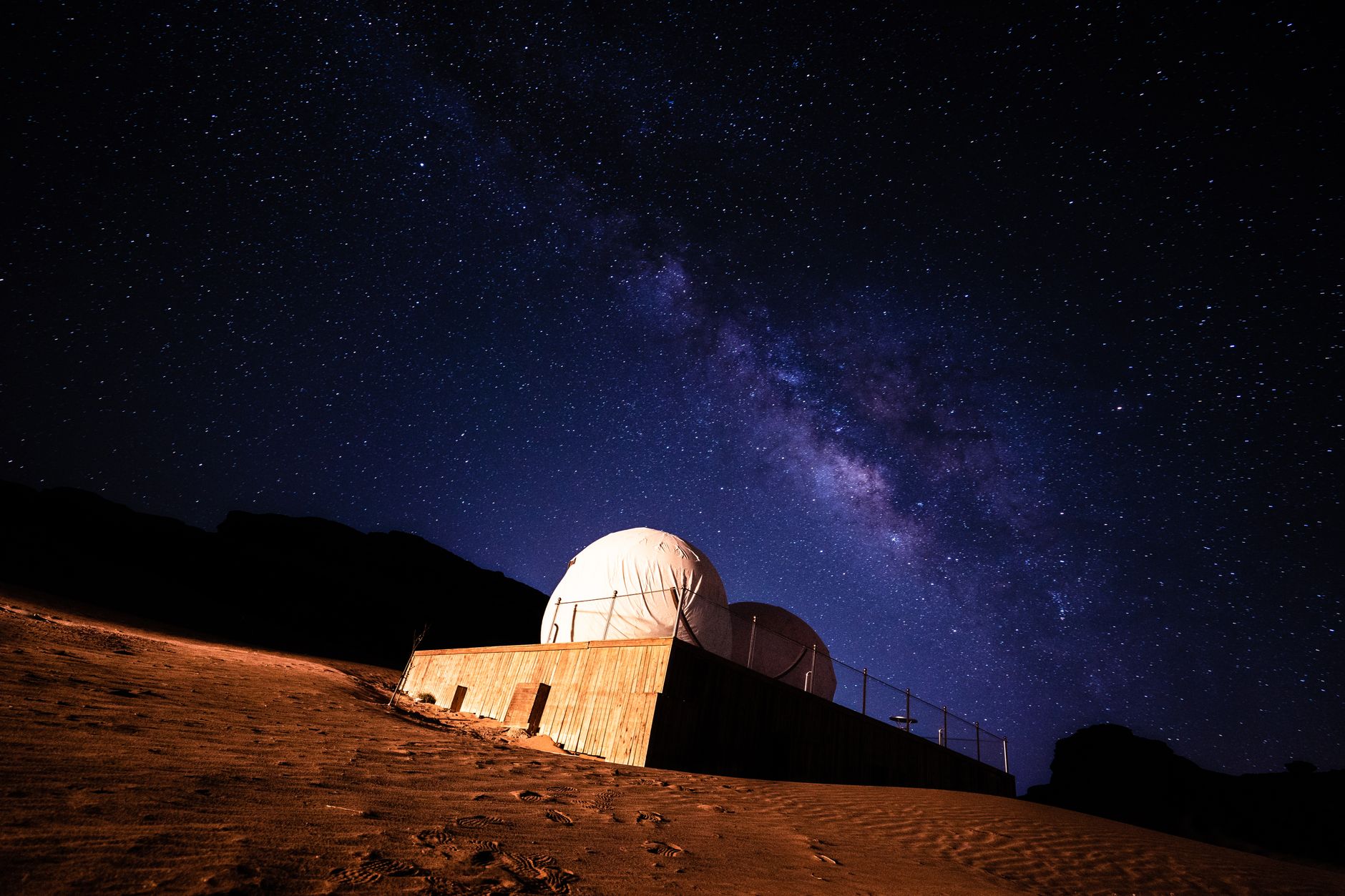
The accommodation spectrum inside Wadi Rum runs wide. At one end are the transparent bubble tent camps, which have become popular enough to require advance booking months out during peak season. These geodesic or dome structures are positioned for unobstructed stargazing, and the night sky in Wadi Rum – with minimal light pollution from any direction – makes the investment feel justified. They are comfortable enough to attract travelers who would not typically describe themselves as campers.
At the other end are traditional Bedouin tent camps where bedding is laid out inside goat-hair structures, dinner is served communally around a fire, and the morning call comes from whatever bird decides the hour. These camps are considerably less expensive and, for many visitors, produce the more lasting memory. The choice between them is genuinely a matter of what kind of discomfort you are willing to trade for what kind of intimacy with the place.
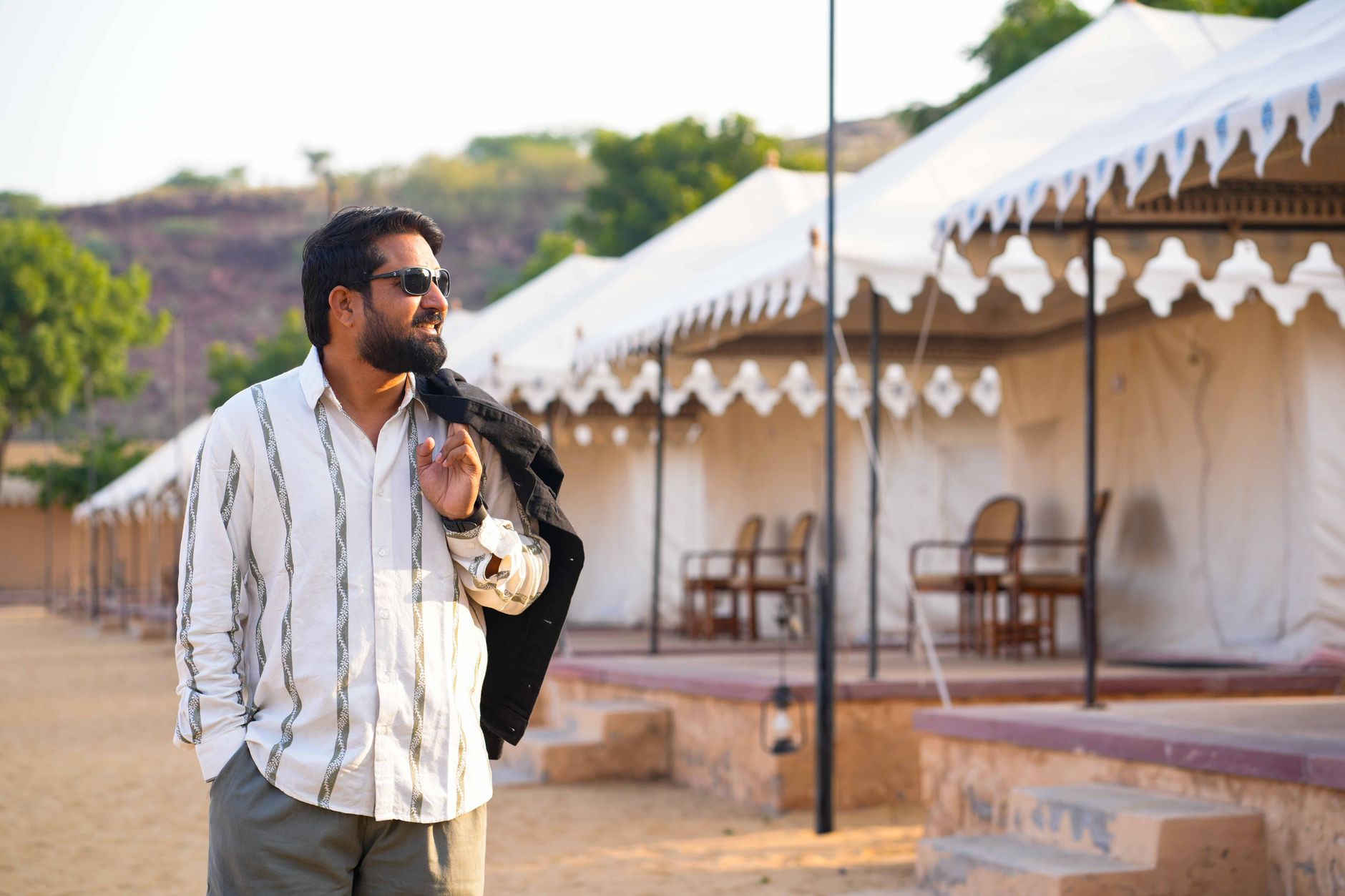
Some camps split the difference with semi-permanent canvas tents outfitted with proper beds and small private washroom facilities, positioned within rock formations so that guests step outside in the morning directly into the canyon wall. These tend to be mid-range in price and fill up quickly between October and April, which is the primary travel window. Summer temperatures in Wadi Rum can exceed 40 degrees Celsius during daylight hours, making the desert brutal rather than beautiful for anyone without serious heat tolerance.
The logistics of booking a camp require some attention. Many camps are run by individual Bedouin families and do not have robust online presences. Booking through a Jordanian tour operator or through the Wadi Rum Visitors Centre in the village of Rum is often more reliable than attempting to arrange everything independently through search engines. The visitors centre also manages permits for the protected area, which are required for entry.
How to Move Through the Desert
The practical question once inside is how to cover terrain. Jeep tours driven by local guides are the standard method and work well for first-time visitors who want to cover the major landmarks – the red sand dunes near the Um Sabatah area, Lawrence’s Spring, Khazali Canyon with its ancient Nabataean and Thamudic rock inscriptions – in a half or full day. These tours are priced per vehicle rather than per person, which makes them more economical for groups.
Rock climbing routes exist throughout the valley at grades ranging from beginner to serious technical climbs on the major faces. Hikers who prefer to move on foot can arrange multi-day routes with a guide, sleeping in different locations each night as the landscape shifts around them. Hot air balloon flights are available through a small number of operators and provide a view of the desert from above that changes the scale of everything you have been looking at from the ground.
What Wadi Rum Has That Petra Does Not
Petra is a city carved into rock, and experiencing it properly means walking its ancient streets surrounded by other tourists, hearing tour group narration echo through the Siq, and navigating timed entry requirements that have become more structured in recent years. None of this diminishes its power – but it is a shared experience by design. Wadi Rum, because of its scale and because overnight stays distribute people across a large protected area, offers genuine solitude even in high season. You can be sitting against a rock face watching the sun move across the valley and see no one.
The other factor is time. Petra rewards a long day. Wadi Rum rewards two nights minimum, ideally three. The first sunset resets your expectations. The second morning, when you wake before the heat arrives and the light comes sideways through the canyon, is when the place does what it actually came to do.
Planning the Practical Details
Jordan’s Jordan Pass, available for purchase online before arrival, covers the visa fee and entry to over 40 sites including both Petra and the Wadi Rum protected area. For visitors combining both destinations, the pass essentially makes Wadi Rum entry free once the Petra ticket cost is factored in. The village of Rum at the desert’s edge has a handful of small restaurants and a grocery store for supplies, but meals are almost universally included in camp packages because there is nowhere else to eat once you are inside the protected area.
Getting to Wadi Rum from Petra or Aqaba takes roughly an hour by road, and shared minibuses run between the main tourist hubs during peak season. Private taxis are the more reliable option if you are carrying camping gear or arriving outside standard service hours. Cell service inside the protected area is limited to nonexistent depending on which camp you reach, which, depending on your travel philosophy, is either a problem to plan around or the whole reason to come.
The biggest practical gap between Wadi Rum and Petra for most travelers is simply awareness – Petra has decades of marketing infrastructure behind it, while Wadi Rum has largely traveled by word of mouth and the occasional film credit. That gap is narrowing. Camp bookings for the October-to-November window, when temperatures drop into the ideal range and the tourist volume is still below the December-January peak, now fill weeks earlier than they did just a few years ago. If you are considering a Jordan trip that includes even one night in the desert, the calendar math matters more than most itinerary decisions you will make.