Madagascar’s Masoala Peninsula Quietly Rivals Borneo for Rainforest Seekers

Where the Rainforest Meets the Sea
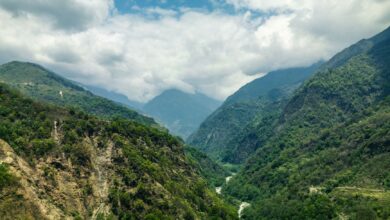
Most travelers chasing primate encounters and old-growth canopy automatically book flights to Borneo. The orangutans, the proboscis monkeys, the sheer theatrical scale of Southeast Asia’s jungle infrastructure – it’s a well-worn argument. But on the northeastern tip of Madagascar, the Masoala Peninsula sits largely ignored by comparison, despite holding the largest remaining tract of lowland rainforest on the entire island. At roughly 230,000 hectares of protected land and ocean, Masoala National Park combines terrestrial jungle with a marine park in a way very few destinations on earth can match.
Getting there is not simple. Masoala requires a flight to Maroantsetra, a remote port town on the Bay of Antongil, followed by a boat crossing that takes anywhere from 45 minutes to several hours depending on conditions. That friction is, paradoxically, the destination’s greatest asset. The traveler numbers stay low, the trails stay quiet, and the wildlife behaves accordingly.
What Masoala Actually Offers
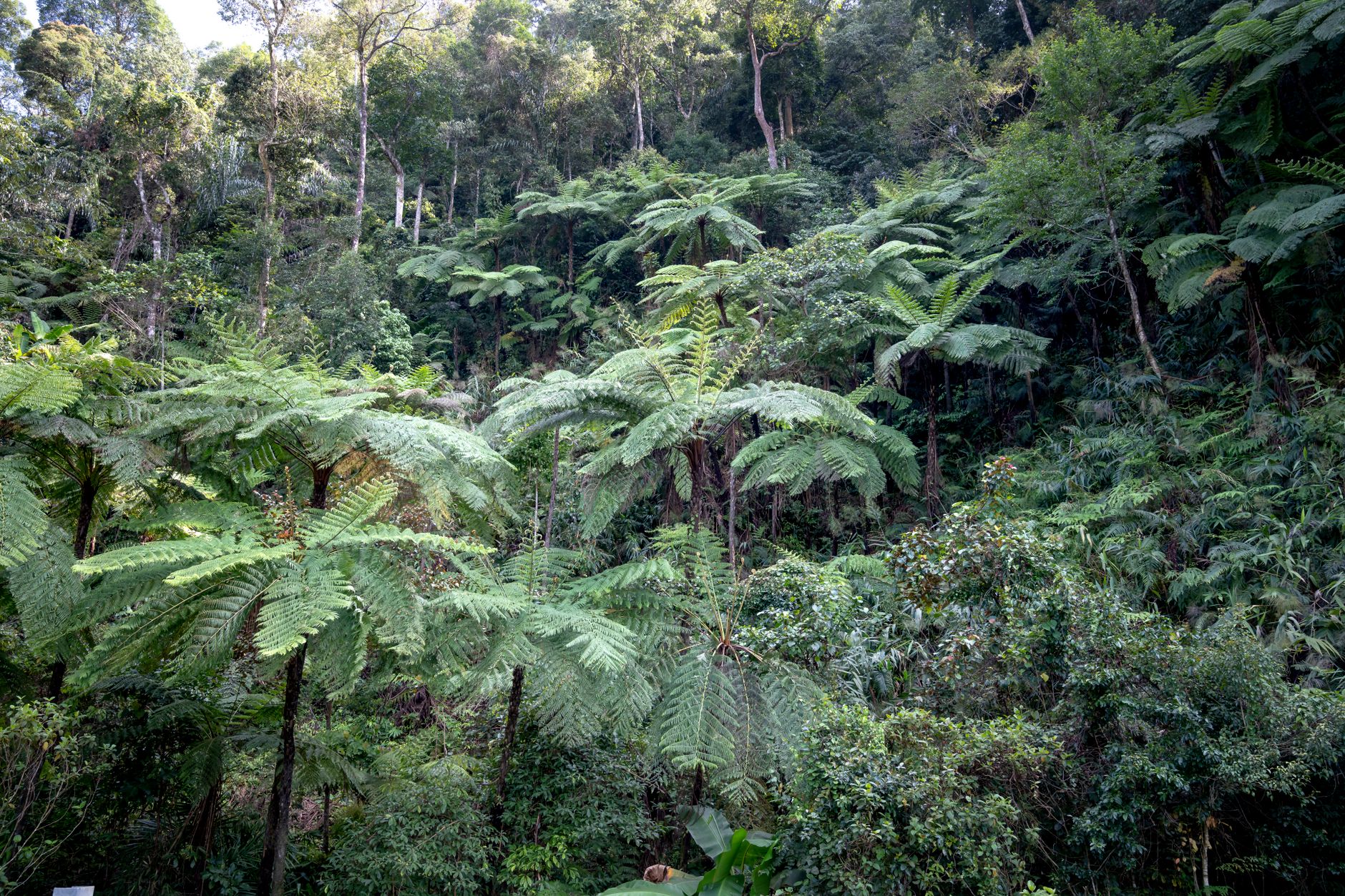
The peninsula’s biodiversity case is genuinely hard to argue against. Madagascar’s isolation from the African mainland for roughly 88 million years produced evolutionary results found nowhere else – around 90 percent of the island’s wildlife is endemic. On Masoala, that means red-ruffed lemurs moving through the upper canopy, aye-ayes occasionally spotted on night walks, and serpent eagles perched along river corridors. The forest floor runs thick with chameleons, and the tree fern understory gives the interior a prehistoric atmosphere that other jungle destinations rarely replicate.
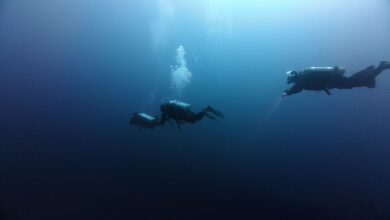
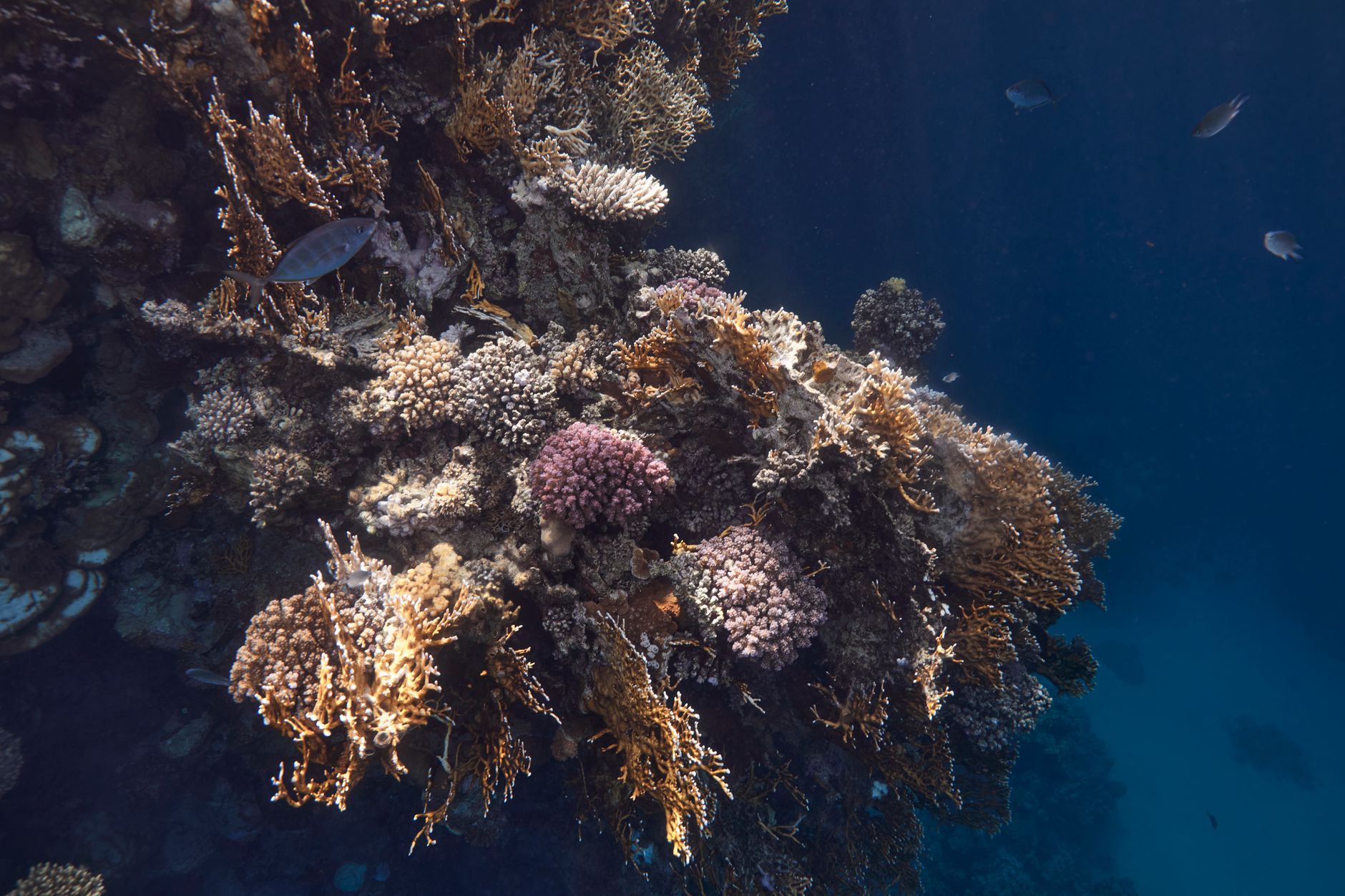
What separates Masoala from even the most celebrated forest reserves is the transition zone where jungle meets reef. The park’s marine component protects three distinct coral bays – Tampolo, Ambanizana, and Ifaho – where humpback whales pass through between July and September on their migration cycle. Snorkeling directly off the beach, in water that shifts from mangrove brown to open-ocean blue within a few hundred meters, is a disorienting and genuinely rare experience. In Borneo, you go to the forest or you go to the coast. In Masoala, the geography refuses to separate them.
The Logistics, Honestly Assessed
Masoala is not a destination that tolerates under-preparation. The rainy season runs roughly from November through April, and during that window the trails become seriously difficult, river crossings turn dangerous, and boat access to the peninsula can be suspended for days at a time. The dry season window, primarily May through October, is the only realistic entry point for most international travelers. That said, the forest looks most dramatic during and just after the rains – the canopy densifies, fruit production peaks, and lemur activity increases noticeably.
Accommodation within and around the park ranges from basic research-station-adjacent lodges to a handful of eco-camps that sit directly on the beachfront. None of them offer luxury in the traditional sense, but the better ones have invested in local guide training programs, and the quality of naturalist interpretation on Masoala consistently punches above what you’d find at a more commercially developed jungle destination. A knowledgeable local guide here doesn’t just identify species – they navigate micro-terrain that a first-time visitor would find genuinely impassable.
Food supply chains in this part of Madagascar are thin, so most camps operate on set menus built around what arrives by boat or grows nearby. Fresh seafood is reliable and excellent. Everything else depends on logistics that can shift without warning. Travelers who treat this as a feature rather than a bug tend to have significantly better experiences than those who arrive expecting Borneo’s more developed tourism infrastructure.
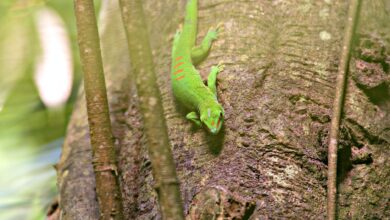
Maroantsetra itself deserves a day on either end of any peninsula itinerary. The town sits at the edge of the Bay of Antongil and offers access to Nosy Mangabe, a small island reserve just offshore where aye-ayes were reintroduced in the 1960s and where giant leaf-tailed geckos plaster themselves to tree trunks in broad daylight. It’s a useful warm-up for the sensory recalibration that Masoala demands.
The Wildlife Numbers Don’t Lie
Borneo’s wildlife draw is real, but the competitive framing matters here. Borneo covers roughly 743,000 square kilometers across three countries, with tourism infrastructure spread across Sabah, Sarawak, and Kalimantan. Masoala, by contrast, concentrates extraordinary endemism into a geographically compact zone. Red-ruffed lemurs exist in the wild only on this peninsula. The helmet vanga – a bird with a silhouette so unusual it looks designed rather than evolved – breeds nowhere else. For serious wildlife photographers, the species-per-accessible-hectare ratio on Masoala competes with almost anything in Southeast Asia.
Whale season deserves its own emphasis. Humpbacks use the Bay of Antongil as a nursery, and mother-calf pairs are reliably present from July onward. Watching a humpback breach against a backdrop of unbroken rainforest canopy, with no other boats in sight, is not an experience that requires exaggeration.
Planning the Trip
Most travelers combine Masoala with a broader Madagascar itinerary that includes the Avenue of the Baobabs near Morondava or the limestone tsingy formations of Bemaraha. But Masoala warrants at least five nights on its own to do the terrain justice – anything shorter means spending the bulk of each day in transit rather than inside the forest. Some operators offer multi-day trail traverses across the peninsula’s spine, crossing from the ocean side to the bay side through the interior. That traverse is the best single way to understand Masoala’s scale.
Entry permits are managed through Madagascar National Parks, and fees go directly into conservation funding for the park. Hiring guides through registered operators rather than informally is both legally required and practically sensible – the trail system is not well marked, and the interior of the peninsula is not a place to improvise navigation. Several Antananarivo-based operators specialize in Masoala itineraries and can coordinate the Maroantsetra flight, the boat crossing, and camp reservations in a single booking chain, which simplifies what is otherwise a genuinely complicated logistics puzzle.
Borneo will continue to dominate the jungle conversation for the foreseeable future, largely because the marketing apparatus behind Southeast Asian ecotourism is decades more mature. But Masoala’s relative obscurity is also its most durable selling point – and that won’t hold indefinitely. A growing number of specialist wildlife operators are quietly building itineraries around it, and the traveler profile is shifting from researchers and birders toward a broader adventure audience. The question is whether the park’s infrastructure can absorb that interest without the quality of the experience eroding. Right now, it can. The window where you can have a Masoala trail entirely to yourself is still open, but it is narrowing.