
Most travelers who come to Morocco in search of dunes, kasbahs, and starlit desert camps fly into Marrakech, ride south to Merzouga, and call it done. The Draa Valley, stretching roughly 200 kilometers from Ouarzazate to the edge of the Sahara near Zagora, absorbs almost none of that traffic – and it shows.
A Different Kind of Desert Country
The Draa Valley is technically the longest river valley in Morocco, fed by snowmelt from the High Atlas and threading through a landscape that shifts between palm groves, mud-brick villages, and open hammada – the flat, rocky desert that precedes the grand dunes. The river itself runs dry for much of the year south of Agdz, but the valley floor stays green in stretches, lined with date palms that have been farmed here since at least the medieval period. That contrast between green cultivation and bare rock is unlike anything you get near Merzouga or the Erg Chebbi dune fields.
Ouarzazate serves as the western gateway, and while most visitors treat it as a brief stopover between Marrakech and the Sahara, the city rewards a slower approach. The Taourirt Kasbah at its center is a working neighborhood as much as a heritage site – families still live in portions of it, and the lanes between the mud towers feel genuinely inhabited rather than curated. From there, the road east into the valley passes through Agdz, where a hilltop kasbah looks over a wide palmery and the surrounding plateaus carry a reddish color that deepens at dusk.
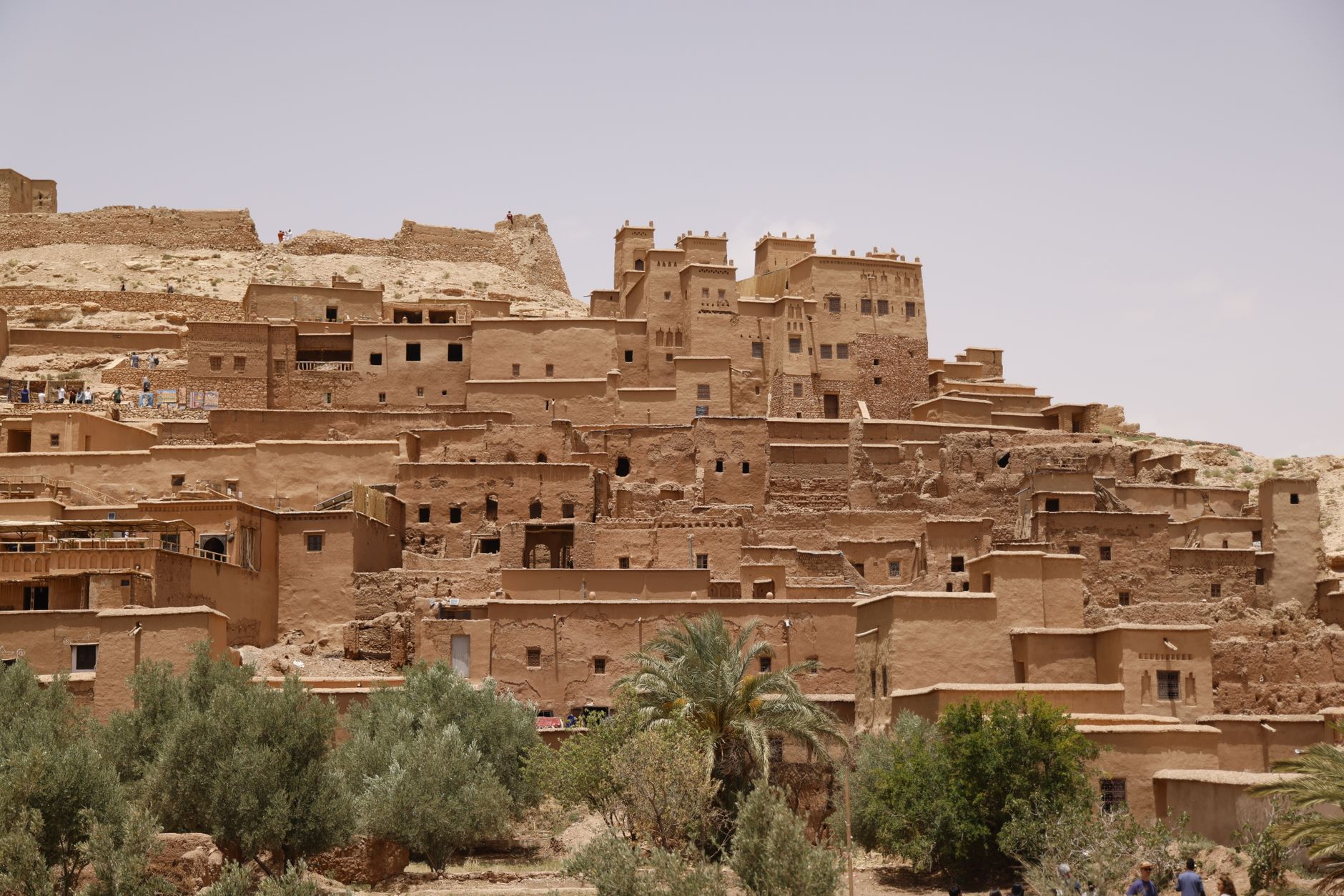
The valley’s ksar villages – fortified earthen settlements – are the real architectural draw. Ksar Ait-Ben-Haddou gets all the press because UNESCO listed it and because it has appeared in enough film and television productions to generate its own tourist infrastructure. But within the Draa Valley itself, places like Ksar Tamnougalt near Agdz sit largely unvisited. Tamnougalt dates to the 16th century and still has inhabited sections, its layered mud walls and carved wooden doors intact without a souvenir stall in sight. There is no formal admission process, no audio guide, no reconstructed anything.
That absence of curation is the Draa’s defining quality. A growing number of travelers are specifically seeking places where the experience has not been processed for easy consumption, and the valley delivers that without requiring any particular hardship or off-road capability. The main N9 highway runs the length of it, paved and in reasonable condition, accessible by rental car from Marrakech in about three hours via the Tizi n’Tichka pass.
The Landscape South of Zagora
Zagora used to mark the end of the road for travelers pushing into the Sahara – a famous signpost in the town center once read “Tombouctou 52 jours,” measuring the journey in camel days. The sign is still there, though it has moved to accommodate road expansion. Zagora itself is a working market town rather than a resort, with a weekly souk that draws Berber and Arab traders from surrounding villages and the occasional Tuareg nomad moving through with merchandise from further south.
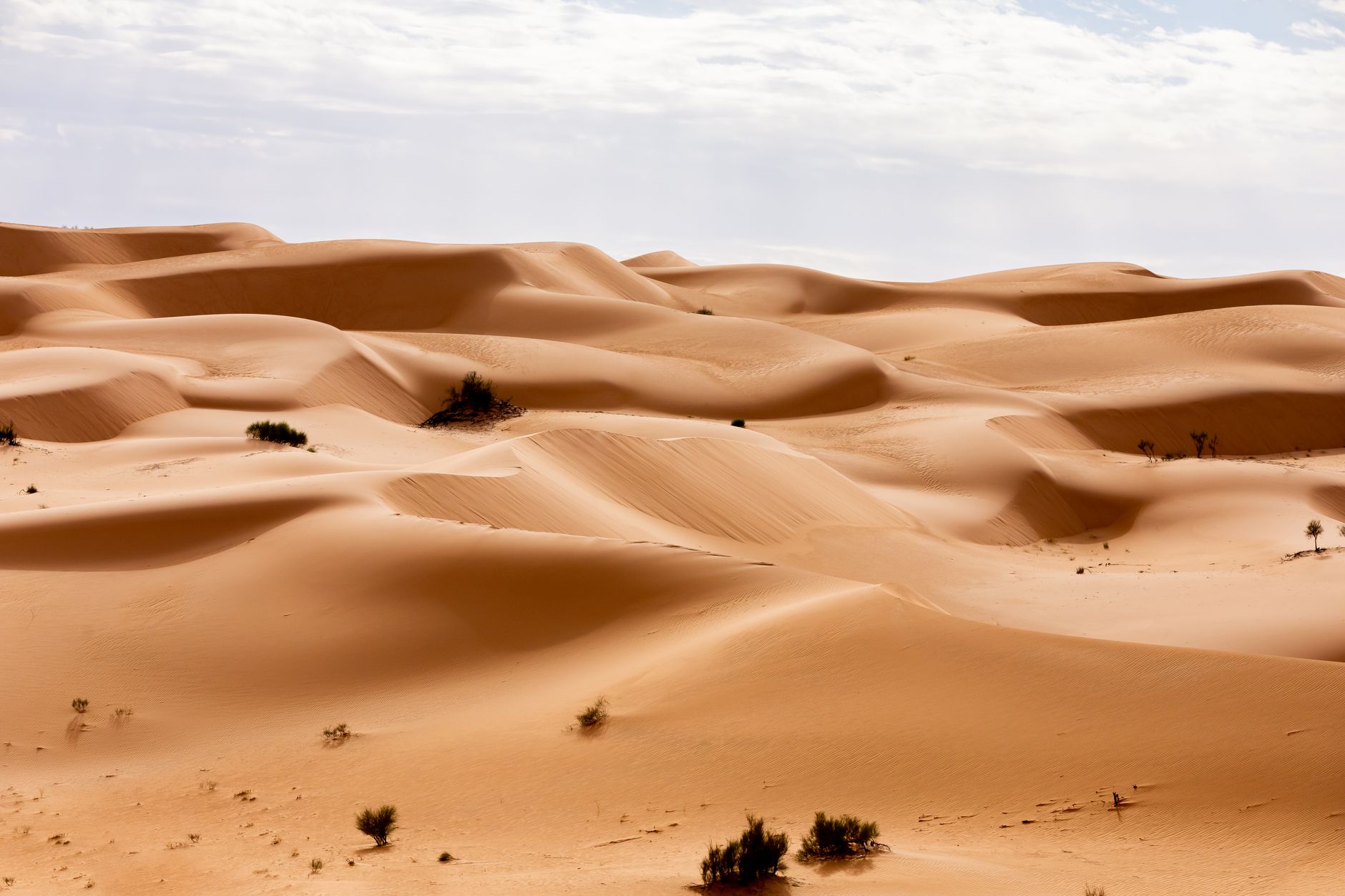
Beyond Zagora, the road continues through the Draa’s most remote stretch toward M’Hamid el-Ghizlane, the last town before the open desert. This section of the valley is where the date palm groves begin to thin and the landscape turns progressively drier and more dramatic. The dunes near M’Hamid – the Erg Chigaga – sit about 50 kilometers further out on piste, accessible only by 4×4 or camel. Unlike Erg Chebbi, which can put a dozen camps within view of each other during high season, Erg Chigaga tends to offer genuine solitude. On a weeknight in October, a traveler could plausibly have a stretch of dunes entirely to themselves.
The hammada between M’Hamid and the dunes carries its own appeal that tends to get ignored in favor of the photogenic dunes at the end of the journey. The flat stone desert here supports an extraordinary density of fossils – ammonites, orthoceras, trilobites – eroding naturally out of the rock surface. Roadside vendors along the N9 sell polished specimens, but the raw material is simply lying on the ground in places, a detail that makes the geology feel visceral rather than academic.
Wildlife in the valley is sparse but consistent enough to reward attention. Fennec foxes, sand cats, and various species of jerboa are present in the desert fringe, mostly nocturnal and rarely seen without deliberate effort. More reliably, the date palm groves support a resident population of North African birds – cattle egrets, hoopoes, rollers – that make the green corridors through the valley surprisingly active in early morning. A pair of binoculars earns its weight here in a way it might not in a more heavily touristed destination.
Accommodation along the valley runs from basic guesthouses in Agdz to mid-range riads in Zagora and a handful of higher-end desert camps near M’Hamid. The camp operations vary considerably in quality, and the better ones are smaller, family-run setups rather than the large commercial camps that dominate the Merzouga market. Prices throughout the valley tend to run noticeably lower than equivalent experiences in the Marrakech-to-Merzouga corridor, not because the experience is lesser, but because demand has not caught up.
Planning the Route Realistically
Three days is a functional minimum for the valley – enough to drive from Ouarzazate to M’Hamid with stops in Agdz and Zagora, spend one night in the desert near Erg Chigaga, and retrace to Marrakech via the same route or loop north through Tinghir and the Todra Gorge. Five to six days allows for a more deliberate pace: a night in Tamnougalt or Agdz, time in the weekly Zagora souk, and a longer excursion into the dunes. Travelers who have previously explored southern Africa’s more remote salt flat destinations will recognize the rhythm – vast, quiet terrain that requires you to slow down before it gives anything back.
The question worth sitting with before booking a Marrakech-and-Merzouga itinerary is whether the convenience of a well-worn route is the point, or whether it’s simply the default. The Draa Valley requires approximately the same travel time from Marrakech, offers a richer architectural and cultural landscape, and ends at dunes that are technically harder to reach but consistently less crowded. The trade-off is that fewer people have heard of it, which means fewer online reviews, less infrastructure, and no one at the hotel desk who speaks your language if you get off the beaten path. That last part is either the problem with the Draa Valley or the whole reason to go.