
Where the Andean Condor Comes First
Machu Picchu dominates every Peru itinerary, every mood board, every travel bucket list. It earns that attention. But roughly 100 miles northwest of Arequipa, the Colca Canyon has been quietly running a different kind of show – one measured not in stone temples or tourist queues, but in the wingspan of the world’s largest flying bird circling thermal currents at dawn. The Andean condor, with a wingspan that can exceed 10 feet, makes Colca Canyon its home, and the canyon itself drops to depths that make the Grand Canyon look modest by comparison.
This is not a secret destination in the strict sense. Peruvian travelers and serious birders have known about it for decades. What Colca lacks is the marketing machinery that has made Machu Picchu a global shorthand for Peru itself. For visitors whose primary interest is wildlife, high-altitude landscapes, and an experience that doesn’t involve navigating crowds at a UNESCO site, Colca Canyon offers something harder to manufacture: a genuine sense of scale without the performance around it.
The Canyon Itself: A Landscape That Requires No Embellishment
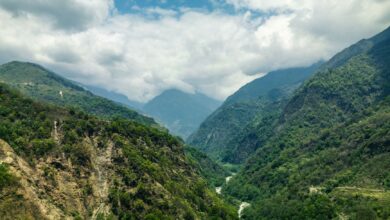
The Colca Canyon reaches depths of around 10,700 feet in some sections, making it one of the deepest canyons on earth. The walls are layered with ancient terracing built by pre-Inca civilizations, some still farmed today by local Collagua and Cabana communities in traditional dress. The canyon floor is threaded by the Colca River, and the climb from river to rim is serious enough that most trekkers spend at least two nights inside before attempting the ascent. It is physical, often cold at altitude, and wildly beautiful in the way that places are when they have not been designed for visitors.
Arequipa serves as the natural gateway, a city of white volcanic stone architecture about four hours from the canyon by road. The drive itself passes through the Reserva Nacional Salinas y Aguada Blanca, where vicunas graze at altitudes above 14,000 feet and the road cuts through high plateau landscapes that feel far removed from anything coastal Peru has to offer. By the time travelers reach the village of Chivay, the air is thin and the scenery has shifted into something that looks more lunar than Andean. Acclimatization matters here – arriving from sea level and heading straight into the canyon is a reliable way to make the experience miserable.
Cruz del Condor: The Morning Window
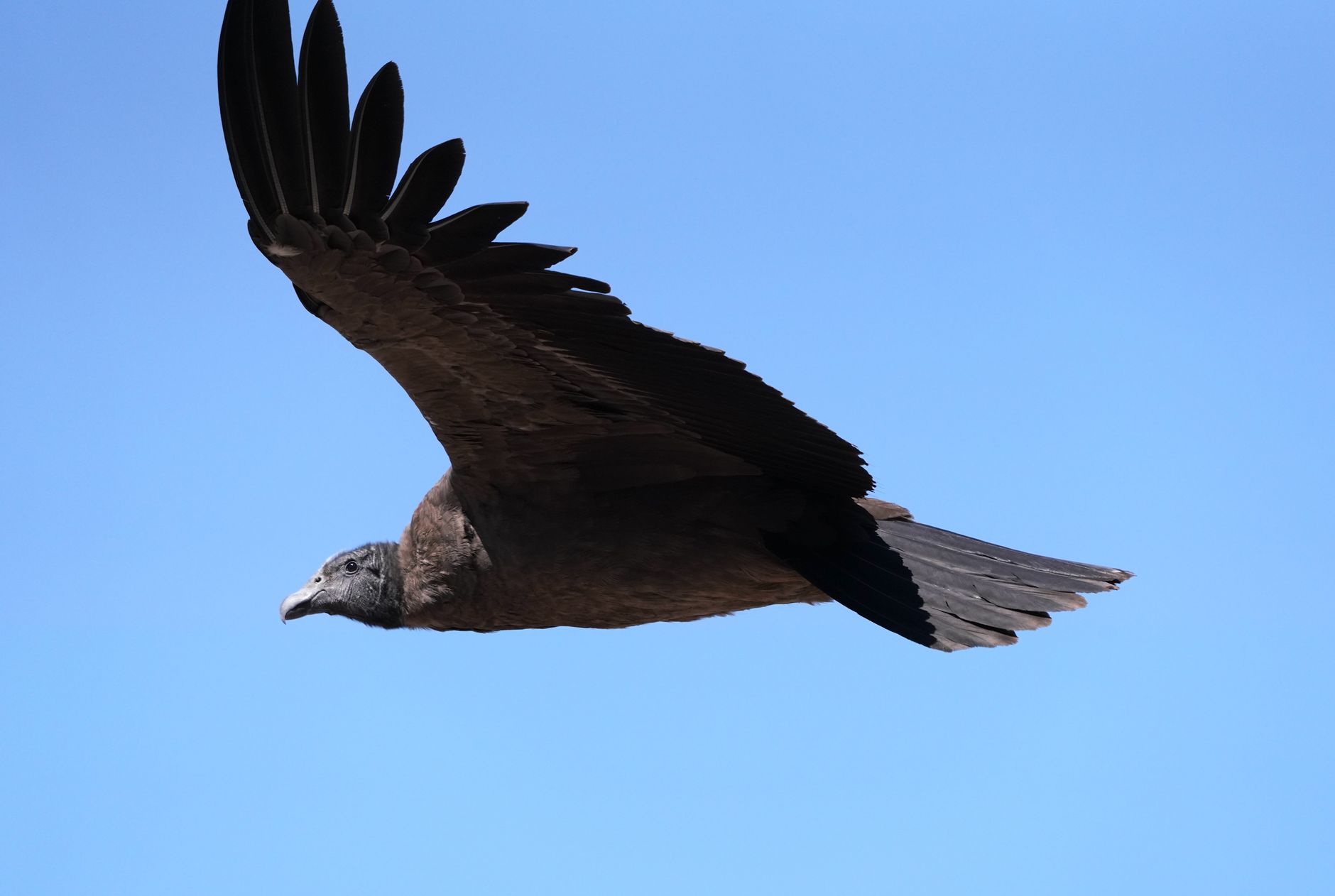
The single most visited spot in the canyon is Cruz del Condor, a lookout point above a section where the canyon walls compress and thermal air rises sharply from the valley floor. Between roughly 8 and 10 in the morning, Andean condors use these thermals to gain altitude after overnight roosting. They appear first as distant shapes on the rock faces, then unfold into full flight at eye level or below, close enough that their feathers are visible and their lack of effort in the air is almost unsettling. A bird that large should not move that effortlessly.
The condor sightings are not guaranteed – weather, season, and simple chance determine what any given morning produces. Clear dry season mornings between April and November offer the most consistent activity. But the canyon rewards patience in ways that scheduled wildlife tours rarely do. Visitors who arrive early and stay past the tour bus peak hour often see multiple birds working the thermals for extended periods, sometimes swooping within meters of the lookout railing.
Beyond the condors, the canyon hosts a range of high-altitude wildlife that most visitors overlook entirely because condors dominate the focus. Andean geese, giant hummingbirds, and various raptors are visible throughout the canyon during any serious walk. The terraced walls create microclimates that support plant life at elevations where most vegetation gives up entirely. A hiker moving between the rim and the river in a single day passes through several distinct ecological zones.
What makes Cruz del Condor work as an experience is not just the birds – it is the relationship between the lookout, the depth below it, and the scale of the canyon walls rising on the opposite side. Standing there in the early morning cold with a condor riding air currents below eye level creates a disorientation that is difficult to describe and harder to photograph accurately. No lens captures the depth perception, and most visitors put the camera down after the first few minutes.
Trekking Into the Canyon
The standard two-day trek descends from the rim village of Cabanaconde to the oasis settlement of Sangalle at the canyon floor, where a handful of small lodges cluster around a natural pool area surrounded by palm trees. The descent is steep and the re-ascent the following morning is genuinely demanding at altitude – most guides recommend leaving Sangalle well before sunrise to avoid climbing in direct sun. The trail is not technical, but it is relentless, and the altitude amplifies every effort.
Longer routes exist for trekkers with more time, cutting through villages like Cosñirhua and Malata where colonial churches sit against terraced hillsides that have been continuously farmed for centuries. These extended routes require local knowledge or a reliable guide and offer a version of the canyon that has nothing to do with observation platforms or scheduled wildlife windows. The communities along the inner canyon are small and the infrastructure is basic – bringing supplies and managing expectations about accommodation is part of the planning process.
Why Colca Stays Off the Main Circuit
Part of Colca’s persistent low profile comes down to logistics. Peru’s tourism infrastructure is built around Cusco and the Sacred Valley, where a network of trains, luxury lodges, and guided circuits handles enormous visitor numbers with practiced efficiency. The Colca Canyon route requires committing to Arequipa as a base, which pulls travelers away from the Cusco-Lima axis that most international itineraries follow. Tour operators can sell Machu Picchu as a standalone product; Colca requires a different frame of reference entirely.
There is also the question of what kind of traveler the canyon attracts. Condor watching does not photograph the way ancient ruins do. The landscape is spectacular but abstract – canyon walls and open sky do not compress into a single iconic image the way a citadel on a cloud-wrapped ridge does. Colca Canyon rewards presence over documentation, which puts it slightly at odds with how most modern travel is curated and shared. That is not a criticism of either place. It is simply why one of them has a four-hour wait for the sunrise photo and the other still has mornings where the condors come and the lookout is nearly empty.
The Peruvian government has been expanding road and lodging access around the canyon in recent years, and visitor numbers have grown steadily. Whether that growth eventually changes the character of the experience – the quiet of the early morning lookout, the absence of crowds on the inner canyon trails – is the question that serious Colca visitors are already asking themselves before they go back.