
Where the Clouds Sit Below Your Feet
Bali has held the imagination of slow travelers for decades – its rice terraces photographed endlessly, its wellness retreats booked months in advance, its roads increasingly clogged with tourists chasing a version of paradise that no longer exists in quiet form. Sri Lanka’s Hill Country offers something different: a walking landscape so densely layered with tea estates, mist-covered ridgelines, and colonial-era bungalows that it barely needs to market itself. It just sits there, at elevation, waiting.
The central highlands around Nuwara Eliya, Ella, and Haputale have long attracted backpackers passing through on the famous blue train from Kandy. But a different kind of traveler is arriving now – one who books guided tea trail walks, stays in converted estate guesthouses, and plans multi-day routes through working plantations rather than ticking off a single scenic viewpoint. The region is not undiscovered. It is simply underestimated.
The Walking Routes That Actually Deliver
The trails connecting Ella to Haputale form the backbone of what long-term visitors call the Hill Country circuit. This is not a single marked path but a loose network of estate roads, village shortcuts, and ridgeline tracks that can be combined into anywhere from a half-day outing to a four or five-day traverse. The altitude stays consistently between 1,200 and 2,000 meters, which keeps temperatures cool even at midday – a factor Bali’s tropical lowlands simply cannot match for walking comfort.
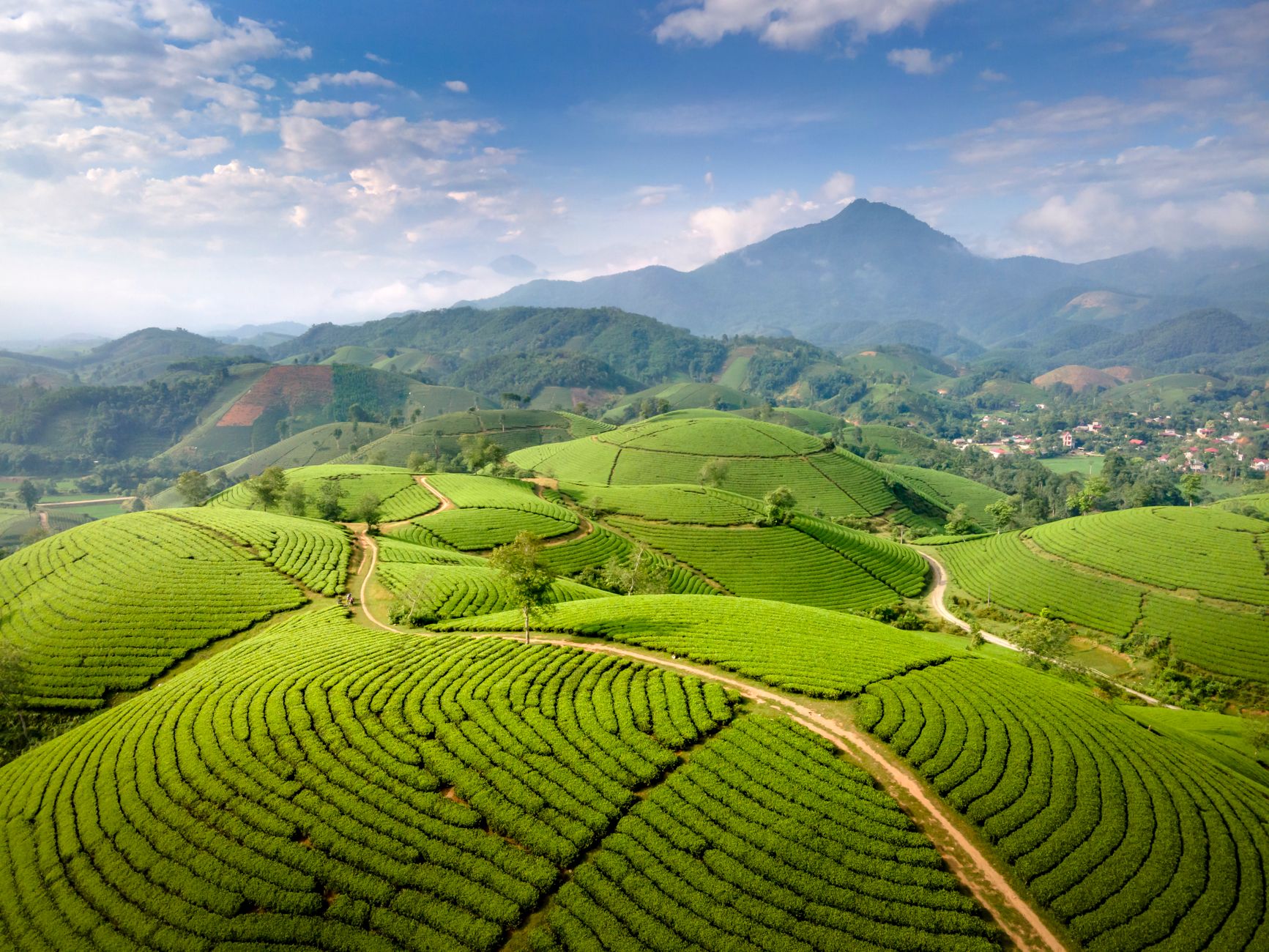
What makes the routes work for walkers at almost any fitness level is the terrain logic. The grades are long and gradual rather than sharp and technical. Tea bushes grow in dense rows along contoured hillsides, meaning the paths between them wind rather than climb straight up. A morning walk from a guesthouse above Haputale toward the Dambatenne Tea Factory – one of the region’s historically significant estates, originally developed during the British colonial period – takes roughly two hours at a relaxed pace and drops you directly into a working operation where guided tours of the processing floor run through the afternoon.
Lipton’s Seat, a viewpoint above Haputale named after the tea trade figure who once surveyed his estates from that ridge, offers arguably the most striking panorama in the Hill Country on a clear morning. The walk up takes about 90 minutes from the nearest village, passes through low cloud forest near the summit, and rewards early starters with a sea of mist filling the valleys below while the peaks stay sharp and sunlit. Most days, by 9 a.m., the clouds have burned off completely – which means the window is narrow and genuinely worth the early alarm.
The Ella area adds a different character to the circuit. The town itself has grown considerably in the past decade and now runs a full strip of cafes and guesthouses aimed squarely at budget travelers. The surrounding walks – to Little Adam’s Peak, through the Nine Arch Bridge area, and up to Ella Rock – are short enough to complete independently in a morning. The Nine Arch Bridge, a colonial-era railway viaduct set deep in jungle, has become a heavily photographed landmark, but arriving at it from above via a plantation path rather than from the tourist access point below changes the experience entirely.

Staying on the Estate
The accommodation market in Sri Lanka’s Hill Country has shifted meaningfully in recent years. A growing number of colonial-era tea estate bungalows have been converted into small guesthouses – some still operated by the estates themselves, others leased to independent operators. These bungalows were built in the late 19th and early 20th centuries for British planters and retain their original architecture: wide verandas, fireplaces, timber floors, and gardens that look directly out over the tea rows. Staying in one frames every morning as an immersion rather than a hotel stay.
The practical advantage over Bali’s villa market is cost. Estate bungalows in the Hill Country typically run at a fraction of what a comparable experience costs in Canggu or Ubud, often including meals prepared by in-house staff using local produce. Some properties offer guided estate walks at dawn as a standard part of the stay, meaning the best walk of the day can begin thirty seconds from the front door.
The Tea Culture Element That Bali Cannot Offer
Sri Lanka produces some of the most traded black teas in the world, and the Hill Country is where the highest-grown varieties – marketed internationally as “high-grown Ceylon” – originate. Walking through a working estate in flush season, when the newest two leaves and a bud are being hand-plucked by experienced workers moving through the rows, is a specific kind of agricultural spectacle that has no real equivalent in the experiences Bali packages for visitors.
Factory tours at the larger estates walk visitors through withering, rolling, oxidation, and drying – the full orthodox process that distinguishes Ceylon teas from mass-produced alternatives. For anyone who drinks tea daily without thinking about it, watching the transformation from fresh green leaf to dry black tea takes about 40 minutes of walking through processing rooms and produces a lasting shift in how a cup of tea registers afterward.
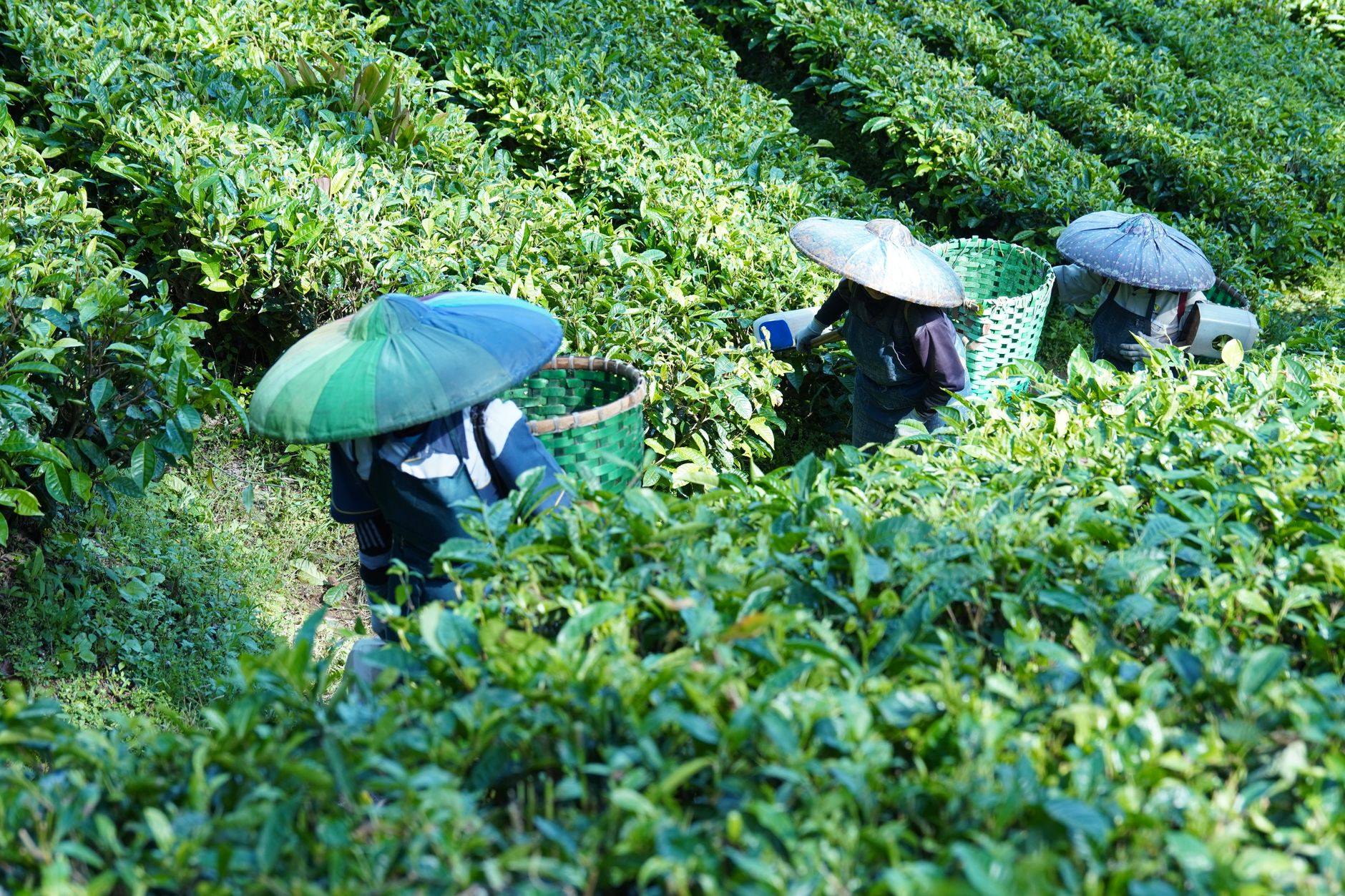
There is a sensory specificity to the Hill Country that builds across a few days of walking. The smell of fresh leaf in the morning air. The way the mist moves through estate roads lined with silver oak trees planted as windbreaks. The sound of the blue train crossing a viaduct somewhere below while you are sitting at elevation with a cup of something that was growing on the bush you passed an hour ago. Bali offers beauty. The Hill Country offers a particular kind of slow accumulation – one that rewards walkers who stay long enough to notice it.
The region’s relative quiet compared to Bali is partly structural: Sri Lanka’s Hill Country has no beach, no nightlife circuit, and no surf culture drawing the demographic that keeps Seminyak running year-round. For those planning routes through landscapes where the altitude itself is part of the appeal, the Hill Country sits in a category of its own in South Asia. The question is not whether it competes with Bali – it is whether the right traveler has heard of it yet. Many haven’t, which is the only reason the trails are still this quiet on a Tuesday morning in February.
Frequently Asked Questions
When is the best time to walk the tea trails in Sri Lanka’s Hill Country?
The dry season from January to April offers the clearest mornings and best visibility from viewpoints like Lipton’s Seat. Early starts before 9 a.m. are recommended to catch the mist below the ridgelines.
Do you need a guide to walk the Hill Country tea trail routes?
Most routes between Ella and Haputale can be walked independently using basic maps, but hiring a local guide adds context about estate history and ensures access to plantation paths that are not always clearly signed.