
Where Jane Goodall’s Legacy Meets the Lakeshore
Gombe Stream National Park sits on the eastern shore of Lake Tanganyika in western Tanzania, occupying just 52 square kilometers of steep forested ravines and narrow beaches. It is the smallest national park in Tanzania and, by almost any conventional metric, the least visited. Yet it holds a distinction that no other park in Africa can claim: it is the site where chimpanzee research began, where the science of primate behavior was practically invented, and where the forest still runs wild enough to feel genuinely untouched. That combination – historical weight and raw wilderness – is what makes Gombe worth talking about now.
The park tends to get overshadowed by Mahale Mountains National Park, its neighbor further south along the same lakeshore. Mahale draws visitors with its dramatic peaks, its larger chimp population, and its reputation as a luxury safari destination with high-end tented camps. Gombe, by contrast, operates on quieter terms. The accommodation is modest, the access is by boat only, and the experience feels closer to a research station than a resort. For a certain kind of traveler, that is precisely the point.
Getting There Is Part of the Journey
Reaching Gombe requires a commitment that filters out casual visitors almost automatically. The closest major town is Kigoma, itself only reachable by flight from Dar es Salaam or by the famous TAZARA railway that cuts across Tanzania from the coast. From Kigoma, the park is accessible by motorized water taxi – a wooden boat that carries local passengers, supplies, and the occasional wildlife researcher north along the lake. The ride takes roughly two hours and runs along a shoreline where fishing villages appear and disappear against a backdrop of dense green hills. There are no roads into Gombe.
That journey by water sets the tone for everything that follows. Lake Tanganyika is not a background detail here – it is the western edge of the park’s world, and the lake itself is worth arriving for. It is the second deepest lake on the planet, with visibility that rivals the Caribbean in some sections. Snorkeling directly off the beach inside the park reveals cichlid fish in extraordinary variety, many of which exist nowhere else on earth. Travelers who arrive expecting only chimps routinely leave having also logged an unexpected aquatic experience.
The infrastructure at Gombe is basic by design. The Tanzania National Parks authority maintains a resthouse and bandas – simple self-catering cottages – at the park headquarters near Kasekela. There is no Wi-Fi, limited mobile signal, and meal options depend largely on what you bring or arrange with staff in advance. Some visitors organize supplies through guesthouses in Kigoma before departure. The lack of polish is not a flaw in the product – it is the product.
The Chimpanzees of Kasekela
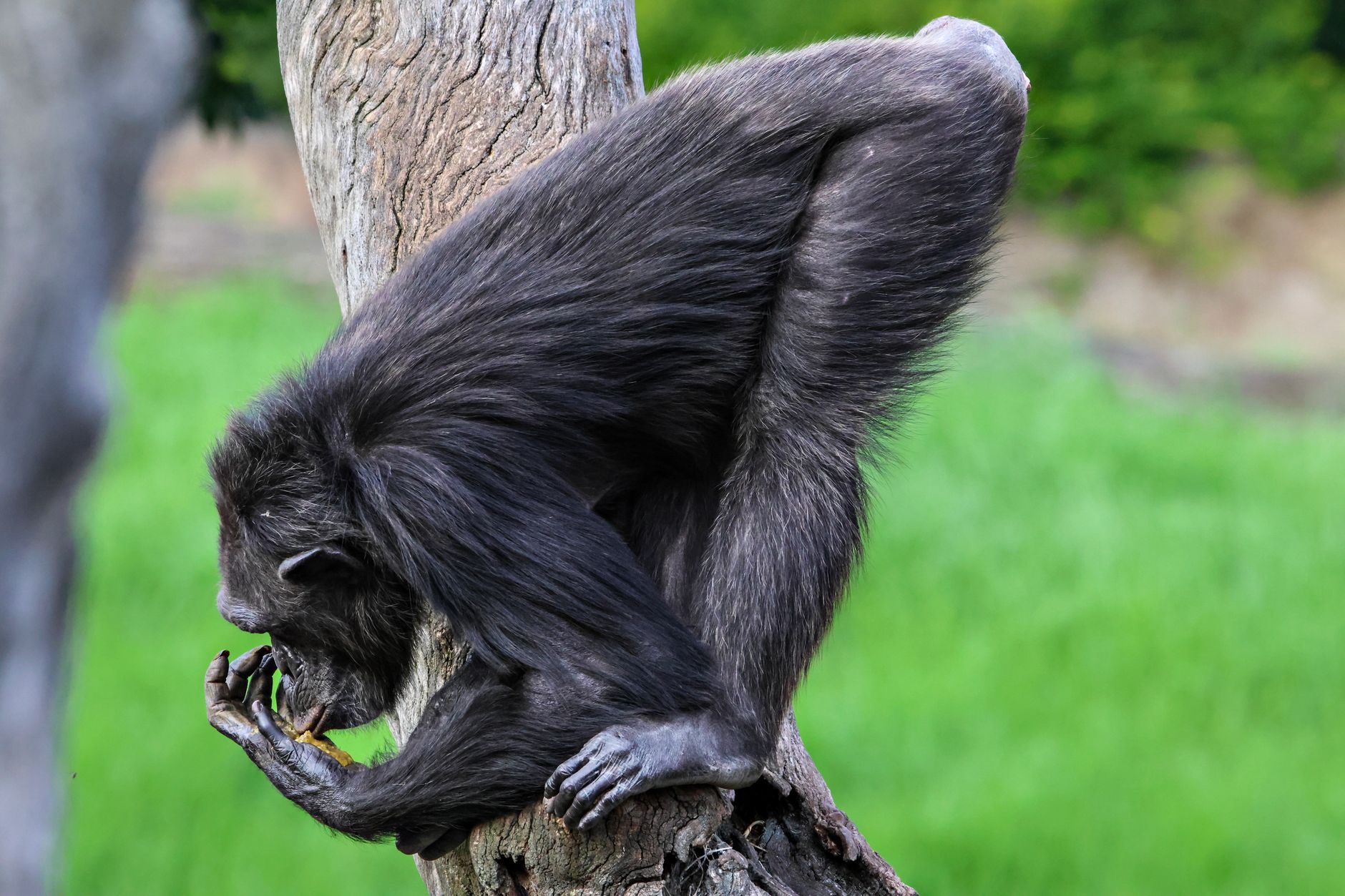
The chimps at Gombe have been studied continuously since 1960, making the Kasekela community among the most observed and documented wildlife groups anywhere on the planet. That decades-long habituation process means encounters can be extraordinarily close and calm. Rangers and research staff guide visitors through the forest on foot along steep trails that follow the same ravine systems the chimps move through daily. When you find a group, you stay with them for up to an hour – watching them groom, forage, rest, and occasionally display – before backing away.
The forest itself demands attention beyond the chimps. Gombe is home to olive baboons, red-tailed monkeys, and red colobus, and the birding is dense and rewarding. The forest interior shifts from riverine gallery forest along the stream corridors to drier woodland on the ridge tops, creating distinct habitat zones within a very small area. Guides who have worked here for years read the terrain almost instinctively, knowing which fruiting trees are active, which trails the chimps favor in dry versus wet season, and where to pause on a ridge for a view of the lake below.
What Gombe cannot offer is the grand scale of other Tanzanian parks. There are no elephants, no lions, no vast migratory herds. The wildlife experience is intimate and focused rather than panoramic. Visitors who arrive having spent days on the Serengeti often describe Gombe as a deliberate deceleration – an experience where the frame gets smaller and the detail gets sharper. The comparison to Mahale is worth examining here: Mahale’s chimps are habituated too, but the park sits against the Mahale Mountains, adding a trekking and scenery dimension that Gombe simply does not try to match. Gombe trades altitude for depth of research history.
The research station founded during the early years of primate study still operates within the park. It functions as an active scientific facility, and the presence of researchers conducting long-term behavioral studies gives Gombe a texture that most wildlife destinations lack. This is not a staged encounter or a curated safari experience. Visitors are, in a small way, entering a workspace – one that has produced peer-reviewed science for more than six decades. That dynamic changes how the experience feels without necessarily changing what you see.
Who Goes to Gombe, and Why Now
The traveler drawn to Gombe tends to prioritize authenticity over comfort and historical context over spectacle. Conservation-focused itineraries are increasingly building East African trips around parks like this one – places with deep scientific backstory and low visitor pressure – rather than stacking days at the same high-profile reserves. Rwanda’s Nyungwe Forest attracts a similar profile of visitor – someone who wants primate tracking embedded in an ecosystem that hasn’t been packaged for mass tourism.
Gombe’s low visitation numbers are partly logistical and partly reputational. The journey from Kigoma puts off travelers who are short on time or traveling with children who aren’t suited to rougher conditions. The modest accommodation deters guests accustomed to the standard of East Africa’s luxury tented camps. But those same barriers create a floor below which the experience does not erode. When a park sees very few visitors per day during peak season, the forest stays quiet and the animals behave naturally.
The practical calculus for visiting now is favorable. Kigoma has seen improvements in flight connections over the past few years, reducing the journey time from Dar es Salaam considerably. Boat transfers to the park are well organized by local operators with experience running trips for researchers and international guests. And while the accommodation won’t suit everyone, there are guesthouses in Kigoma – some with genuine character – that allow visitors to base themselves in town and make day trips or multi-night stays inside the park on a schedule that fits their tolerance for roughing it.
The question most travelers eventually ask is whether Gombe is worth the extra planning when Mahale is available on the same lake. The honest answer depends entirely on what you want the trip to mean. Mahale offers beauty, scale, and comfort alongside its chimp experience. Gombe offers something harder to quantify – a place where the science is still happening, where the history is embedded in every trail, and where the simplicity of the setup forces a kind of attention that more polished destinations make easy to avoid. Some travelers find that trade-off deeply satisfying. Others find Mahale’s setting more rewarding. The fact that they are genuinely different experiences, rather than different grades of the same one, is what makes choosing between them an actual decision rather than an obvious answer.