The Loop That Gets Overlooked
Sapa gets the Instagram posts, the guided tours, and the glossy magazine spreads. Its terraced rice fields are genuinely beautiful, and the infrastructure built around foreign visitors is efficient, well-trodden, and increasingly crowded. But roughly 300 kilometers to the northeast, a 350-kilometer mountain circuit through Ha Giang province has been drawing a quieter, more self-directed type of traveler – one arriving on two wheels and leaving with a different kind of story.
The Ha Giang Loop, as cyclists and motorbike riders call it, winds through some of the most dramatic karst limestone scenery in Southeast Asia. Sharp peaks rise above ethnic minority villages, and the road surface alternates between smooth government-paved stretches and sections that demand full concentration. What makes it distinct from Sapa is not just the landscape – it is the degree to which the route remains genuinely off-script for most visitors arriving from Hanoi.
What the Route Actually Involves
The loop typically begins and ends in Ha Giang city, the provincial capital that sits about six hours north of Hanoi by bus or private car. From there, riders head toward Dong Van, a town near the Chinese border that anchors the route’s most photographed section: the Dong Van Karst Plateau Geopark, a UNESCO-recognized geological zone covering nearly 2,500 square kilometers. The rock formations here are ancient in a way that reads as almost cinematic – jagged, grey, and unrelenting.
The road through Ma Pi Leng Pass is where most cyclists either fall in love with the loop or seriously question their decision-making. The pass runs along a cliff edge above the Nho Que River, and on clear days the contrast between the green water below and the pale limestone above is the kind of view that does not require explanation or hyperbole. On rainy days, the same road becomes narrow, slick, and borderline dangerous – which is the honest version of the experience that travel content rarely shows.
Accommodation along the route is basic by international hotel standards and increasingly well-developed by local ones. Homestays run by Hmong and Tay families have grown from informal arrangements to structured offerings with set menus and dedicated sleeping quarters. The food – corn wine, buckwheat pancakes, and slow-braised pork dishes – varies meaningfully from one village to the next, which is a small but real pleasure for anyone cycling through over four or five days.
Why Cyclists Are Choosing Ha Giang Over Sapa
Sapa’s cycling infrastructure has grown considerably, but so has the volume of visitors competing for the same trails. Roads leading out of town toward Fansipan or into the Muong Hoa Valley now share space with organized tour groups, shuttle vans, and tuk-tuks catering to day-trippers. For serious mountain cyclists, that density changes the experience fundamentally – not the scenery, but the texture of moving through it.
Ha Giang does not have that problem yet. The province requires foreign visitors to carry a permit, which is easy to obtain in Ha Giang city but adds a step that filters out some portion of casual tourist traffic. That small bureaucratic friction has, unintentionally, helped preserve the sense that the loop rewards preparation over impulse. Riders who show up with a basic map, a reliable bicycle or rented motorbike, and enough Vietnamese to navigate mealtimes will find the experience substantially more immersive than what Sapa now offers at equivalent effort.

The Physical Reality of the Route
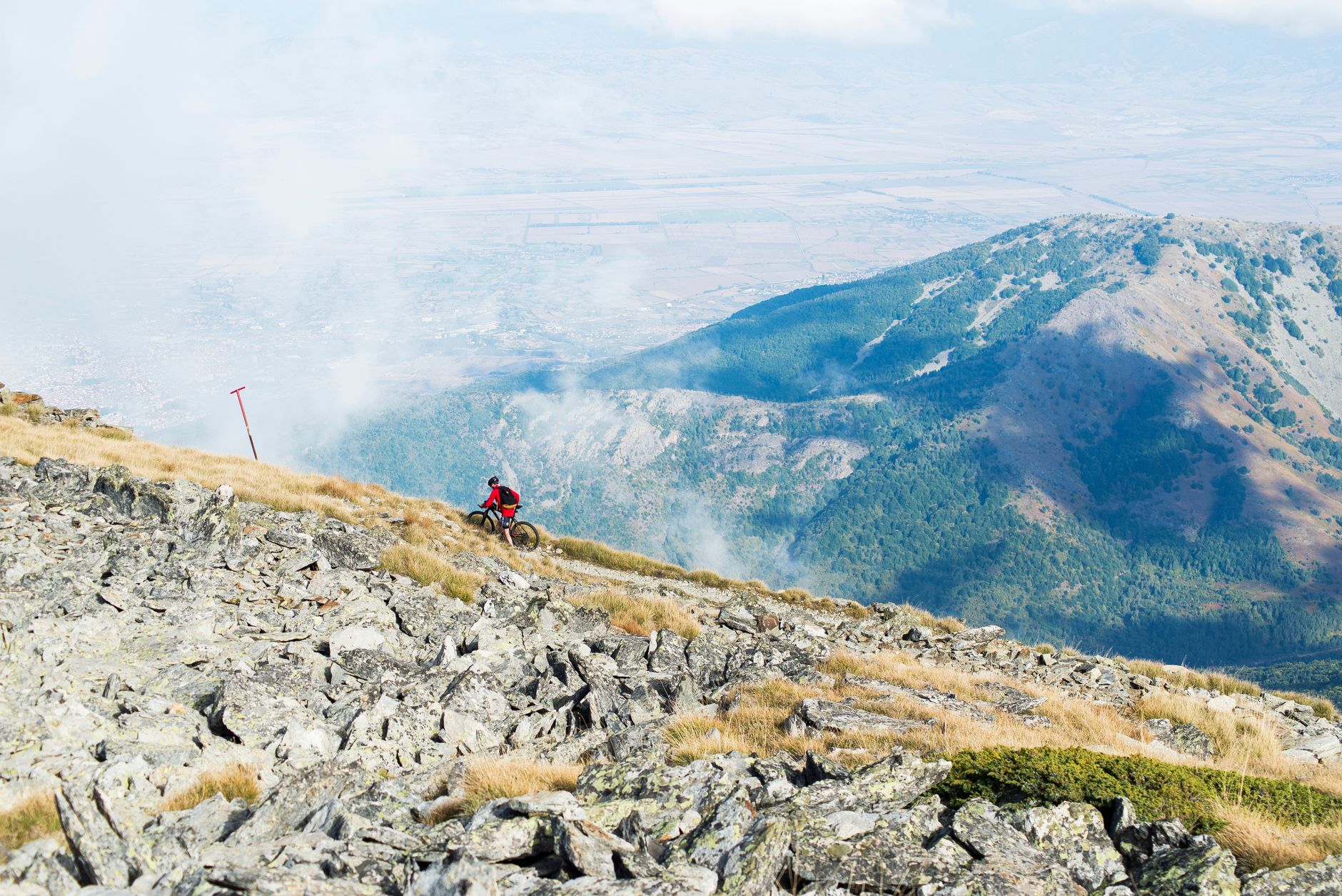
Cycling the full loop on a pedal bicycle – as opposed to a semi-automatic motorbike, which is the more common choice – requires genuine fitness and multi-day endurance. Elevation gains throughout the circuit are significant, and there is no flat section long enough to serve as recovery riding. Riders who attempt the loop on hybrid or touring bicycles regularly report that the descents are as physically demanding as the climbs, because the road quality on some stretches requires constant braking and body control.
The best months to ride are October through December and March through May, when rainfall is lower and visibility on the passes is reliable. The summer monsoon season, running roughly from June through August, produces road conditions that range from inconvenient to genuinely hazardous. Landslides are not theoretical risks in this region – they are a documented annual occurrence on several sections of the loop, particularly near Meo Vac.
Bicycle rental availability in Ha Giang city has expanded noticeably over the past several years, with a growing number of guesthouses and tour operators stocking mountain bikes alongside the standard motorbike fleet. Quality varies widely, and the standard advice from long-distance cyclists who know the route is to inspect brake pads and gear shifting thoroughly before leaving town. A mechanical failure on Ma Pi Leng Pass is not a situation that resolves quickly.
For riders interested in other off-the-radar mountain routes across Asia, Nepal’s Mustang region presents a comparable dynamic – a spectacular high-altitude corridor that requires a special permit and rewards preparation with a low-crowd experience that more famous routes in the same country can no longer guarantee. The logic is similar even if the terrain is entirely different.
What Ha Giang cannot yet offer is Sapa’s polish – the reliable wifi, the range of international food options, the easy access to guides who speak fluent English. What it offers instead is the particular satisfaction of a route that still asks something of you before it gives anything back. For mountain cyclists who have already done Sapa and found it slightly too comfortable, that trade seems to be landing well.